
What if the energy storage system that defined the last several years is no longer the most efficient way to protect your Houston home? As the local energy landscape evolves, many homeowners find themselves caught in a complex Tesla Powerwall 3 vs Powerwall+ comparison while trying to secure their backup power. You likely feel the pressure to choose a system that doesn’t just store energy but actually manages the heavy surge loads of a central air conditioner during a humid Texas August. It’s a valid concern because the wrong architecture can lead to unexpected system trips or avoidable permitting delays at the Houston Permitting Center.
This guide provides the technical clarity you need to make an informed investment in your home’s infrastructure. You’ll discover why the structural shift to DC-coupled efficiency in the Powerwall 3 matters for new installations and how it addresses the legacy power limitations of the discontinued Powerwall+ model. We’ll examine continuous power outputs, the nuances of CenterPoint Energy interconnection, and the specific performance metrics that ensure your system remains a reliable asset. By the end, you’ll understand the local compliance requirements and technical justifications necessary for a resilient 2026 solar strategy.
Key Takeaways
- Recognize the transition to the Tesla Powerwall 3 as the primary energy storage solution for 2026, superseding the legacy Powerwall+ model.
- Evaluate the technical advantages of the Powerwall 3, including its 11.5 kW continuous power output and superior 185 LRA load-start capability for demanding HVAC systems.
- Analyze the strategic shift to DC-coupled architecture and the utility of six integrated MPPTs through our technical Tesla Powerwall 3 vs Powerwall+ comparison.
- Identify the correct implementation strategy for your property, whether deploying Powerwall 3 for a new solar project or as a retrofit using AC-coupled mode.
- Secure your investment and ensure regulatory compliance by leveraging certified professional installation and PE-stamped engineering designs.
The Evolution of Tesla Energy Storage: Powerwall 3 vs. Powerwall+
The 2026 energy market in Texas has moved decisively toward integrated, high-performance storage. The Tesla Powerwall 3 stands as the current flagship for residential and light commercial applications, establishing a new baseline for efficiency. When conducting a Tesla Powerwall 3 vs Powerwall+ comparison, it’s vital to recognize that the Powerwall+ is now categorized as a legacy technology. While the Powerwall+ was a significant milestone in the Tesla Powerwall history, the Powerwall 3 introduces a structural redesign that optimizes energy flow for modern Houston homes. This transition is not merely an incremental update; it’s a shift from the AC-coupled traditions of the Powerwall 2 toward a DC-optimized ecosystem that maximizes solar harvesting during peak Texas sun hours.
Grid resilience in Houston depends on hardware that can withstand volatile weather and high-demand cycles. The Powerwall 3 provides this stability through a robust, unified housing that simplifies the installation process and reduces potential points of failure. For homeowners prioritizing reliability, the newest generation offers a streamlined path to energy independence.
The Legacy of the Powerwall+
The Powerwall+ represented the first major step toward a fully integrated solar-plus-storage unit. It combined the battery chemistry of the Powerwall 2 with a proprietary solar inverter, allowing for faster response times than standalone AC-coupled systems. However, its design relied on a complex assembly of separate components housed within a single aesthetic shell. These hardware limitations led to a more labor-intensive installation process and restricted the maximum power output compared to current 2026 standards. Although it remains a capable unit for existing owners, it has been discontinued in favor of the more streamlined Powerwall 3.
Defining the Powerwall 3 Standard
The Powerwall 3 utilizes a unified architecture where the battery and solar inverter are designed as a single, cohesive engine. This generation introduces significant scalability through the use of battery extension packs. These packs allow homeowners to increase storage capacity without the need for additional full-inverter units, which creates a more cost-effective expansion path. This modularity ensures a customized fit for properties with diverse energy profiles. The system maintains the 10-year warranty standard common to the industry, providing long-term assurance for Houston homeowners. Its ability to manage high-surge loads ensures that critical systems remain operational during grid outages.
Technical Specifications: Comparing Power, Capacity, and Performance
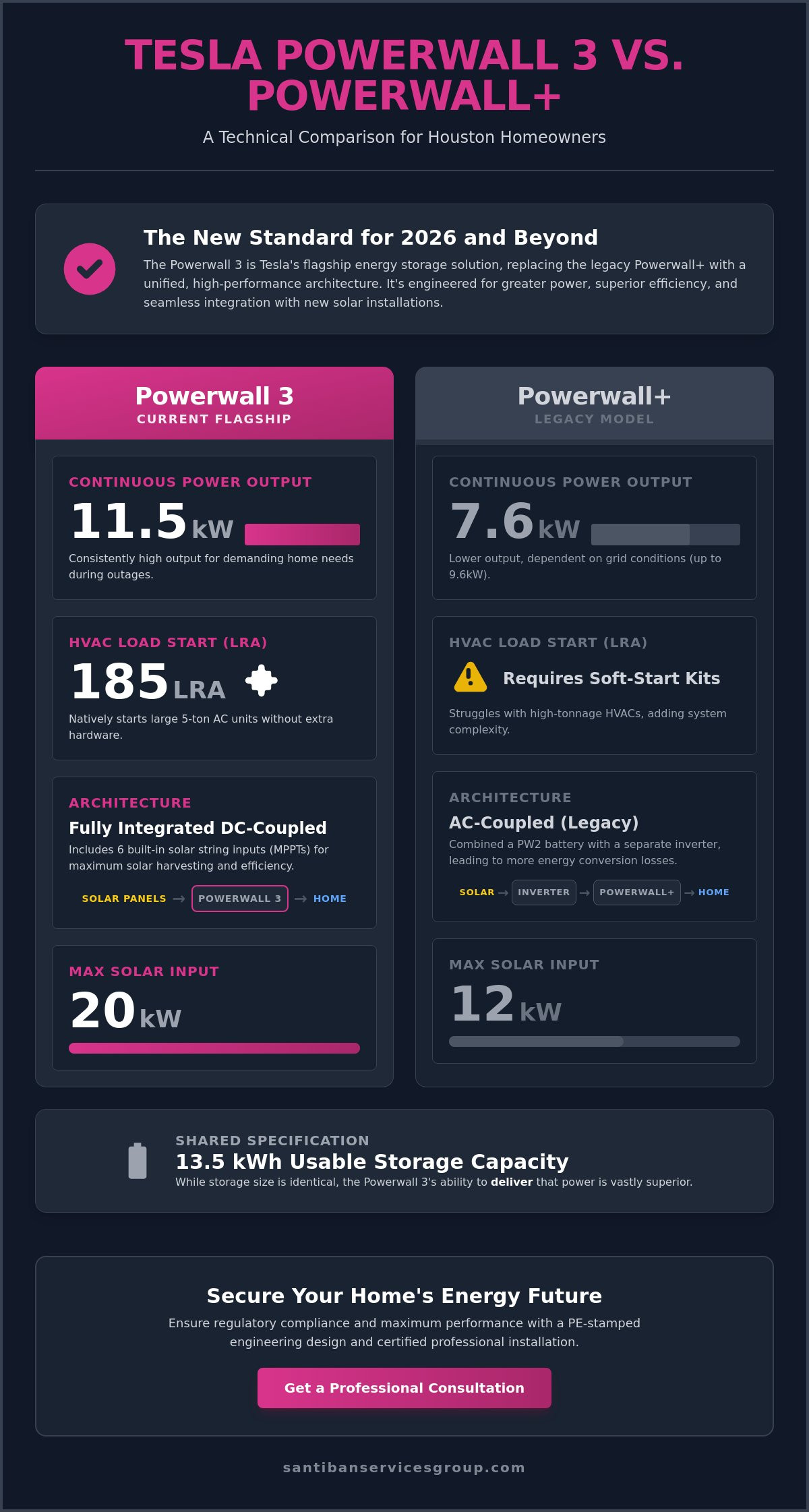
Engineering precision defines the performance gap between these two generations of energy storage. While both units share a 13.5 kWh usable storage capacity, their ability to deliver that energy varies significantly. A rigorous Tesla Powerwall 3 vs Powerwall+ comparison highlights the Powerwall 3’s superior 11.5 kW continuous power output. This is a substantial increase over the Powerwall+ legacy model, which provided between 7.6 kW and 9.6 kW depending on grid conditions. Additionally, the newer architecture supports a solar system capacity of up to 20 kW DC, providing a much higher ceiling than the 12 kW limit found on the previous model. For a deeper dive into these metrics, Clean Energy Reviews’ technical analysis of the Powerwall 3 offers an exhaustive breakdown of these hardware iterations.
Load-Start Capacity and Houston HVAC Needs
Locked Rotor Amps (LRA) represent the most critical specification for Texas homeowners. This metric determines the battery’s ability to start heavy motors, such as those found in 5-ton air conditioning units. The Powerwall 3 features a massive 185 LRA load-start capability. In contrast, legacy systems often struggled to ignite high-tonnage HVAC compressors without the assistance of external soft-start kits. By providing this high surge capacity natively, the Powerwall 3 reduces system complexity and potential failure points. Homeowners can achieve a more reliable backup solution by commissioning a PE-stamped engineering design that accounts for these specific electrical demands.
Efficiency and Thermal Management
Reliability in extreme heat is a non-negotiable requirement for Houston installations. Both models utilize advanced liquid cooling systems to maintain optimal battery chemistry temperatures. However, the Powerwall 3 achieves higher round-trip efficiency through its DC-to-DC charging path. By eliminating the need for multiple energy conversions between the solar panels and the battery cells, the system preserves more of the power you generate. These units are engineered for outdoor durability, maintaining operational integrity across the wide temperature swings common to the Gulf Coast region. The integrated design ensures that thermal management is handled by a single, synchronized control system.
Architecture and Efficiency: DC-Coupled vs. AC-Coupled Systems
The structural design of an energy storage system dictates its long-term efficiency and operational reliability. A detailed Tesla Powerwall 3 vs Powerwall+ comparison reveals a fundamental shift in how electricity is processed within the home. While previous generations often relied on AC-coupling, the Powerwall 3 utilizes a DC-coupled architecture. In a legacy AC-coupled system, energy from solar panels is converted from DC to AC by a solar inverter, then back to DC to be stored in the battery, and finally back to AC for home use. Each conversion stage introduces efficiency losses. The Powerwall 3 eliminates these redundant steps by allowing solar energy to flow directly into the battery as DC power. This streamlined path reduces thermal waste and ensures more of the harvested solar energy is available for consumption during Houston’s frequent grid disturbances.
To maximize these architectural advantages, our team employs PE-stamped engineering design for every project. This rigorous approach ensures that the DC-coupled system is precisely balanced with the property’s electrical load and solar array. We focus on minimizing voltage drop and optimizing string lengths to ensure the hardware operates at its peak rated efficiency. This level of precision is essential for maintaining the integrity of the 2026 energy standards. By utilizing professional engineering at the design phase, we mitigate the performance risks associated with generic, one-size-fits-all installations.
The Integrated Inverter Advantage
The Powerwall 3 functions as a unified solar and storage controller. This consolidation removes the need for separate, bulky solar inverters mounted alongside the battery. It simplifies the installation footprint, which is particularly beneficial for Houston homes with limited wall space in garages or utility areas. Beyond aesthetics, this integrated approach enhances system reliability. With fewer interconnected components, there are fewer potential points of failure. Homeowners also benefit from a single point of technical support. This ensures that any performance queries are resolved through a unified service channel rather than through multiple manufacturers.
Handling Shading and Complex Rooflines
Solar performance on complex Houston rooflines depends heavily on Maximum Power Point Trackers (MPPTs). A comparison of the two models shows a significant upgrade in this area. While the Powerwall+ featured 4 MPPTs, the Powerwall 3 is equipped with 6 MPPTs. These trackers allow the system to manage multiple strings of solar panels independently. If one section of the roof experiences partial shading from a nearby tree or a chimney, the remaining five inputs continue to operate at peak efficiency. This increased granularity provides immense design flexibility. It allows for solar placement on varied roof orientations without compromising the overall system output. This newer DC architecture ensures that even the most challenging architectural designs can achieve high energy yields.
Strategic Selection: Retrofits vs. New Solar Installations
Property owners often inquire whether the newest hardware is compatible with an existing solar array. A comprehensive Tesla Powerwall 3 vs Powerwall+ comparison reveals that while the Powerwall 3 is optimized for new DC-coupled installations, it remains highly adaptable for retrofit scenarios. For homeowners with functional solar panels but no storage, the Powerwall 3 can operate in an “AC-coupled mode.” This configuration allows it to communicate with third-party inverters already present on the roof. However, the most significant advantages are realized when the system is designed as a unified whole. For those undertaking Solar Reroofing, the Powerwall 3 is the superior selection because it allows for the complete removal of aging external inverters, replacing them with a single, high-performance unit.
Regardless of the installation type, professional oversight is mandatory for system longevity. Compliance with local municipal codes requires PE-stamped engineering for solar systems to ensure the structural and electrical integrity of the property. This engineering validation is a critical step in the 2026 permitting landscape, providing a technical guarantee that the storage system won’t compromise the home’s existing electrical infrastructure. You can secure your property’s energy future by requesting a professional site assessment and engineering review today.
Optimizing for New Solar Systems
The Powerwall 3 is the default recommendation for new solar projects due to its integrated design. By serving as both the battery and the solar inverter, it eliminates the need for external third-party hardware. This reduces the total equipment cost and minimizes the physical footprint on the property. The commissioning process for these unified systems is significantly more streamlined. Technicians can configure the entire solar-plus-storage ecosystem through a single interface, which reduces the labor hours required for setup. This efficiency translates to a faster path from installation to operation, ensuring your home is protected from grid instability as quickly as possible.
Navigating the Houston Permitting Process
The Houston Permitting Center enforces strict electrical standards that can be difficult for uncertified installers to navigate. Specific engineering requirements must be met to satisfy both city inspectors and CenterPoint Energy interconnection protocols. Utilizing PE-stamped designs prevents project delays and rejections by providing the exact technical documentation these agencies require. These stamped plans prove that the system can safely handle the high-surge loads typical of Houston properties. Partnering with a provider experienced in certified Tesla Powerwall installation ensures that every regulatory hurdle is addressed before the first component is mounted. This proactive approach is the most reliable way to avoid the administrative bottlenecks that often plague residential energy projects.
Professional Implementation: Why Certified Installation Matters
Professional execution represents the final and most critical variable in the energy independence equation. Santiban brings 24+ years of specialized industrial and residential electrical experience to ensure that your hardware selection performs to its exact engineering specifications. While the technical data in our Tesla Powerwall 3 vs Powerwall+ comparison favors the newer DC-coupled architecture, the real-world reliability of the system depends on the precision of the physical installation. Tesla requires certified installers to validate the 10-year warranty, making professional oversight a necessity rather than an option. We position our clients to leverage the full benefits of Tesla Electric in Houston, turning a standard battery installation into a strategic grid asset that maximizes ROI.
For complex sites with diverse energy demands, a single-product approach may not always be sufficient. Our expertise allows for the seamless integration of EcoFlow and Tesla solutions to create a customized energy profile for your property. This versatility ensures that whether you are managing a high-tonnage HVAC load or maintaining sensitive medical equipment, your backup system is engineered for consistent performance. By functioning as a strategic partner rather than a simple labor provider, we manage every operational detail from initial design to final interconnection with CenterPoint Energy.
The Santiban Advantage: Engineering and Execution
Our team applies an “Industrial Grade” approach to every residential project. This means we utilize the same rigorous safety protocols and precision standards required for large-scale industrial electrical construction. A key component of this methodology is our in-house PE-stamped engineering design. By managing the engineering process internally, we maintain total operational control over the project’s technical integrity. We prioritize proactive safety measures, especially during high-voltage DC integrations, to protect both the property and the long-term health of the battery chemistry. This disciplined methodology ensures that every connection meets or exceeds the highest current industry standards.
Securing Your Houston Energy Future
The Powerwall 3 is the definitive choice for 2026 resilience. It offers the high-surge capacity and DC-coupled efficiency required to navigate the volatile Texas climate. Choosing this system ensures your home remains a stable environment during prolonged grid outages. To begin your energy transition, we recommend a professional facility or home assessment to determine the optimal configuration for your specific site. You may also refer to our comprehensive guide to installation costs for additional budget planning insights regarding broader electrical infrastructure upgrades. Our commitment is to provide a seamless, reliable energy solution that functions as a silent engine for your home’s operations.
Securing Houston’s Energy Independence in 2026
The transition to the Powerwall 3 represents a fundamental upgrade in how Houston properties manage energy. By prioritizing DC-coupled efficiency and a higher LRA threshold, this system addresses the specific surge requirements of large HVAC units that legacy models often struggled to support. Our detailed Tesla Powerwall 3 vs Powerwall+ comparison demonstrates that while the Powerwall+ served as a vital bridge, the integrated architecture of the newest generation provides a more resilient foundation for the modern Texas grid.
Precision in execution remains the deciding factor for system success. We leverage 24+ years of electrical expertise and in-house PE-stamped engineering design to deliver customized results that exceed municipal standards. As Tesla-certified installers, we ensure your investment is protected by full warranty coverage and industrial-grade safety protocols. It’s time to transition from basic backup to a strategic energy asset. Request a Certified Tesla Powerwall 3 Consultation from Santiban to finalize your property’s resilience strategy. You can face the next storm season with the quiet confidence that your home’s critical operations are under expert control.
Frequently Asked Questions
Is the Tesla Powerwall 3 compatible with existing solar panels?
Yes, the Powerwall 3 is compatible with most existing solar panel systems through its integrated AC-coupling mode. This specific functionality allows the battery to communicate with third-party solar inverters already installed on the property. While the unit is optimized for new DC-coupled designs, it remains a versatile solution for homeowners looking to add storage to an established solar array without replacing their current hardware.
Can a single Powerwall 3 start a 5-ton air conditioner?
Yes, a single Powerwall 3 is capable of starting a 5-ton air conditioner due to its 185 LRA load-start capacity. This represents a significant technical advancement over legacy systems that often required soft-start kits to handle high-tonnage compressors. This high surge capability ensures that your home’s most demanding cooling systems remain operational during a grid failure without the need for additional external hardware.
How many solar panels can I connect to a Powerwall 3?
The Powerwall 3 supports a solar system capacity of up to 20 kW DC, which typically equates to approximately 40 to 50 high-efficiency solar panels depending on their specific wattage. This increased input ceiling allows for larger residential arrays than the previous generation. Our engineering team utilizes PE-stamped designs to ensure that the solar array is precisely balanced with the battery’s intake specifications for maximum efficiency.
What is the main difference between Powerwall 3 and Powerwall+?
The primary distinction found in a Tesla Powerwall 3 vs Powerwall+ comparison is the shift from an AC-coupled legacy design to a fully integrated DC-coupled architecture. The Powerwall 3 delivers 11.5 kW of continuous power, whereas the Powerwall+ was limited to a range of 7.6 kW to 9.6 kW. Additionally, the newer model features six MPPTs for better performance on complex roofs, compared to the four found in the discontinued Powerwall+.
Does the Powerwall 3 require a separate inverter?
No, the Powerwall 3 doesn’t require a separate solar inverter because it features a built-in hybrid inverter that manages both solar and storage functions. This unified design simplifies the physical installation footprint and reduces the number of potential failure points within the electrical system. It allows the battery to process energy directly from the solar panels as DC power, which improves overall round-trip efficiency.
How long does a Powerwall 3 installation take in Houston?
The physical installation of a Powerwall 3 typically takes one to two days for a standard residential property. However, the total project timeline is influenced by the Houston Permitting Center’s review process and CenterPoint Energy’s interconnection requirements. We mitigate these administrative delays by providing in-house PE-stamped engineering designs that meet all local regulatory requirements on the first submission, ensuring a predictable schedule.
What happens to my Powerwall 3 during a grid outage?
The Powerwall 3 detects a grid outage instantly and transitions your property to backup power in a fraction of a second. This seamless switch ensures that sensitive electronics and heavy appliances remain operational without interruption. During the day, your solar panels will continue to charge the battery and power your home, creating a self-sustaining energy ecosystem until the utility grid is restored.
Is the Powerwall 3 better for shaded roofs than the Powerwall+?
Yes, the Powerwall 3 is superior for shaded roofs because it’s equipped with six Maximum Power Point Trackers (MPPTs) compared to the four found in the Powerwall+. These trackers allow the system to manage solar panel strings independently. If shading affects one part of your roof, the remaining strings continue to operate at peak capacity, ensuring higher energy yields on properties with complex architectural features.