
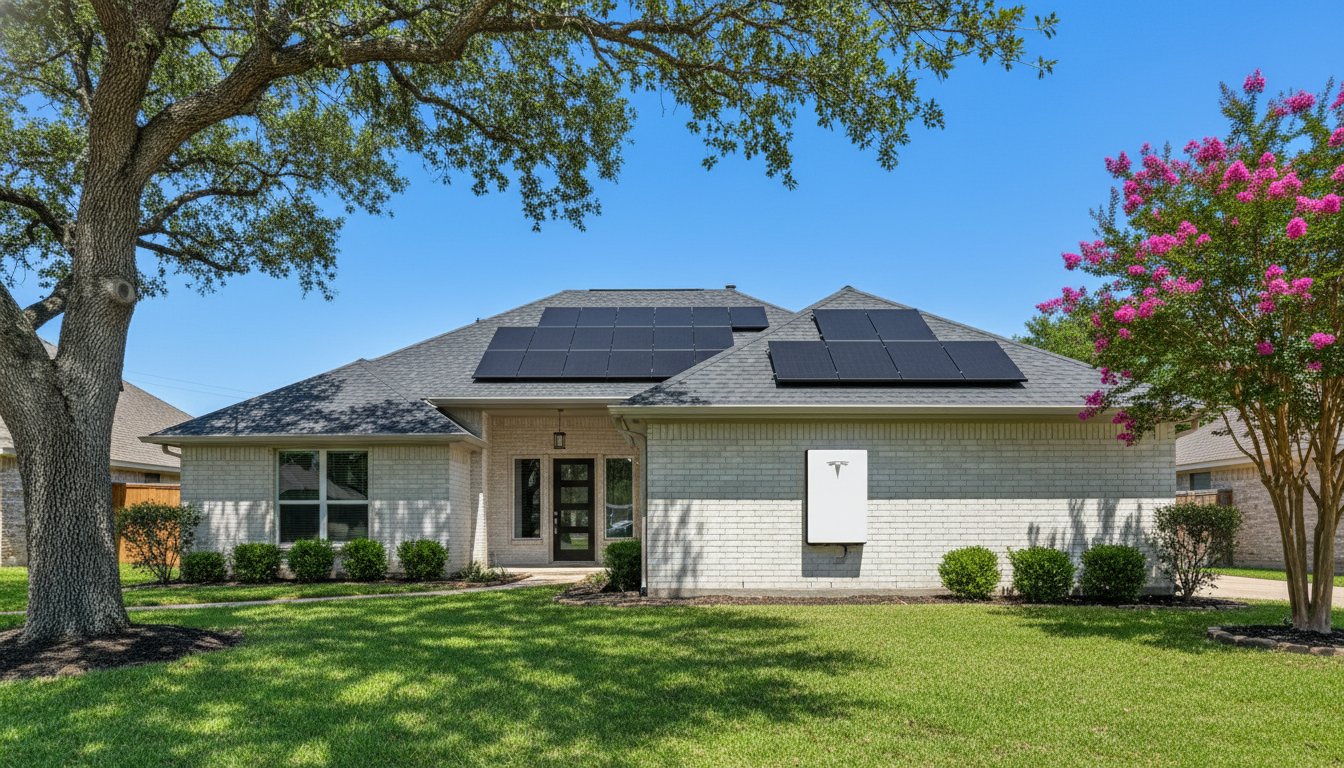
A residential roof in Houston must withstand wind speeds exceeding 150 mph to maintain structural integrity during a Category 4 hurricane. When homeowners research tesla solar solar specialists in the Gulf Coast region, they often overlook the critical intersection of structural engineering and energy storage. You’ve likely felt the frustration of grid instability during the 2024 storm season and worried about whether a new solar array might compromise your roof’s waterproofing. We understand that a solar system’s performance is only as reliable as the structure supporting it.
This guide provides a comprehensive roadmap to mastering Houston-specific installations, from securing PE-stamped engineering documents to the meticulous integration of the Powerwall 3. You’ll learn how a single-source solution for reroofing and solar eliminates the risk of structural failure and ensures a hurricane-resilient energy system. We’ll examine the technical requirements for seamless installation and the professional standards that define a superior residential energy transition.
Key Takeaways
- Discover how integrating the Powerwall 3 as a central energy management hub optimizes the Tesla solar ecosystem for Houston’s unique climate and 2026 standards.
- Learn the strategic necessity of a “Solar Reroof” to synchronize your home’s structural lifespan with your new energy investment for long-term reliability.
- Understand why mandatory PE-stamped engineering is the legal and technical foundation required for every tesla solar solar installation to withstand extreme Gulf Coast weather events.
- Evaluate the critical performance and aesthetic differences between Tesla Solar Panels and the Solar Roof to determine the superior solution for high-end Texas properties.
- Master the meticulous planning process, from structural audits to custom engineering, that ensures a seamless and professional transition to renewable energy.
Understanding the Tesla Solar Ecosystem for Houston Homeowners
The 2026 energy landscape in Houston demands a meticulous approach to residential power generation and storage. Homeowners currently face a choice between two primary solar technologies: traditional high-efficiency solar panels and the integrated Tesla Solar Roof. While panels provide a streamlined addition to an existing roof structure, the Solar Roof serves as a comprehensive reroofing solution, replacing standard shingles with durable, energy-generating glass tiles. Both systems rely on the Tesla Powerwall 3 to serve as the central energy management hub, bridging the gap between raw generation and usable household power.
Houston’s unique climate, characterized by extreme humidity and the frequent threat of tropical cyclones, necessitates a specialized strategy for hardware deployment. Standard backup systems often fail to provide the sustained output required for large HVAC systems during extended outages. Transitioning to a tesla solar solar holistic ecosystem allows a residence to move beyond simple backup and toward genuine energy independence. This shift is critical for maintaining operational stability when the Texas grid faces peak demand or infrastructure failure.
The Evolution of Tesla Solar Panels and Storage
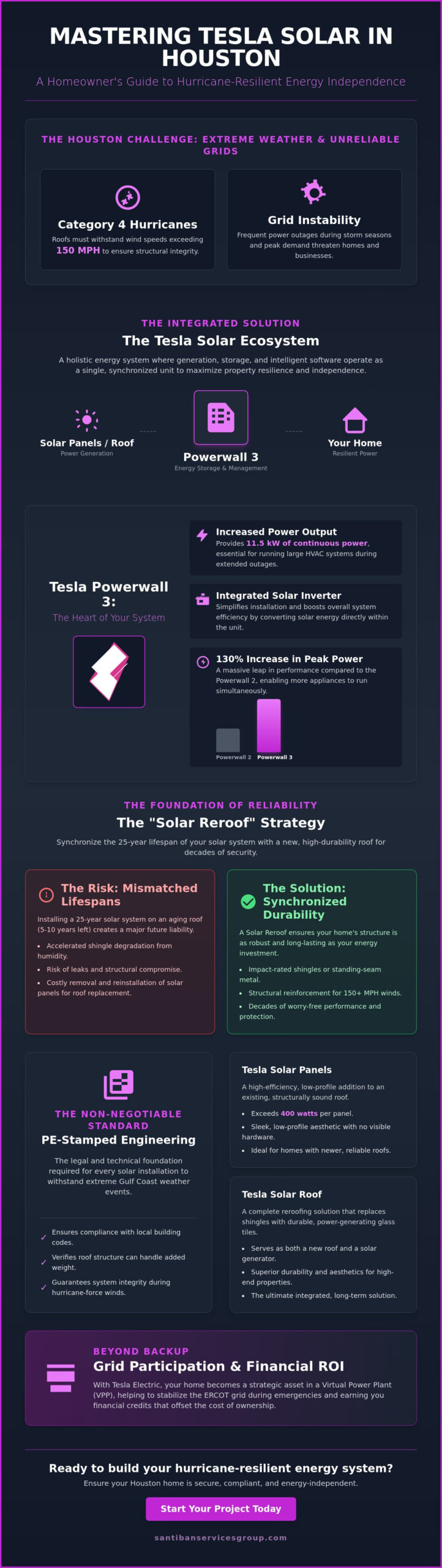
Current Tesla solar modules utilize high-efficiency cell technology to deliver power ratings that often exceed 400 watts per panel. These modules are engineered for a low-profile aesthetic, utilizing integrated front skirts and no visible mounting hardware. The Powerwall 3 represents a significant technical leap over previous versions, featuring an integrated solar inverter that simplifies the installation process and increases overall system efficiency. It provides 11.5 kW of continuous power, which is a 130% increase in peak power compared to the Powerwall 2. We define tesla solar solar as a holistic energy ecosystem where generation, storage, and intelligent software operate as a single, synchronized unit to maximize property resilience.
Grid Resilience: Tesla Electric and the Houston Market
Homeowners can now leverage Tesla Electric in Houston to transform their property into a strategic asset. This retail electric provider allows users to participate in virtual power plants (VPPs), which aggregate residential battery capacity to stabilize the ERCOT grid during emergencies. Participation often yields financial credits, offsetting the cost of system ownership. Understanding CenterPoint Energy regulations is vital, as local export rules dictate the rate at which excess solar energy is credited back to the homeowner. Santiban Services Group manages these meticulous regulatory details to ensure every system achieves optimal performance and compliance within the local utility framework.
The Critical Role of Solar Reroofing in Southeast Texas
Installing solar panels on a compromised structure creates a liability that often exceeds the initial energy savings. In Houston, where humidity and extreme weather patterns accelerate shingle degradation, a roof’s integrity is the foundation of any renewable energy strategy. The Santiban Services Group prioritizes a “Solar Reroof” methodology. This approach synchronizes the 25-year service life of tesla solar solar components with a new, high-durability roofing system. By selecting impact-rated shingles or standing-seam metal, homeowners ensure that their infrastructure remains secure for decades. It’s a proactive measure that prevents the costly necessity of removing and reinstalling panels just a few years into their operation.
Assessing Your Roof for Tesla Solar Readiness
Homeowners must identify specific indicators of wear, such as granule depletion, thermal cracking, or localized decking rot, before proceeding. Southeast Texas homes face unique challenges from wind loads that can reach 150 mph during peak hurricane season. Structural reinforcement is a standard requirement for many residential properties built before 2006 to handle the added dead load of the solar array, which typically weighs between 2.5 and 3 pounds per square foot. Our teams evaluate rafter spacing and decking thickness to ensure the system meets current building codes. When Planning Your Tesla Solar Project, verifying these structural metrics prevents future system removals for roof repairs. It’s a step that we consider essential for long-term stability and safety.
Benefits of a Unified Roofing and Solar Contract
A single-source contract eliminates the common friction between roofing contractors and solar installers. When different companies handle these tasks, warranty disputes frequently arise regarding the origin of leaks or mechanical damage. Santiban provides a seamless transition by managing both disciplines under one project umbrella. This integration results in approximately 15% lower permitting and administrative costs compared to hiring separate entities. We use professional flashing and proprietary mounting hardware to maintain a watertight seal across all penetration points. This meticulous attention to detail protects your investment and ensures tesla solar solar performance remains uninterrupted. If you require a detailed evaluation of your property’s structural capacity, our team can provide a comprehensive roof assessment to determine the most effective path forward. Our dedicated teams focus on excellence in every detail, ensuring your facility remains a high-performing asset.
PE-Stamped Engineering: The Foundation of Technical Compliance
Professional engineering stamps represent more than a bureaucratic hurdle. They serve as a legal guarantee that a solar installation won’t compromise the structural integrity of a residential building. In Texas, specifically within the jurisdiction of Houston Public Works, technical documentation must bear the seal of a licensed Professional Engineer (PE). This certification confirms that the roof structure can support the added dead load of a tesla solar solar array along with the dynamic loads of extreme weather. Santiban Services Group prioritizes this meticulous validation to ensure every project adheres to the highest safety standards and local statutes.
The engineering phase is where a theoretical design becomes a viable construction plan. A PE-stamped plan set includes detailed structural analysis, electrical single-line diagrams, and equipment specifications. This documentation is essential for maintaining the long-term reliability of the asset. It provides the quiet confidence that the system is built to last decades, not just years. Our teams focus on excellence in every detail, ensuring that the transition to renewable energy is both seamless and secure.
Why Houston Permits Require PE-Stamped Design
The City of Houston enforces strict building codes to manage urban density and environmental risks. Obtaining a construction permit requires a comprehensive review of PE Stamped Engineering for Solar Systems. A Professional Engineer validates the mounting system’s attachment points and electrical diagrams to prevent electrical hazards or structural collapse. This rigorous process also ensures that the installation qualifies for the Texas property tax exemption for solar energy devices, as documented by the Texas Comptroller. Without these verified stamps, homeowners risk permit denials, project delays, and potential insurance complications.
Engineering for Hurricane Resistance
Houston falls within high-velocity wind zones where wind speeds can exceed 150 mph during major weather events. Engineering for these conditions involves calculating uplift forces that attempt to pull panels off the roof deck. Santiban’s technical teams apply a disciplined approach to these challenges. We focus on specific technical metrics:
- Uplift and Shear Force Calculations: We ensure mounting hardware can withstand the specific pressures of Houston wind zones.
- Thermal Management: We design precise placement for the Powerwall 3 to maximize cooling efficiency and battery longevity.
- Structural Integrity: We verify the tesla solar solar hardware integrates perfectly with the existing roof rafters to prevent sagging or leaks.
Our industrial-grade approach brings corporate-level precision to residential applications. We treat every home as a critical facility. This methodical strategy ensures the energy system remains secure during the most severe Gulf Coast storms. By acting as a single-source solution, we manage the entire engineering lifecycle to deliver a resilient, high-performance energy ecosystem.
Tesla Solar Panels vs. Solar Roof: A Houston Comparison
Homeowners in Houston’s premier neighborhoods must choose between traditional panels and the integrated glass tile system. This decision impacts both property resilience and energy yield. Standard panels offer a cost-effective path for those with a roof in good condition. The Solar Roof provides a single-source solution for properties requiring a full replacement. Santiban Services Group provides the technical expertise to execute both installations with meticulous precision.
Houston experiences an average of 53 inches of rain annually and periodic Class 3 or 4 hail events. Tesla’s glass tiles carry a Class 4 hail rating, which is the highest industry standard for impact resistance. Traditional panels also meet high durability marks, yet the integrated nature of the Solar Roof eliminates potential leak points found in traditional racking penetrations. For local homeowners, the Tesla and Solar Roof comparison often centers on the age of the existing substrate. If a roof replacement is scheduled within the next 36 months, the Solar Roof often yields a superior long-term return on investment.
- Installation Timelines: Traditional panels typically require 1 to 3 days for mounting. A full Solar Roof installation is a comprehensive construction project lasting 5 to 14 days.
- Logistics: Panels require minimal structural modification. The Solar Roof demands a full tear-off of existing materials down to the deck.
- Structural Integrity: The integrated glass tiles reduce the dead load on the rafters compared to heavy concrete tiles or double-layered shingles.
Performance Metrics in the Texas Heat
High ambient temperatures in Harris County affect energy conversion. Tesla solar solar modules utilize advanced cells with low temperature coefficients, typically maintaining efficiency even when roof temperatures exceed 140 degrees Fahrenheit. Traditional panels benefit from natural convection via the 4-inch gap between the module and the shingles. The Solar Roof uses specialized ventilation channels and fire-rated underlayment to dissipate heat. While panels stay slightly cooler due to airflow, the Solar Roof offers a more robust structural profile that resists thermal expansion better than traditional metal racking.
Aesthetic and Property Value Considerations
Curb appeal remains a priority in Houston’s master-planned communities. The Solar Roof offers a seamless, architectural finish that mimics high-end slate or tile. Under the Texas Solar Rights Act, specifically Texas Property Code Section 202.010, HOAs cannot prohibit solar installations, but they can enforce aesthetic guidelines. A Solar Roof often bypasses these disputes by blending into the existing neighborhood architecture. Maintenance for both systems is minimal. Panels require occasional cleaning to remove pollen and dust; however, the glass tiles are designed to shed debris naturally during rain events. This integrated approach ensures that your tesla solar solar investment enhances the property’s market valuation without compromising its visual identity.
Planning Your Tesla Solar Project with Santiban Services Group
Santiban Services Group approaches renewable energy with the same precision applied to large-scale facility management. Our process begins with a meticulous site assessment and structural roof audit. We evaluate the load-bearing capacity of your rafters to ensure they exceed the requirements for a tesla solar solar installation. This data-driven approach prevents structural fatigue over the 25-year lifespan of the system.
Following the audit, our engineering team produces a custom design tailored to your home’s specific orientation. We require a mandatory PE-stamp on every plan set from a licensed Texas Professional Engineer. This certification guarantees that the array can withstand wind speeds exceeding 110 mph, which is a critical safety standard for the Gulf Coast region. We then facilitate seamless permitting and utility interconnection coordination. Our administrative staff interacts directly with municipal offices and utility providers like CenterPoint Energy to secure all necessary approvals.
Professional installation is executed by Tesla-certified specialists. These teams are trained to integrate high-voltage components with surgical accuracy. We ensure that every penetration is flashed correctly to maintain your roof’s weather-tight seal. By consolidating these services, we provide a single-source solution that eliminates the friction typical of multi-contractor projects.
Maximizing Your Solar Investment
Securing the best return on your tesla solar solar project involves strategic planning beyond the hardware. We often recommend integrating EcoFlow backup systems for supplementary energy security. These portable units provide a redundant power layer for critical medical devices or mobile communications during extreme grid failures. Homeowners should also leverage the 30% Federal Investment Tax Credit (ITC), which remains a significant financial driver for adoption in 2024.
The technical complexity of these systems makes it essential to hire a certified Tesla Powerwall installer. Proper certification ensures that your backup system is configured for maximum grid resilience and complies with local Texas utility rebates. Our teams focus on optimizing your discharge settings to reduce peak-hour energy costs significantly.
Next Steps for Houston Homeowners
Preparing your home for the transition to renewable energy is a straightforward process when managed by experts. The Santiban commitment to “Excellence in Every Detail” means we handle the heavy lifting, but homeowners can assist by ensuring clear access to the main electrical panel and the attic. We provide a final checklist to ensure a successful deployment:
- Confirm your Wi-Fi signal strength at the Powerwall installation site.
- Review your local HOA guidelines for solar placement.
- Identify your critical circuits for backup prioritization.
- Finalize the net-metering agreement with your Retail Electric Provider.
Our goal is to act as a silent engine, managing the technical and regulatory hurdles in the background. This allows you to enjoy the benefits of a sustainable, resilient home with total peace of mind. Your transition to clean energy is a long-term investment that requires a partner dedicated to stability and consistent performance.
Securing Your Houston Energy Future
Integrating a high-performance energy system requires more than just hardware; it demands a foundation of technical excellence and structural integrity. For Houston homeowners, the transition to tesla solar solar solutions represents a strategic investment in long-term resilience. Santiban Services Group brings over 24 years of industrial electrical expertise to every project, ensuring your installation meets the highest standards of safety and efficiency. Our Tesla-certified installation team manages every aspect of the process, from initial reroofing to the seamless integration of Powerwall 3 technology.
By utilizing our in-house PE-stamped engineering services, we provide the meticulous documentation required for municipal compliance and structural peace of mind. We don’t just install panels; we deliver a comprehensive, single-source solution tailored to the specific demands of the Southeast Texas climate. This disciplined approach guarantees your home remains powered during grid outages while maximizing your energy independence. We’re ready to transform your property into a model of modern efficiency.
Consult with our Houston Tesla Solar Specialists today
Frequently Asked Questions
Do I really need a new roof before installing Tesla solar panels in Houston?
You should replace your roof if it has less than 10 years of functional life remaining to avoid the future cost of removing and reinstalling the hardware. Santiban Services Group provides a meticulous assessment of your current roof’s structural integrity before any tesla solar solar installation begins. Our integrated approach ensures that the underlying structure supports the 25 year lifespan of the system without requiring premature or costly repairs.
What is the benefit of a PE-stamped engineering design for my solar project?
A Professional Engineer (PE) stamp provides authoritative verification that your solar array will withstand wind speeds of 130 mph as required by Houston building codes. This certification ensures structural safety and is a mandatory requirement for obtaining municipal permits in Harris County. It offers a superior level of reliability, confirming that every mounting point and rail is strategically placed for maximum stability during extreme weather events.
How does the Tesla Powerwall 3 handle Houston’s hurricane season?
The Powerwall 3 includes a Storm Watch feature that monitors National Weather Service data and automatically charges the battery to 100 percent when a tropical storm warning is issued. With an 11.5 kW continuous power output, it manages heavy loads like central air conditioning during extended outages. This proactive energy management ensures your facility remains operational while the local grid faces instability from high winds or flooding.
Can I install Tesla solar if my HOA has strict aesthetic guidelines?
Texas Property Code Section 202.010 protects your right to install solar energy devices despite restrictive HOA covenants. Tesla’s low-profile design and black mounting hardware provide a seamless look that meets most architectural standards. Our dedicated teams work directly with your HOA board to submit tailored site plans and technical specifications, ensuring the project aligns with community aesthetics while maintaining high performance standards.
What is the typical timeline for a Tesla solar installation in Texas?
The transition to a tesla solar solar system typically takes between 60 and 90 days from the initial site survey to final activation. This timeline includes 14 days for system design, approximately 30 days for municipal permitting, and 2 days for the physical installation. Santiban Services Group maintains a disciplined, methodical schedule to ensure each phase of the project meets our internal benchmarks for excellence and efficiency.
How does Santiban Services Group handle the permitting process with CenterPoint?
We serve as your single-source solution by managing the entire Interconnection Agreement process through CenterPoint Energy’s electronic portal. Our team submits all required electrical diagrams and structural calculations to ensure compliance with utility standards. This meticulous handling of the administrative details prevents delays in obtaining the final Permission to Operate, allowing for a smooth transition to renewable energy production.
Is the Tesla Solar Roof worth the extra cost compared to traditional panels?
The Tesla Solar Roof is a high-end strategic choice for homeowners who require a full roof replacement and prioritize a cohesive architectural appearance. It replaces traditional shingles with durable glass tiles that generate electricity, offering a 25 year warranty on both the tiles and weatherization. This integrated solution eliminates the visual clutter of racks and frames, providing a superior aesthetic that can increase property valuation in premium neighborhoods.
What happens to my Tesla solar system during a total grid outage?
Your system will automatically disconnect from the utility grid and create a localized microgrid within 50 milliseconds of detecting a power failure. The Powerwall 3 provides the necessary voltage to keep your solar panels producing energy even when the neighborhood is dark. This seamless transition ensures that your critical appliances and security systems remain powered without any manual intervention or interruption in service.