
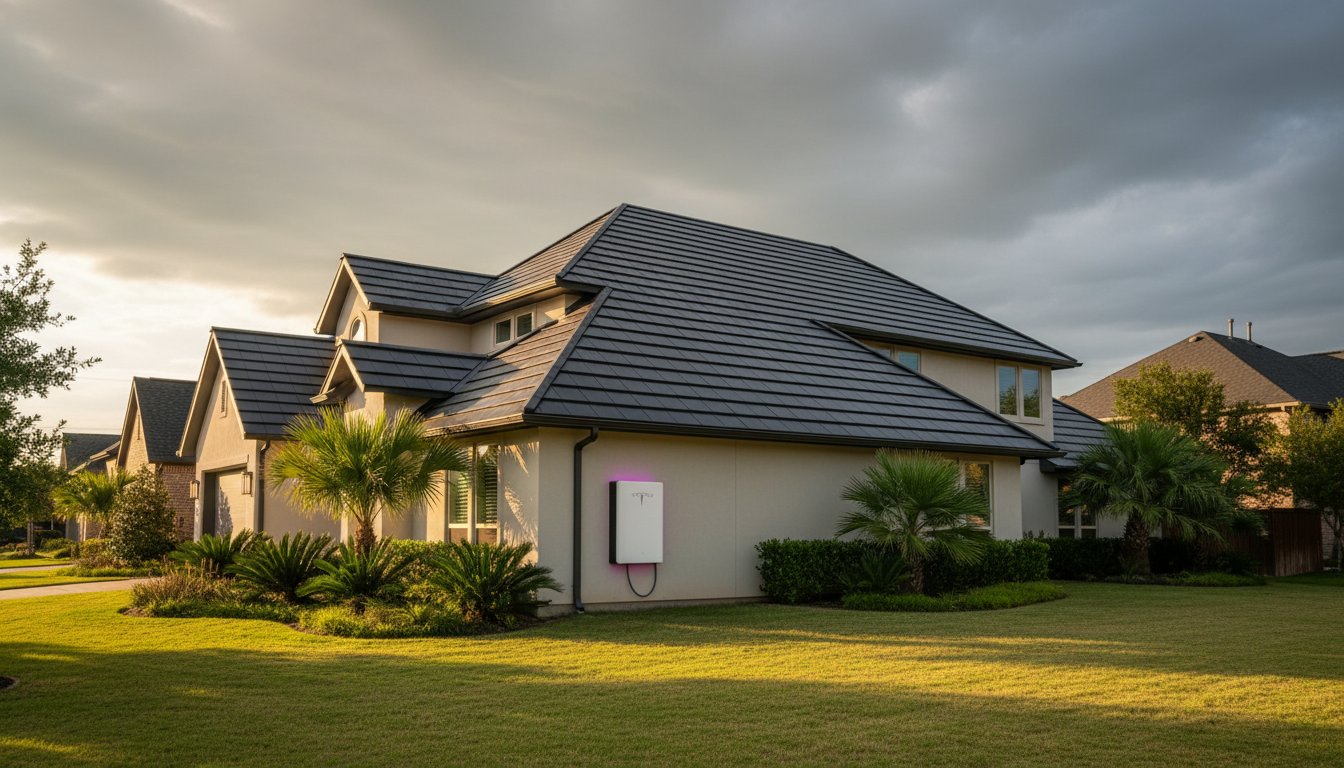
In the high-velocity hurricane zones of the Texas Gulf Coast, a standard roof is no longer a sufficient defense for your primary asset. As of 2024, Houston property owners face an average 25% increase in seasonal cooling costs, making traditional infrastructure an expensive liability. You already recognize that a roof must do more than provide shelter; it must generate value and withstand the 150 mph wind gusts common to Harris County. This guide demonstrates how a meticulously installed tesla and solar roof provides a seamless integration of aesthetic elegance and industrial-grade durability. You will discover the technical pathways to lower utility bills and increased property valuation through advanced engineering. We provide a comprehensive overview of the 2026 permitting requirements and the structural specifications necessary to ensure your energy system remains operational when the grid fails. It’s a strategic approach to facility management that prioritizes long-term reliability over temporary fixes.
Key Takeaways
- Distinguish between integrated glass shingles and traditional panels to select the optimal technology for Houston’s evolving energy landscape.
- Assess the rigorous engineering standards and wind ratings of the tesla and solar roof to guarantee long-term resilience against Gulf Coast weather extremes.
- Perform a comprehensive cost-benefit analysis over a 25-year lifecycle to determine the most strategic investment for your property’s infrastructure.
- Navigate the complexities of Houston’s permitting and PE-stamped engineering requirements to ensure full technical and regulatory compliance.
- Leverage a single-source partner to coordinate meticulous installation and integrate a complete energy ecosystem with industrial-grade precision.
Defining the Tesla and Solar Roof Landscape in Houston (2026)
Houston’s residential energy infrastructure reached a critical turning point as we entered 2026. Homeowners now prioritize structural longevity alongside sophisticated power generation. The tesla and solar roof represents a fundamental departure from traditional photovoltaic arrays. While standard Tesla solar panels are mounted atop existing shingles using racking systems, the solar roof replaces the entire substrate with power-generating glass. This integrated approach eliminates the mechanical penetrations required for traditional panels, which significantly reduces potential leak points in the high-humidity environment of the Gulf Coast.
The evolution of this technology has moved toward total system cohesion. In the current Texas market, the distinction between a roof and a power plant has blurred. Property owners no longer view solar as an additive component but as a foundational building material. This shift is driven by a requirement for resilient infrastructure that can withstand the increasingly volatile weather patterns observed in Southeast Texas over the last decade.
What is a Tesla Solar Roof?
The system utilizes two distinct tile types to create a uniform appearance across the entire structure. Active tiles contain high-efficiency solar cells protected by tempered glass, while inactive tiles consist of architectural-grade steel. This combination ensures the roof maintains its structural integrity during the 130 mph wind gusts common during Houston storm seasons. Solar shingle technology has matured into a reliable, building-integrated solution that offers three times the strength of standard roofing tiles. The Tesla Solar Roof is a complete reroofing system that replaces traditional materials with high-strength glass tiles to generate renewable energy.
The Value Proposition for Houston Property Owners
Houston homeowners face unique challenges involving utility volatility and strict architectural guidelines. By 2026, electricity rates in the CenterPoint service area have seen consistent annual adjustments, making fixed-cost energy production a strategic financial asset. Integrated systems offer a superior aesthetic for deed-restricted communities in high-end suburbs like West University or Memorial, where traditional blue-tinted panels often face HOA resistance. The seamless profile provides a meticulous finish that preserves property value while delivering industrial-grade performance.
The tesla and solar roof ecosystem now centers on the Tesla Powerwall 3 as the primary energy management hub. This unit provides 11.5 kW of continuous backup power and features an integrated solar inverter, which simplifies the installation footprint and enhances system reliability. Since the expansion of Tesla Electric across Texas in 2022, Houston residents can now participate in real-time energy trading. This connectivity transforms a private residence into a proactive participant in the Texas grid, offering a level of energy autonomy that standalone components cannot achieve. Homeowners seeking to understand the full scope of solar electric Texas solutions can find a comprehensive technical roadmap covering PE-stamped engineering and Powerwall 3 integration for Gulf Coast properties.
Engineering for Resilience: How Tesla Solar Roofs Handle Houston Weather
Houston’s climate demands a roofing solution that transcends standard residential specifications. The integration of a tesla and solar roof provides a sophisticated barrier against the Gulf Coast’s environmental stressors, offering a level of durability that traditional asphalt shingles cannot match. While standard shingles often degrade under intense UV exposure and high humidity, tempered glass tiles are engineered for longevity and structural stability. Achieving this resilience requires a meticulous approach to installation, ensuring every component functions as a unified shield against the elements.
Hurricane-Grade Durability Standards
Protection against extreme weather starts with material science. Tesla glass tiles are tested to meet the most rigorous industry benchmarks for impact and wind resistance. This technical superiority is essential for properties located in high-risk zones near the ship channel or coastal suburbs. Key performance metrics include:
- Impact Resistance: Tiles carry a Class 4 hail rating, the highest possible certification. They withstand 2-inch hail stones dropped from 20 feet without cracking, whereas asphalt shingles typically suffer granular loss or punctures in similar conditions.
- Wind Velocity: The system is rated for wind speeds exceeding 110 mph. This capacity is vital for maintaining structural integrity during tropical storms and localized wind events that frequently impact the region.
- Structural Integrity: Because glass tiles weigh between 3.5 and 4.5 pounds per square foot, professional engineering is mandatory. A dedicated team must validate that the home’s load-bearing capacity can support the system before the first tile is placed.
Managing Heat and Energy Efficiency
Thermal management is a critical concern in a city where summer temperatures regularly surpass 100 degrees Fahrenheit. The tesla and solar roof isn’t just a power generator; it’s a sophisticated insulation layer. Unlike traditional materials that absorb and hold heat, this system utilizes integrated air gap technology. This gap creates a natural convective cooling effect between the tiles and the roof deck, acting as a thermal break that prevents solar gain from migrating into the attic space.
By lowering attic temperatures by as much as 30 degrees during peak daylight hours, the system significantly reduces the strain on HVAC units. This efficiency is a cornerstone of modern property management. Homeowners planning for the next decade should consult Texas Solar in 2026: The Houston Homeowner’s Guide to Resilient Energy to see how these engineering choices fit into the evolving energy landscape. For those seeking a single-source solution for complex residential engineering, professional oversight ensures that these technical benefits translate into long-term financial performance.
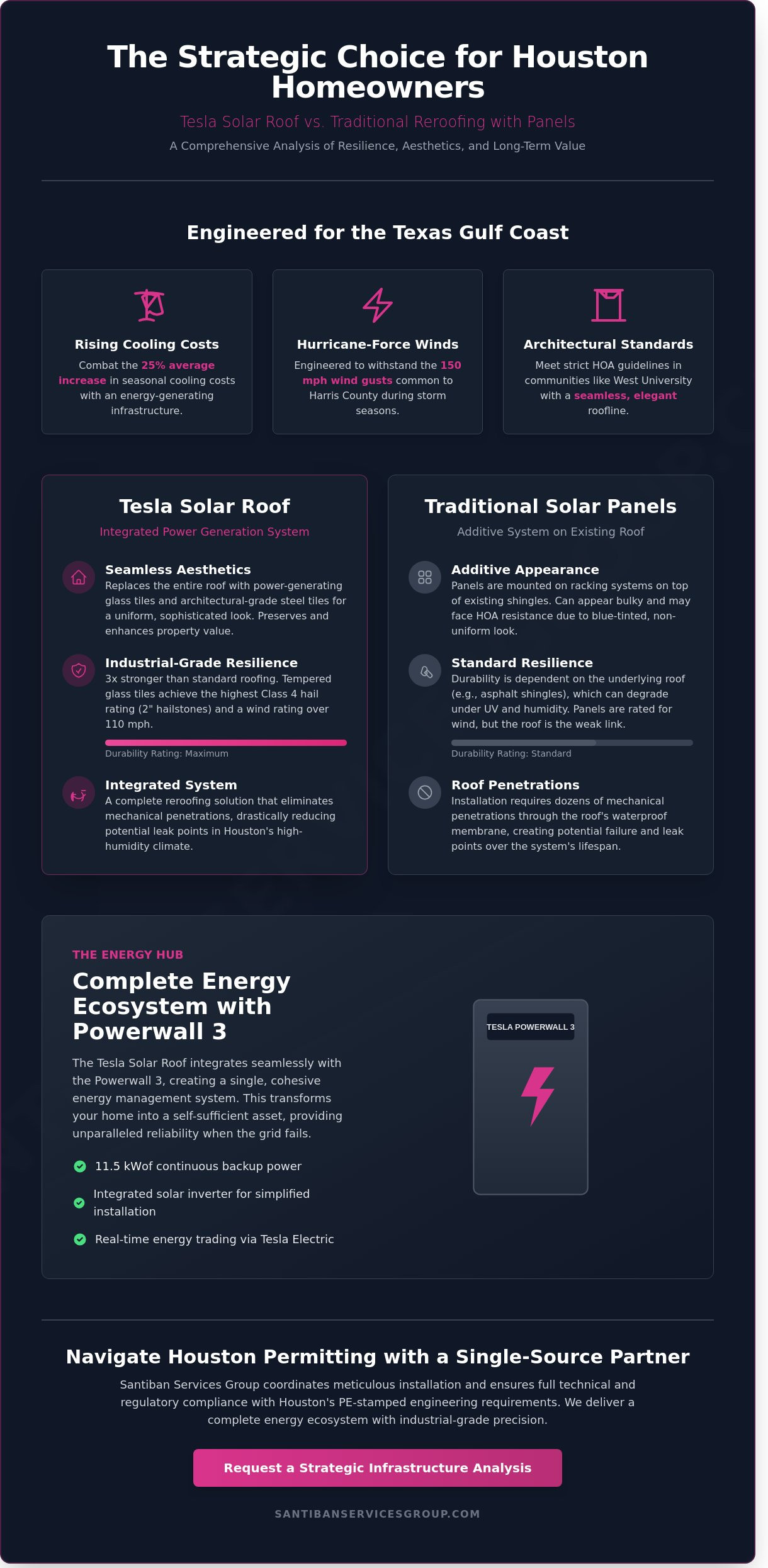
The Strategic Choice: Tesla Solar Roof vs. Traditional Reroofing with Panels
Homeowners must evaluate the long-term performance of their energy assets through a lens of corporate-grade reliability. Selecting between a tesla and solar roof and a traditional reroof with rack-mounted panels involves more than a simple price comparison. It requires a meticulous analysis of the 25-year total cost of ownership. While traditional panels offer a lower entry point, they often necessitate a secondary reroofing event within two decades. Integrated glass tiles function as both the primary weather barrier and the energy generator, effectively streamlining the maintenance cycle into a single, durable solution.
Cost vs. Value Analysis
The upfront investment for integrated solar technology reflects its dual-purpose engineering. In the Houston market, high-end property appraisals often respond more favorably to integrated systems that preserve the architectural integrity of the home. Financial planning for 2026 should account for the Federal Investment Tax Credit (ITC), which allows homeowners to deduct 30% of the installation costs from their federal taxes. This credit applies to both the solar components and the necessary structural roofing work for integrated systems.
- Asset Longevity: Glass solar tiles are engineered to withstand Class 4 hail and 166 mph winds, surpassing the durability of standard asphalt shingles.
- Appraisal Impact: Seamless installations eliminate the industrial aesthetic of racks, which remains a primary concern for Houston’s luxury real estate sector.
- Reduced Maintenance: Integrated tiles eliminate the “critter gaps” found under traditional panels, preventing debris accumulation and pest nesting.
Aesthetic and Practical Considerations
Roof complexity dictates the feasibility of your energy strategy. Homes featuring numerous dormers, chimneys, or deep valleys present significant challenges for traditional rectangular panels. A tesla and solar roof utilizes a combination of active and non-active glass tiles to maintain a uniform appearance across complex geometries. This architectural flexibility is a decisive factor for Houston homeowners navigating strict HOA guidelines. Many local associations that previously restricted bulky rack-mounted systems now approve integrated tiles because they mimic the appearance of high-end slate or textured shingles.
For those with a roof nearing the end of its functional life, the “Solar Reroof” approach is the most efficient path forward. This strategy involves a single, comprehensive mobilization of crews to replace the entire deck and install the energy system simultaneously. This integrated workflow reduces the risk of structural damage that can occur when third-party installers penetrate a brand-new roof to mount racks. You can review detailed technical requirements in the Solar Energy in Houston, Texas: The 2026 Homeowner’s Readiness Checklist to ensure your property is prepared for this transition.
The final decision rests on your planned tenure in the home. If you intend to maintain the property for over 15 years, the integrated approach provides a superior return through avoided replacement costs and enhanced durability. Santiban Services Group prioritizes these tailored solutions to ensure every operational detail of your home remains under expert control.
Navigating Houston Permitting and PE-Stamped Engineering Requirements
Securing the necessary approvals from the City of Houston Permitting Center and the Harris County Engineering Department is a foundational step in any solar installation. Houston’s specific climate demands that structures withstand wind speeds of at least 130 mph, making the permitting process more rigorous than in many other Texas regions. For homeowners investing in a tesla and solar roof, these requirements ensure the system remains secure during extreme weather events. Santiban Services Group manages these logistical complexities, ensuring every document meets the latest 2023 Texas Building Code standards.
The Necessity of PE-Stamped Engineering
A Professional Engineer (PE) stamp serves as a formal verification of safety and structural integrity. This certification confirms that the existing roof structure can handle the specific dead load of solar shingles and mounting hardware. Our team coordinates with licensed engineers to produce meticulous site plans that detail electrical layouts and structural reinforcements. This level of precision is essential for technical compliance and long-term reliability. You can find more details in our PE Stamped Engineering for Solar Systems in Houston: A 2026 Compliance Guide.
- Verification of wind uplift resistance for coastal zones.
- Structural analysis of rafters to support heavy battery backups.
- Electrical diagrams that comply with the National Electrical Code (NEC).
- Detailed site maps showing setbacks and equipment locations.
Utility Interconnection in the Houston Area
Connecting a tesla and solar roof to the local grid involves a formal application with CenterPoint Energy. This process includes a technical review of the Tesla Powerwall 3 integration to ensure the system can safely export excess energy via net metering. We handle the submission of interconnection agreements and coordinate the final inspection required for Permission to Operate (PTO). This proactive management reduces the “permitting-to-power-on” timeline, which typically spans 30 to 60 days depending on the municipal backlog. Our certified installers ensure that every technical requirement is met, avoiding the delays often caused by incomplete paperwork or non-compliant equipment configurations.
Santiban Services Group functions as a single-source solution, bridging the gap between engineering theory and field execution. We don’t just submit permits; we advocate for your project’s swift approval through established relationships with local officials. This integrated approach allows homeowners to focus on their energy savings while we handle the invisible, complex engine of regulatory compliance.
Implementing a Comprehensive Tesla Energy Ecosystem with Santiban
Santiban Services Group applies industrial-grade standards to every residential project. Our extensive background in complex facility management makes us the ideal partner for homeowners investing in a tesla and solar roof. We function as a single-source provider. This means our dedicated teams manage the structural engineering, the reroofing process, and the intricate electrical integration. You won’t deal with fragmented sub-contractors; you’ll work with one cohesive entity that prioritizes professional accountability and corporate stability.
Ensuring long-term reliability requires more than basic installation skills. It demands meticulous workmanship that anticipates the unique environmental pressures of the Gulf Coast. Our industrial roots allow us to implement solutions that withstand local weather extremes while maintaining peak efficiency. We treat your home like a high-performance facility, ensuring every connection and seal meets superior standards.
Beyond the Roof: Powerwall 3 and EV Charging
Integrating a tesla and solar roof requires a robust storage strategy. The Powerwall 3 provides whole-home backup to protect against the 25% increase in grid instability reported across the ERCOT system over the last three years. Our team optimizes your energy ecosystem for Tesla vehicle charging and home battery storage. This ensures your home remains operational during peak demand periods or unexpected outages. For a deeper look at maximizing your investment, consult our Tesla Electric in Houston: A Strategic Guide to Powerwall 3 & Grid ROI (2026). We ensure every component works in unison to provide seamless power management. Property owners seeking to extend their energy infrastructure beyond the home should also review our guidance on commercial EV charger installation in Houston to understand how scalable charging networks integrate with existing electrical systems.
Tailored Energy Solutions for Houston Residences
The Santiban commitment to “excellence in every detail” defines our design and deployment phases. We begin with a professional site evaluation to determine the structural readiness of your home. Our engineers then produce a final PE-stamped design. This document serves as a verified blueprint for safety and performance. We focus on long-term reliability through industrial-grade workmanship. Houston homeowners can expect:
- Comprehensive structural assessments to ensure load-bearing capacity.
- Integrated electrical systems that unify solar, storage, and charging.
- Meticulous installation standards derived from large-scale commercial projects.
- Seamless project management that handles permitting and grid interconnection.
A professional site evaluation is the first step toward energy independence. Our team analyzes your roof’s orientation, local shading, and electrical infrastructure to create a customized deployment plan. Don’t settle for generic installations. Request a certified, engineered solution that protects your home and powers your future. Contact Santiban today to schedule your initial assessment.
Elevate Your Property’s Resilience for 2026 and Beyond
Adopting a tesla and solar roof represents a significant shift toward energy independence and structural fortitude. Houston’s building codes now reflect updated 2024 wind speed requirements, necessitating systems engineered for maximum resistance and seamless grid integration. Santiban Services Group brings 24+ years of industrial electrical expertise to every project, ensuring your installation meets the highest standards of excellence. Our approach eliminates the friction of local permitting through comprehensive, in-house PE-stamped engineering services. This technical precision protects your investment while our Tesla-certified installation team executes each phase with meticulous care. You’re choosing a partner that values corporate stability and consistent performance. We provide the integrated energy ecosystem your facility needs to remain operational during Houston’s most challenging weather cycles. It’s about more than just power; it’s about establishing a reliable foundation that functions silently in the background. Our dedicated teams focus on excellence in every detail to deliver a tailored solution that fits your specific requirements.
Request a PE-Stamped Engineering Design for Your Houston Tesla Solar Project to begin your transition today. We look forward to securing your energy future together.
Frequently Asked Questions
Is the Tesla Solar Roof available for installation in Houston, TX?
Yes, the Tesla Solar Roof is currently available for residential and commercial properties throughout the Houston metropolitan area. Certified installation teams serve Harris, Fort Bend, and Montgomery counties, providing seamless integration for local homeowners. We maintain a disciplined approach to site assessment to ensure your property meets the technical specifications for this advanced technology. Our experts coordinate every phase of the deployment process to ensure a reliable outcome.
How much does a Tesla Solar Roof cost compared to traditional panels in 2026?
Industry projections for 2026 suggest that a tesla and solar roof will maintain a 40% to 60% premium over conventional roofing systems. Data from the Solar Energy Industries Association indicates that while material costs stabilize, integrated systems remain a high-end investment for property owners. We provide the professional oversight needed to manage these complex, long-term assets. This ensures your capital expenditure results in a durable, power-generating structure.
Can a Tesla Solar Roof withstand a Category 4 or 5 hurricane?
The Tesla Solar Roof carries a Class F wind rating, the highest available, which certifies its durability against winds up to 166 mph. This standard confirms the system can withstand Category 5 hurricane conditions without structural failure. We prioritize safety and reliability by ensuring every tile is secured according to rigorous manufacturer specifications. This meticulous installation process protects your structural investment during extreme Gulf Coast weather events.
Does CenterPoint Energy offer net metering for Tesla solar systems?
CenterPoint Energy provides the infrastructure for net metering, though the financial credits are managed through your chosen Retail Electric Provider (REP). Under Texas Senate Bill 398, homeowners have the right to connect solar systems to the grid. We help clients select REPs like Gexa or Reliant that offer 1:1 buyback rates for surplus energy. This integrated approach ensures your system generates measurable financial returns every month through a stable utility connection.
How long does the installation process take for a full solar roof in Houston?
A typical installation for a comprehensive solar roof in Houston requires 5 to 7 days of on-site labor. This timeline follows a 4 to 6 week period dedicated to engineering reviews and City of Houston permitting. Our dedicated teams follow a methodical schedule to minimize disruption to your daily operations. We maintain a steady communication rhythm to keep you informed of every milestone from material delivery to final inspection.
What is the difference between a solar reroof and a Tesla Solar Roof?
A solar reroof involves installing a new traditional roof surface before mounting separate panels, whereas a tesla and solar roof replaces the entire surface with active and inactive glass tiles. This single-source solution eliminates the need for separate contractors and specialized mounting hardware. We provide tailored solutions that address both aesthetic preferences and energy requirements. This integrated design offers a superior, cohesive look for modern properties and high-end developments.
Do I need a battery like the Powerwall 3 for my solar roof to work during an outage?
You must integrate a battery storage system like the Powerwall 3 to maintain electricity during a local grid failure. Standard grid-tied systems automatically shut down during outages to prevent backfeeding, which protects utility workers according to IEEE 1547 standards. Our technicians install these storage units to provide a seamless transition to backup power. This setup ensures your critical systems remain operational during the 15 to 20 power interruptions Houston experiences annually. Houston residents who want a deeper understanding of how solar electric Texas systems maintain resilient power during ERCOT grid failures can review our comprehensive 2026 guide to high-performance energy deployment.
Are there specific HOA rules in Houston regarding Tesla Solar Roof installations?
Texas Property Code Section 202.010 prevents HOAs from banning solar installations, including integrated glass tiles. Associations may only restrict the placement if it significantly impacts the aesthetic of a common area or violates safety codes. We provide comprehensive documentation to help you navigate these regulations with your board. Our professional team ensures your project meets all 7 specific criteria outlined in the Texas state statutes to avoid legal complications.