
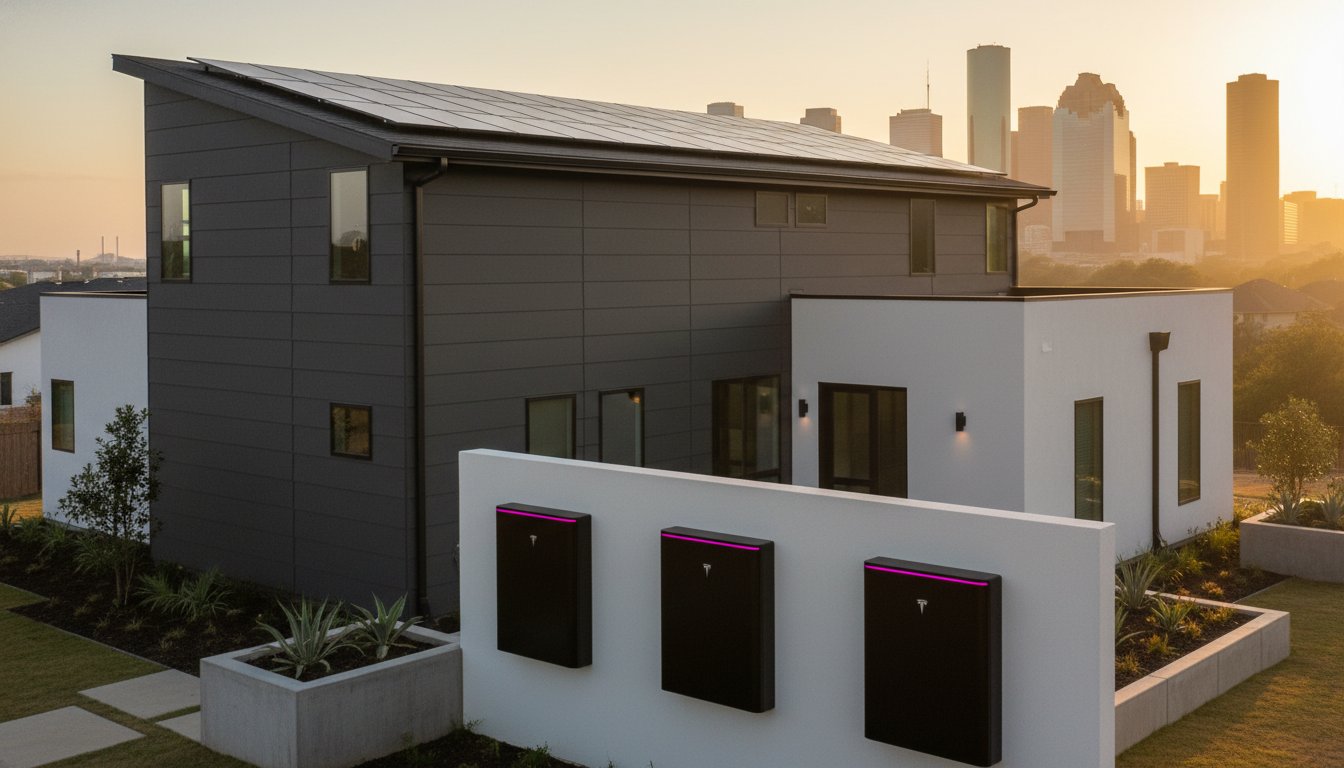
What if the most sophisticated way to manage your property’s power in 2026 is to treat the Texas grid as a secondary failsafe rather than a primary source? As Houston residential electricity rates reach an average of 14.90¢ per kWh, the frustration of paying more for less stability is a reality for many property owners. You’ve likely felt the tension of watching ERCOT North Hub wholesale prices fluctuate while wondering if your facility will stay online during the next weather event. Achieving true energy independence from ERCOT is no longer a theoretical concept or a legal gray area; it’s a strategic necessity for those who value total power reliability and operational continuity.
We understand the demand for a system that functions without compromise, even when the central grid fails. This guide provides the technical clarity you need to transform your property into a resilient microgrid that remains fully operational regardless of external conditions. You’ll learn the specific steps to implement industrial-grade backup systems, including advanced battery storage architectures and the essential PE-stamped engineering designs required for Houston code compliance. We’ll examine how meticulous planning and integrated battery storage can provide a seamless transition to self-sufficiency.
Key Takeaways
- Understand why the Texas grid’s isolated status necessitates a shift toward localized power generation for guaranteed operational continuity.
- Discover how advanced battery architecture allows you to achieve energy independence from ERCOT while maintaining a seamless connection to modern electrical standards.
- Compare the strategic advantages of industrial-grade microgrids over traditional backup generators for managing multi-day blackouts.
- Identify the specific PE-stamped engineering requirements necessary to secure permits and ensure structural integrity for Houston installations.
- Explore the benefits of a single-source solution that integrates engineering, procurement, and industrial electrical construction into a unified roadmap.
The ERCOT Landscape: Why Texas Grid Independence is a Top Priority
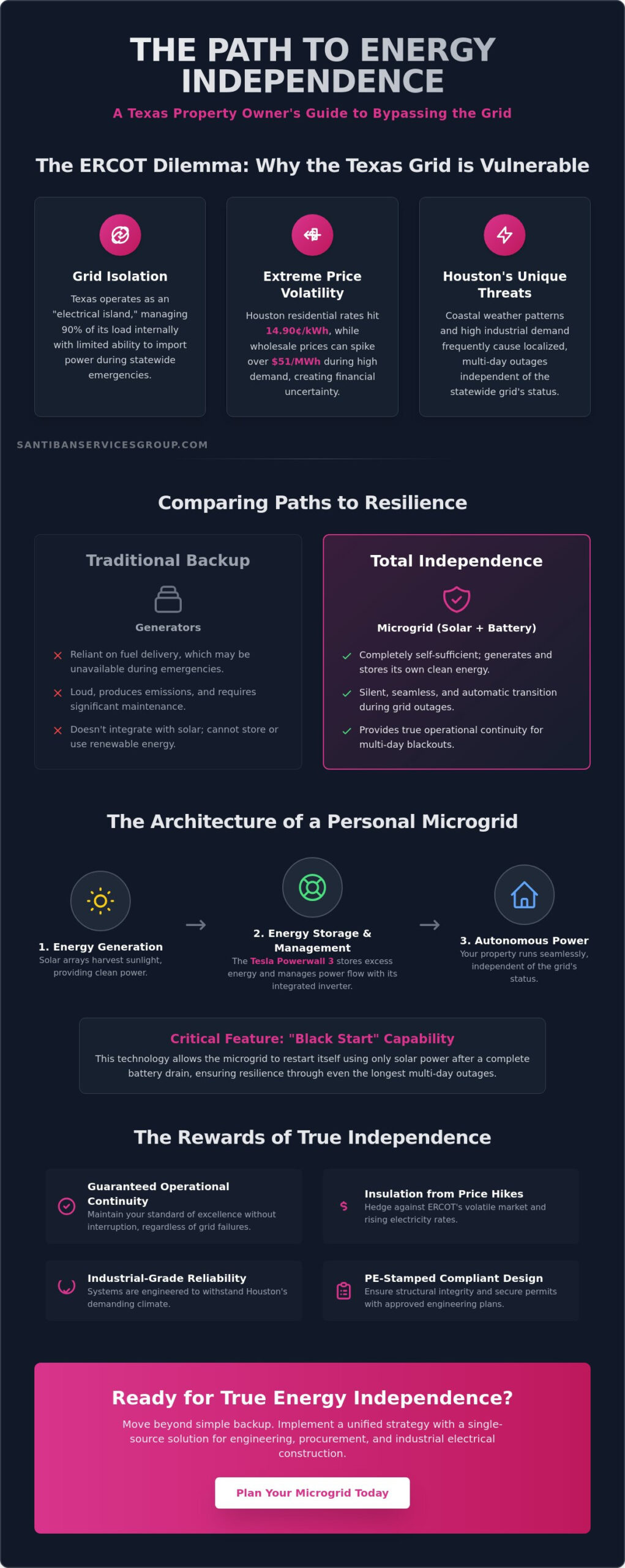
The Electric Reliability Council of Texas (ERCOT) operates as a unique entity within the American energy sector. It functions as an electrical island, managing approximately 90% of the state’s power load without significant links to the Eastern or Western Interconnections. This structural isolation limits the ability to import power during statewide emergencies, placing the full burden of reliability on local generation assets. As residential electricity rates in Houston reach an average of 14.90¢ per kWh in 2026, property owners increasingly view energy independence from ERCOT as a strategic financial and operational priority. The transition from simple emergency backup to total independence represents a move toward comprehensive site resilience. It’s no longer about merely surviving a storm; it’s about maintaining a standard of excellence in every detail of your facility’s operation.
The Vulnerability of an Isolated Grid
The lack of interstate connections means Texas must balance supply and demand in real time using only internal resources. During extreme heat events or severe winter storms, ERCOT’s generation capacity often faces immense strain. When demand surges, the wholesale pricing model can lead to extreme market volatility. The EIA forecasts wholesale electricity prices in the ERCOT North hub to be around $51/MWh in 2026, yet these figures can spike dramatically during periods of scarcity. Localized energy production provides a meticulous hedge against these systemic failures. By establishing a dedicated onsite microgrid, you bypass the inherent risks of a centralized system that cannot rely on neighboring states for support. It’s a proactive approach to facility management that ensures your operations remain seamless regardless of broader grid instability.
Houston’s Specific Reliability Challenges
Houston faces distinct environmental pressures that complicate energy delivery. Coastal weather patterns frequently cause localized infrastructure damage that can lead to multi-day outages even when the statewide grid remains functional. High industrial demand in the Greater Houston area further complicates load management for residential and commercial sectors. Utilizing tesla and solar roof solutions provides a superior first line of defense against these disruptions. These integrated systems allow for autonomous operation, protecting your property from the vulnerabilities of aging transmission lines. Achieving true energy independence from ERCOT requires a transition to these industrial-grade solutions to maintain consistent performance and safety throughout the year. Our dedicated teams ensure that every installation meets the high standards required for long-term reliability in the Texas climate.
The Architecture of Independence: Building Your Personal Microgrid
Passive solar arrays provide environmental benefits but fail to deliver true resilience without an active management layer. Many Houston property owners discovered during previous grid events that standard solar panels without battery storage automatically shut down when the grid fails. This safety feature prevents backfeeding but leaves the property in the dark. Achieving energy independence from ERCOT requires a shift from simple power generation to sophisticated energy orchestration. An integrated microgrid combines solar reroofing with high-capacity battery storage to create an autonomous energy ecosystem. This architecture allows your facility to harvest, store, and distribute power regardless of the state of the broader utility network.
The Tesla Powerwall 3 serves as the technical backbone of this modern resilience strategy. Unlike earlier generations, the Powerwall 3 features an integrated solar inverter that streamlines the conversion process and increases round-trip efficiency. A critical feature of this system is the “Black Start” capability. This technology allows the microgrid to resume power generation even if the batteries are fully depleted and the grid is completely dark. By utilizing a small reserve of energy to “jumpstart” the solar array the next morning, the system ensures that your path to energy independence from ERCOT remains viable during multi-day outages. Integrating these components with a professional solar reroofing project ensures maximum energy harvest efficiency by optimizing panel placement and structural integrity.
Tesla Powerwall 3 Integration
The Powerwall 3 delivers a continuous power output of 11.5 kW, providing the capacity to support heavy loads like HVAC systems and industrial machinery. Its integrated design reduces the physical footprint of the installation while increasing system reliability through fewer points of failure. A certified tesla powerwall installer configures the gateway to execute a sub-cycle transfer that keeps sensitive electronics operational during a sudden grid collapse. This precision ensures that your facility transitions to battery power seamlessly, protecting expensive equipment from voltage sags or surges.
EcoFlow and Modular Backup Solutions
While the Powerwall 3 offers a comprehensive whole-home solution, EcoFlow battery backup systems provide essential modularity for supplemental energy security. These systems allow property owners to scale their energy autonomy by targeting specific critical loads before expanding to total site coverage. Professional installation is mandatory for these high-voltage battery storage units to ensure compliance with local electrical codes and fire safety standards. Consulting with an expert for a PE-stamped engineering design ensures your microgrid architecture meets the rigorous safety standards required for permanent Houston installations.
Comparing Paths to Resilience: Backup vs. Total Independence
Property owners often mistake a standby generator for a complete resilience solution. While a generator provides temporary relief, it remains tethered to external supply chains that frequently collapse during regional emergencies. Achieving energy independence from ERCOT requires a shift toward self-sustaining systems that don’t rely on volatile fuel markets or aging gas infrastructure. The spectrum of resilience ranges from basic critical-load backup to 100% off-grid capability. Most Houstonians find the highest value in a hybrid model: remaining grid-tied to monetize excess energy while maintaining enough onsite storage to operate autonomously for 99% of the year. This approach mitigates the risk of rising utility rates, which currently average 14.90¢ per kWh in the Houston area.
Battery Storage vs. Traditional Generators
Traditional gas or diesel generators present significant operational hurdles during Houston hurricane seasons. Fuel availability often becomes a critical failure point when local stations lose power or supply routes are blocked. Combustion engines require meticulous maintenance schedules and produce noise and emissions that may violate local ordinances or corporate sustainability mandates. In contrast, battery systems like the Tesla Powerwall 3 offer a silent, emissions-free alternative with a superior Total Cost of Ownership (TCO) over a 10-year period. Battery systems provide an instantaneous power transfer, functioning as a whole-home Uninterruptible Power Supply (UPS). This seamless transition protects industrial-grade equipment and sensitive electronics from the sub-cycle voltage drops that occur when a traditional generator attempts to crank and take over the load.
The ROI of Grid Participation
True energy independence from ERCOT doesn’t mean you must sever your connection to the utility entirely. Instead, it allows you to treat the grid as a secondary financial resource. By utilizing tesla electric and similar grid services, property owners can sell stored energy back to the market during peak demand periods when wholesale prices spike. This strategy transforms an emergency backup system into a revenue-generating asset. The clean, battery-inverted power also ensures that your facility receives a consistent pure sine wave, which extends the lifespan of high-end appliances and HVAC systems. This integrated approach combines the reliability of onsite storage with the financial benefits of modern energy markets, ensuring your property remains a stable and efficient environment regardless of external grid conditions.
Engineering Excellence: The Role of PE-Stamped Design
Achieving energy independence from ERCOT involves more than purchasing industrial-grade hardware. It requires a meticulous engineering foundation to ensure the system performs under peak stress. In Houston, local building departments and utility providers mandate Professional Engineer (PE) stamped designs for solar and battery interconnections to guarantee safety. This requirement isn’t merely a bureaucratic hurdle; it’s a vital safeguard for your property’s structural and electrical integrity. A PE stamp signifies that a licensed professional has verified every calculation, from the circuit breaker ratings to the load-bearing capacity of your roof. Without this level of technical oversight, complex microgrid systems risk catastrophic failure during the very weather events they were designed to withstand.
Meticulous load calculation is the cornerstone of a reliable independent power system. We perform exhaustive audits of your facility’s energy consumption to prevent system trips during peak Houston summer demands. When temperatures exceed 100 degrees, HVAC systems draw maximum current, placing immense strain on battery inverters. Our engineering process accounts for these surges, ensuring that your transition to battery power remains seamless and stable. We apply industrial-grade rigor to every project, treating a residential microgrid with the same precision as a commercial facility. This disciplined approach eliminates the guesswork often found in standard retail solar installations.
Technical Compliance and Permitting
Navigating Houston’s specific building codes requires a sophisticated understanding of current energy storage regulations. Utilizing PE stamped engineering for solar systems accelerates the approval process by providing local officials with verified, code-compliant plans. In 2026, an electrical PE stamp typically costs between $150 and $300, while a structural stamp ranges from $200 to $400 for residential projects. These modest investments prevent costly permit denials and insurance complications. Non-engineered installations lack the legal and technical standing required for permanent grid-independent status, leaving property owners vulnerable to code enforcement actions.
Industrial Standards for Residential Projects
We bring commercial electrical construction standards to the residential sector to ensure long-term reliability. This includes superior thermal management in battery rooms and the use of high-gauge wiring to minimize voltage drop across the system. Our dedicated teams focus on the excellence in every detail, from the conduit runs to the final commissioning of the Tesla Powerwall 3 gateway. PE-stamped designs represent the gold standard for grid-independent systems in 2026 because they provide a legally binding guarantee of technical integrity and safety. By integrating professional engineering with expert installation, we provide a single-source solution for those seeking total energy independence from ERCOT. Secure your facility’s future by requesting a comprehensive engineering consultation today.
Implementing Your Strategy with Santiban Services Group
Executing a transition toward energy independence from ERCOT requires a partner with deep technical roots and industrial-grade discipline. Santiban Services Group brings over 24 years of industrial electrical expertise to every residential and commercial project. We function as a single-source solution, managing the entire lifecycle of your energy transition from the initial PE-stamped engineering design to the final system commissioning. This integrated approach eliminates the logistical friction often found when coordinating between separate engineering firms and retail installers. Our dedicated teams prioritize reliability and safety, ensuring that your property’s power infrastructure remains a stable, invisible force that supports your operations without interruption.
The 2026 energy landscape in Texas offers new opportunities for those with onsite storage. Beyond simple resilience, property owners can now leverage their systems within the evolving Virtual Power Plant (VPP) framework. As ERCOT refines its Aggregate Distributed Energy Resource (ADER) protocols, your independent microgrid can serve as a high-performance asset that supports the grid during peak strain while generating a financial return. We customize these systems to withstand Houston’s specific environmental pressures, utilizing meticulous thermal management and weather-hardened components. This level of tailoring ensures your investment delivers consistent performance during the most demanding coastal weather events.
Tailored Energy Solutions
Cookie-cutter solar packages often fail because they don’t account for the unique load profiles of Houston properties or the complexities of the Texas regulatory environment. We deliver excellence in every detail by conducting exhaustive site assessments that inform our custom system architectures. This includes the seamless integration of commercial ev charger installation within your broader energy ecosystem. By aligning your transportation and facility power needs, we create a unified energy profile that maximizes efficiency and reduces your reliance on volatile wholesale markets. Our proactive approach ensures your facility is ready for the increased electricity sales projected for the West South Central region in 2026.
Securing Your Future Energy Resilience
The path to energy independence from ERCOT begins with a commitment to professional-grade standards. As a certified installer for Tesla Energy and EcoFlow, we provide the technical precision required to maintain whole-site autonomy. Our process starts with a comprehensive engineering review to determine the optimal battery chemistry and solar capacity for your specific requirements. This disciplined methodology provides the peace of mind that comes from knowing your power supply is under expert control. We invite you to experience the reliability of a partner that values long-term performance over marketing hype. Contact Santiban Services Group today to schedule a professional site assessment and begin the transition to a truly resilient energy future.
Securing Your Property’s Power Future
Transitioning to a resilient microgrid is a strategic decision that protects your assets from the structural vulnerabilities of an isolated utility network. By integrating Tesla Powerwall 3 technology with a meticulous PE-stamped engineering design, you ensure that every load calculation and structural detail meets rigorous industrial standards. This disciplined approach transforms the concept of energy independence from ERCOT into a functional reality, providing a seamless bridge between modern facility management and total site autonomy.
Santiban Services Group delivers over 24 years of Houston industrial experience to every energy project we undertake. We function as a single-source partner, managing everything from the initial technical drawings to the final commissioning of your battery storage system. Our status as a Tesla Certified Installer guarantees that your facility utilizes the most advanced power architecture available in 2026. This level of technical oversight is essential for maintaining operational continuity during extreme weather events and grid instability.
Take the first step toward comprehensive site resilience by contacting our dedicated teams today. Request a Professional Engineering Review for Your Energy Independence Project to begin building your resilient power profile. Your path to reliable, independent energy is within reach through disciplined planning and expert execution.
Frequently Asked Questions
Is it legal to disconnect from ERCOT completely in Houston?
Yes, it’s legal to disconnect from the electrical grid in Texas. However, Houston municipal codes and occupancy permits often require a property to maintain a primary utility connection. Most property owners achieve energy independence from ERCOT by utilizing a grid-tied microgrid architecture. This allows you to operate autonomously for 99% of the year while keeping the utility as a secondary failsafe or a medium for selling excess power.
How many Tesla Powerwalls do I need for total energy independence?
The quantity of units required depends on your facility’s peak load and the duration of autonomy you desire. For a typical Houston residence with high-efficiency HVAC systems, two to four Tesla Powerwall 3 units are generally necessary to sustain operations during multi-day outages. A meticulous load audit by our engineering team ensures your system is sized to handle the 11.5 kW continuous power output required for heavy industrial-grade equipment.
Can I still use solar panels if the ERCOT grid goes down?
You can only utilize solar power during a grid failure if your system includes an integrated battery and gateway. Standard grid-tied solar arrays automatically disable themselves during outages to prevent hazardous backfeeding into utility lines. Systems like the Tesla Powerwall 3 feature “Black Start” technology. This allows the microgrid to restart and harvest solar energy even after the batteries have been fully depleted during a prolonged blackout.
What is the difference between backup power and a microgrid?
Backup power is a reactive solution that only activates when the primary grid fails. A microgrid is a proactive, integrated system that manages local generation and storage as the primary power source. While a backup generator might keep lights on, a microgrid provides a seamless, high-fidelity power environment. This architecture allows for 24/7 self-sufficiency and the ability to operate independently regardless of external grid stability.
Do I need a PE-stamped drawing for a residential battery installation?
Yes, many Texas jurisdictions, including Houston, require a Professional Engineer (PE) stamped design for solar and microgrid projects. This ensures that the installation complies with structural and electrical safety codes. As of May 2026, obtaining these stamps typically costs between $150 and $400 for residential projects. A PE-stamped design is a critical step for securing permits and maintaining the integrity of your energy independence from ERCOT strategy.
How does the Tesla Powerwall 3 handle Houston’s high humidity and heat?
The Tesla Powerwall 3 is engineered with an advanced liquid thermal management system specifically designed for extreme environments. It maintains an IP67 rating, which provides superior protection against the high humidity and dust common in coastal Texas climates. This active cooling ensures the battery cells operate within an optimal temperature range even when Houston ambient temperatures exceed 100 degrees Fahrenheit during peak summer months.
Can I participate in ERCOT grid services if I have a self-sufficient system?
You can absolutely participate in grid services like Virtual Power Plants (VPP) while maintaining a self-sufficient profile. Programs such as the ERCOT ADER pilot allow property owners to sell stored energy during high-demand events. This creates a revenue stream without compromising your onsite resilience. By using smart orchestration, your system only exports energy that isn’t required for your immediate operational needs or emergency reserves.
What happens to my energy independence strategy if ERCOT changes its regulations?
Your physical hardware and onsite generation remain under your direct control regardless of regulatory shifts at the state level. While ERCOT may adjust wholesale pricing or interconnection fees, having an independent microgrid provides a hedge against these changes. Since you generate and store your own power, you’re insulated from the rising delivery costs and market volatility that affect standard utility customers in the Houston area.