
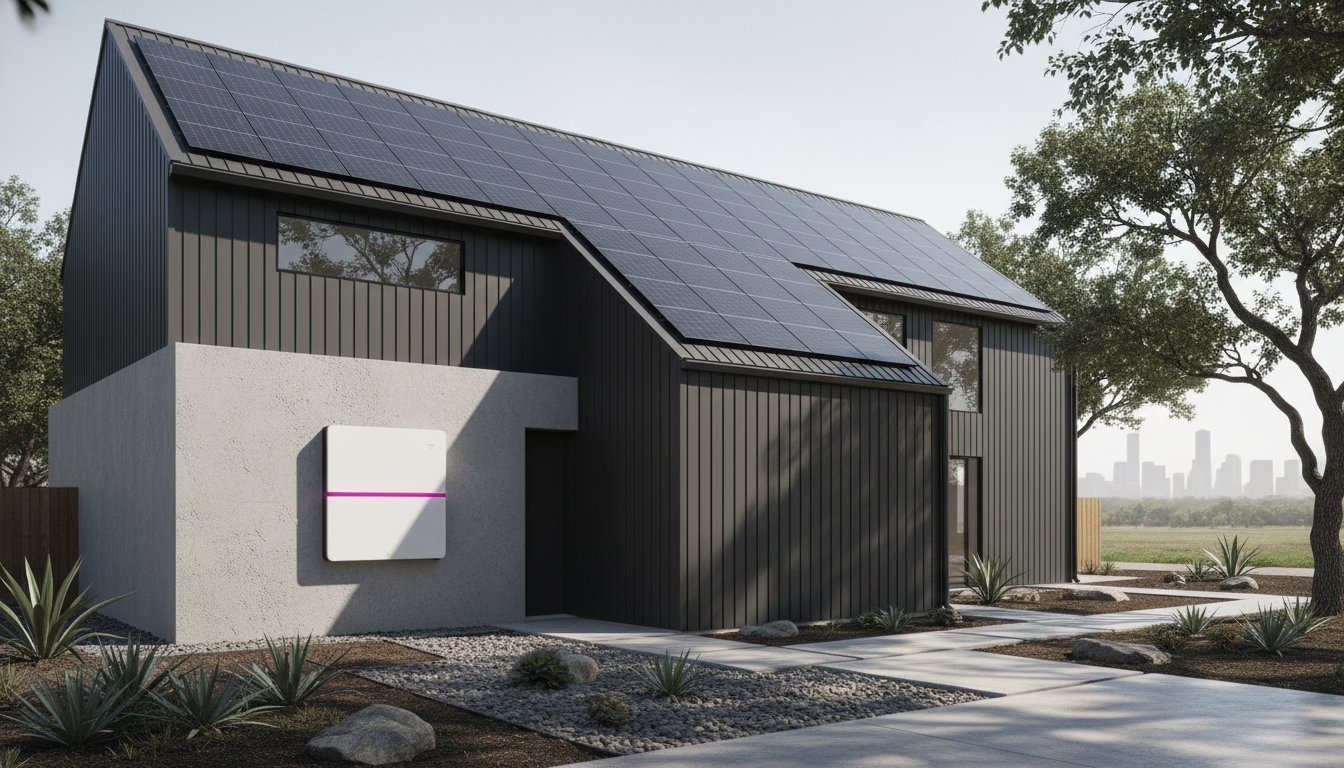
A solar array in the Houston corridor is not merely a hardware purchase; it is a critical infrastructure project that must withstand 150 mph wind loads and manage a complex deregulated utility landscape. Avoiding solar installation mistakes Houston requires a shift from retail-level thinking to a disciplined engineering approach. Since the 30% residential federal tax credit expired on December 31, 2025, the margin for error has narrowed. Precision in design is now the primary driver of your long-term ROI.
You likely understand that the Gulf Coast environment is unforgiving. It’s natural to worry about system failure during a hurricane or the technical hurdles of CenterPoint Energy interconnection. This guide provides the professional validation you need to secure your investment and ensure your home remains powered when the grid fails. We’ll outline how to achieve true off-grid resilience through PE-stamped engineering and strategic battery integration. You’ll learn the technical requirements for streamlined permitting and how to leverage the $135 per kilowatt CenterPoint rebate to optimize your system’s performance in 2026.
Key Takeaways
- Secure your investment by utilizing PE-stamped engineering designs capable of withstanding 150MPH wind loads and salt-air corrosion.
- Identify the most common pitfalls when avoiding solar installation mistakes Houston by prioritizing local climatic resilience over low-cost national hardware packages.
- Maximize off-grid performance with high-capacity battery solutions like the Tesla Powerwall 3 to support critical loads during multi-day storm outages.
- Coordinate solar deployment with professional reroofing assessments to eliminate the secondary labor costs of panel removal and reinstallation.
- Adopt an engineering-first framework that applies industrial electrical standards to ensure the precision and stability of your home energy system.
The Houston Solar Landscape: Why Generic Installation Advice Fails
Generic solar advice often assumes a temperate climate and a standardized utility framework. In Southeast Texas, these assumptions lead to accelerated system degradation and regulatory rejection. Avoiding solar installation mistakes Houston requires a fundamental understanding that our environment is a technical outlier. High-volume national installers often prioritize rapid deployment over the specific structural demands of the Gulf Coast. This ‘Solar Cowboy’ approach frequently results in systems that meet basic electrical requirements but fail to address long-term environmental resilience.
True resilience in Houston means designing for more than just sun exposure. It involves selecting hardware and installation methods that account for salt-air corrosion and extreme wind gusts. Professional engineering ensures that every component, from the racking to the wiring, is rated for our specific industrial-grade challenges. Standardized kits rarely suffice when the goal is a 25-year operational lifespan in a hurricane-prone region.
Climatic Stressors Unique to Southeast Texas
The Houston sun creates extreme thermal loads. When temperatures exceed 100 degrees, standard inverters often experience significant efficiency drops as they struggle to dissipate heat. This constant thermal stress shortens the lifespan of sensitive power electronics. High humidity levels pose a constant threat to electrical integrity. If conduit runs and junction boxes aren’t sealed with industrial precision, moisture ingress leads to internal corrosion and premature component failure.
Rapid temperature fluctuations also contribute to thermal expansion. This movement can cause micro-cracks in solar cells if the Photovoltaic Mounting Systems aren’t engineered to allow for structural breathing. A system that works in Arizona will likely fail in the moisture-heavy, heat-cycling environment of Houston. Precision sealing and thermal management are not optional upgrades; they’re foundational requirements.
The Regulatory Maze: CenterPoint and Harris County
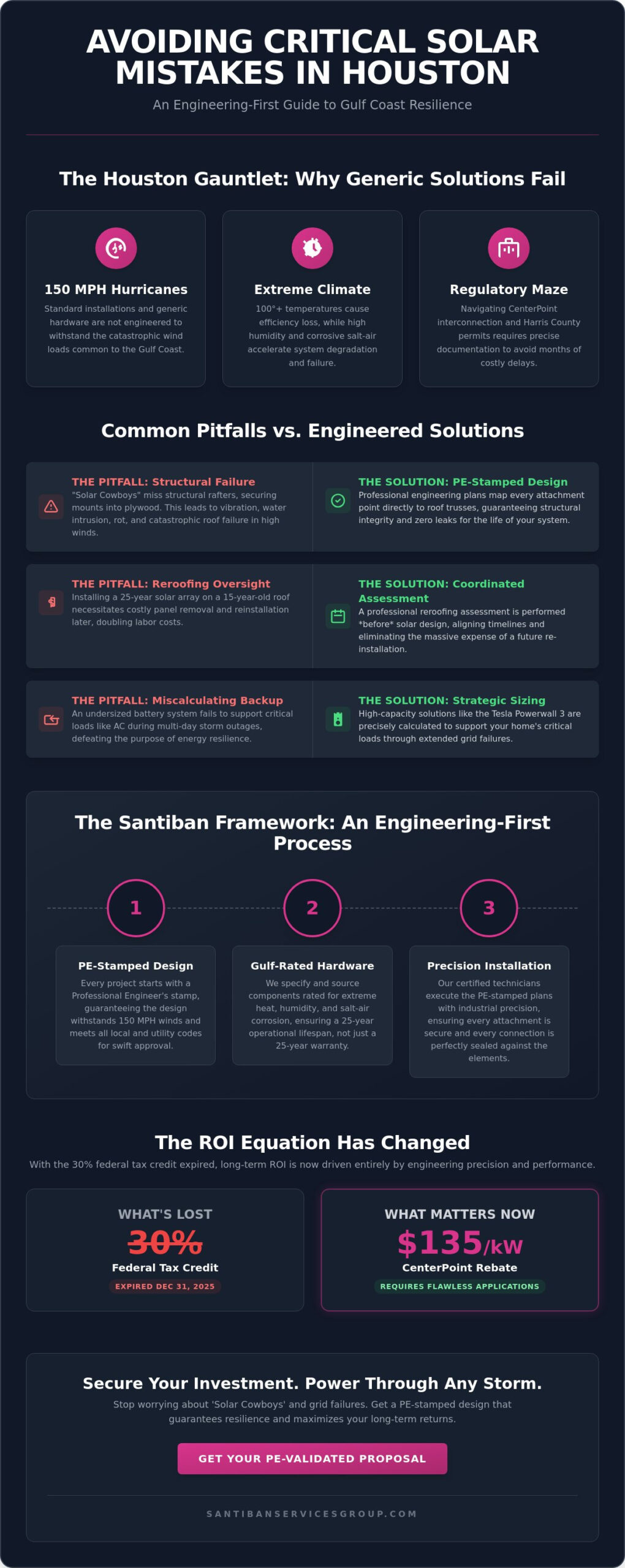
Interconnection with CenterPoint Energy is a precise administrative and technical process. In 2026, CenterPoint handles approvals for grid connection, a process that typically requires two to four weeks for formal application review. Applications are frequently rejected due to inaccurate single-line diagrams or failure to meet the specific technical requirements for the $135 per kilowatt residential rebate. These administrative errors can stall a project for months.
Navigating Harris County building permits requires a proactive approach to structural safety. While Texas state law provides ‘Solar Rights’ that prevent HOAs from banning panels, these rights don’t exempt homeowners from local safety codes. Professional engineering validation ensures that your project meets municipal standards, avoiding the delays and fines associated with non-compliant installations. Successful deployment depends on aligning your engineering design with both utility standards and local governing bodies.
Structural and Engineering Pitfalls: Beyond the Solar Panels
A solar array is a substantial structural modification to your property’s primary envelope. It adds significant static weight and, more importantly, alters the aerodynamic profile of your roof. Avoiding solar installation mistakes Houston requires moving beyond simple panel placement to a rigorous structural analysis. Many national providers rely on automated software that may overlook the specific truss spacing or rafter integrity of older Gulf Coast homes. For a reliable overview of the process, the U.S. Department of Energy provides a Homeowner’s Guide to Going Solar that highlights the necessity of professional assessments.
Structural attachment errors represent the most common cause of catastrophic roof failure following a solar deployment. If mounting brackets aren’t secured directly into the center of the structural members, the system’s integrity is compromised. Over time, the vibration from persistent coastal winds can loosen these “missed” attachments, leading to water intrusion and structural rot. Precision in these initial connections is what separates a long-term asset from a future liability.
The Value of PE-Stamped Engineering Design
In Houston’s complex regulatory environment, a Professional Engineer (PE) provides the highest level of project validation. A PE validates that the proposed system won’t exceed the dead-load capacity of your roof and that the electrical infrastructure can safely handle the new current. Utilizing PE-stamped engineering for solar systems significantly accelerates the permitting process with the Houston Permitting Center. Unlike a standard plan set, an engineered structural analysis provides a customized blueprint that accounts for every specific variable of your property, from the pitch of the roof to the age of the main electrical panel.
Wind Load and Racking Integrity
Houston is situated in a high-wind zone where systems must be designed to withstand 150MPH+ gusts. Adhering to ASCE 7-22 standards for solar mounting is non-negotiable for system survival during hurricane season. Standard “shared rail” systems often fail to provide the necessary rigidity for these extreme conditions. Without proper engineering, solar panels can act as a wing, creating a “lift-off” risk that can tear the array and the underlying roof structure away from the building. Proper spacing and industrial-grade racking hardware are essential components of a storm-resilient installation. Ensuring your project undergoes professional engineering validation before the first bracket is installed is the most effective way to mitigate these high-stakes risks.
Finally, the mismatch between solar output and existing electrical infrastructure is a frequent oversight. If your home’s main panel isn’t rated for the additional backfeed from a large solar array, you risk thermal damage or persistent breaker trips. A thorough engineering review identifies these bottlenecks early, allowing for necessary upgrades like a main lug conversion or a total panel replacement before the interconnection phase begins. Avoiding solar installation mistakes Houston means treating the project as a comprehensive electrical and structural upgrade rather than a simple appliance installation.
Energy Storage Mistakes: Miscalculating Backup for Houston Storms
Many homeowners assume solar panels function independently during a grid failure. Without an integrated battery system, your solar array will automatically shut down during a CenterPoint outage to prevent backfeeding power into lines that utility technicians may be repairing. This safety protocol is a common source of frustration for those who didn’t plan for storage. Avoiding solar installation mistakes Houston involves recognizing that true energy independence requires a sophisticated storage strategy capable of sustaining high-draw appliances in 100-degree humidity. A system without storage is effectively a grid-tied appliance that fails exactly when you need it most.
Under-sizing the battery is another frequent error. Relying on a ‘critical loads’ panel that only powers lights and a refrigerator is often insufficient during a multi-day outage following a tropical storm. In the Houston climate, climate control is a safety requirement, not a luxury. Additionally, installing batteries in unconditioned garages is a mistake. High ambient temperatures in a Texas summer can significantly accelerate the degradation of lithium-ion cells. Professional engineering dictates that storage systems should be installed in locations that mitigate extreme heat to preserve the long-term health of the cells and ensure the system delivers its rated capacity when called upon.
Tesla Powerwall 3 vs. Legacy Systems
The Tesla Powerwall 3 represents a significant shift in storage technology. Its 11.5 kW continuous power output allows it to handle the high inrush current required by modern HVAC systems. Securing a certified Tesla Powerwall installation ensures that your system is configured for maximum efficiency and full warranty protection. Its LFP (Lithium Iron Phosphate) chemistry offers superior thermal stability compared to legacy nickel-manganese-cobalt batteries. This integrated approach simplifies the installation process and provides a more robust solution for the extreme cycles required during Texas grid instability.
Whole-Home Backup Strategy
Supporting a 5-ton AC unit during a July outage requires more than just energy; it requires peak power. A single legacy battery often lacks the surge capacity to start a large compressor, leading to system trips. A professional backup strategy involves calculating these surge requirements and implementing load-shedding protocols. This ensures your most vital systems remain operational without exhausting your reserves. By integrating Tesla Electric, homeowners can manage their stored energy more effectively. This allows for participation in grid-balancing programs while maintaining a secure reserve for storm resilience. Precision in these calculations is the difference between a dark house and a functional home during an extended recovery period.
The Reroofing Oversight: Installing Solar on an Aging Surface
Deploying a 25-year solar array on a roof with only a decade of remaining service life is a recurring strategic error. In the Houston region, the specialized labor required to decommission, store, and reinstall a solar system for a roof replacement can cost $3,000 or more. This hidden cost significantly extends your payback period and complicates your insurance claims. Avoiding solar installation mistakes Houston requires a disciplined evaluation of your roof’s current condition before any hardware is secured to the structure. If the roof fails before the solar system reaches its midpoint, the financial logic of the investment doesn’t hold.
Flashing and penetration errors remain the leading causes of post-installation leaks in Southeast Texas. When installers prioritize speed over precision, they often fail to properly integrate the mounting hardware with the existing shingle layers. This neglect allows moisture to bypass the primary barrier, leading to structural rot that remains hidden until a major storm event. A professional approach treats every roof penetration as a high-stakes engineering detail. We use industrial-grade sealants and triple-layered flashing to maintain the envelope’s integrity. Precision is mandatory.
Assessing Roof Health for Solar Readiness
A thorough pre-installation inspection must look for granule loss and shingle brittleness, which are common symptoms of Houston’s extreme UV exposure. Structural decking must also be verified. Standard residential roofs are designed for specific loads, and adding 3-5 lbs per square foot of solar equipment requires confirmation that the wood is free from previous water damage or warping. For homeowners seeking a more integrated aesthetic, Tesla and solar roof solutions provide a unified system that replaces traditional shingles entirely, offering superior durability and a seamless architectural profile.
Unified Solar Reroofing Services
Choosing a provider that offers integrated Solar Reroofing eliminates the finger-pointing that often occurs when a roofing contractor and a solar installer blame each other for a leak. A unified warranty covers both the energy system and the roof substrate, providing a single point of accountability. This approach also allows for the selection of high-reflectivity Cool Roof shingles. These specialized materials reduce the heat load on your attic, which lowers your cooling costs and improves the efficiency of your solar inverters. Coordinating these services is a critical step in avoiding solar installation mistakes Houston. To protect your home’s structural future, schedule a comprehensive Solar Reroofing evaluation today.
The Santiban Framework: An Engineering-First Approach to Solar
The Santiban Framework is the culmination of 24 years of experience in complex electrical construction. It treats residential energy as a mission-critical utility rather than a simple retail product. Avoiding solar installation mistakes Houston requires this level of systemic rigor. Our approach replaces the traditional sales-first model with a disciplined engineering methodology. This ensures every system we deploy is verified for long-term performance in the unforgiving Gulf Coast environment. We prioritize technical precision over marketing speed, ensuring that your energy infrastructure is built to last.
Final system handoff is not the end of our involvement. A professional installation includes comprehensive system monitoring and a clear long-term maintenance plan. Without proactive oversight, small issues like inverter communication errors or slight shading changes can go unnoticed, eroding your ROI over time. We provide the technical validation necessary to ensure your panels and batteries perform at their rated capacity for decades. Precision isn’t just an installation goal; it’s an operational standard.
Industrial Standards for Residential Reliability
We apply industrial-grade electrical standards to every residential project. This means we don’t utilize general laborers for technical tasks. Our specialized personnel are deeply trained in NEC 2023 code compliance and rigorous industrial safety protocols. Treating a home installation like a commercial infrastructure project ensures that every connection is torqued to specification and every conduit is sealed against persistent Houston humidity. This disciplined focus on detail minimizes the risk of thermal events and electrical failure over the system’s 25-year lifespan. It’s a commitment to corporate-level stability for the private homeowner.
Your Path to Energy Independence in Houston
The Santiban process is methodical and designed to eliminate the ambiguity often found in the solar industry. We begin with a PE-stamped engineering design that validates your roof’s structural capacity and your home’s electrical readiness. This blueprint serves as the definitive guide for our installation teams and provides the technical documentation required by the Houston Permitting Center. We manage the entire project lifecycle, including the administrative hurdles of CenterPoint interconnection and rebate processing.
For business owners or property managers looking to expand their infrastructure, we provide the expertise to integrate commercial EV charger installation into a broader solar and storage plan. This creates a unified energy ecosystem that maximizes your ROI across multiple specialized sectors. Once the system is operational, our focus shifts to long-term monitoring and proactive maintenance. We provide the technical oversight necessary to ensure your investment continues to deliver peak power during Houston’s most demanding weather events. Precision is the foundation of reliability. To ensure your system is built to the highest engineering standards, schedule your professional engineering assessment with Santiban today.
Securing Your Energy Future with Engineering Precision
Success in the Texas energy market requires moving beyond standard retail hardware to a sophisticated engineering model. You’ve learned that climate resilience, precise battery sizing, and structural validation are the pillars of a long-term investment. Avoiding solar installation mistakes Houston depends on prioritizing industrial-grade standards that can withstand 150 mph wind loads and extreme thermal stress. A system designed with these rigorous parameters ensures your property remains operational when the local grid fails.
Santiban Services Group brings over 24 years of industrial electrical experience to every residential project. As a Tesla Certified Installer, we provide PE-stamped engineering designs that eliminate technical ambiguity and streamline the permitting process. Our disciplined approach guarantees that your solar and storage infrastructure is built for consistent performance and long-term reliability. We invite you to Secure Your Houston Home with an Engineered Solar Solution from Santiban. Investing in a resilient energy future provides the stability and peace of mind your household deserves.
Frequently Asked Questions
Do I really need a PE-stamped drawing for a residential solar installation in Houston?
A Professional Engineer (PE) stamped design is essential for validating that your home’s structure can support the dead load and wind uplift of a solar array. While some jurisdictions have simplified paths, Houston’s complex wind zones and CenterPoint’s technical requirements make an engineered blueprint a standard requirement for ensuring safety and compliance. This document provides the legal and technical assurance that your system adheres to the highest industrial standards.
Will CenterPoint Energy let me install solar if my roof faces east or west?
CenterPoint Energy allows solar interconnection regardless of roof orientation, provided the system meets all safety and technical standards. While south-facing roofs typically offer the highest annual yield, east and west orientations are highly effective for capturing morning and late afternoon sun. A professional engineering analysis will determine the specific production estimates for your property to ensure the system meets your energy goals.
How much does it cost to remove solar panels if I need to replace my roof later?
Removing and reinstalling a solar array for a roof replacement is a significant technical undertaking. Industry professionals in the Houston area report that this service typically costs $3,000 or more, depending on the system size and complexity. This is why evaluating your roof’s health is a critical step in avoiding solar installation mistakes Houston; performing a Solar Reroofing project upfront eliminates this future expense.
Can a Tesla Powerwall 3 run my entire Houston home, including the AC?
The Tesla Powerwall 3 is designed with an 11.5 kW continuous power output, which is sufficient to start and run large residential HVAC units. Unlike legacy systems that often require multiple batteries to handle the surge current of a 5-ton air conditioner, a single Powerwall 3 can often support these high-draw loads. A comprehensive load analysis during the engineering phase will confirm the exact number of units required for your specific home.
What are the specific wind speed requirements for solar racking in Harris County?
Harris County and the City of Houston require solar mounting systems to meet ASCE 7-22 standards for wind loads. In our coastal region, this involves designing for wind speeds of 150MPH or higher to ensure the array remains secured during tropical storms and hurricanes. Professional engineering validation ensures that your racking and attachments are rated for these specific local environmental pressures.
How long does the permitting process take for solar in Houston in 2026?
The timeline for solar permitting in Houston typically depends on the current volume at the Houston Permitting Center and the utility. In 2026, the CenterPoint Energy interconnection process alone requires approximately two to four weeks for application review and approval. Total project timelines from engineering design to final permission to operate usually range from six to ten weeks, provided all documentation is accurate.
Does solar increase my property taxes in Texas?
Texas state law provides a 100% property tax exemption for the value added to a home by a solar panel system. While the installation may increase the market value of your property, you aren’t taxed on that specific increase under current state regulations. This exemption is a permanent incentive that helps maximize the long-term ROI of your renewable energy investment.
What happens if my solar panels are damaged by hail or a hurricane?
Solar panels are engineered to withstand significant impacts, including hail and high-velocity winds. If damage occurs during a catastrophic event like a hurricane, the system is typically covered under your standard homeowner’s insurance policy. It’s important to notify your insurance provider following the installation to ensure the array is included in your coverage and to maintain records of your PE-stamped engineering designs.