
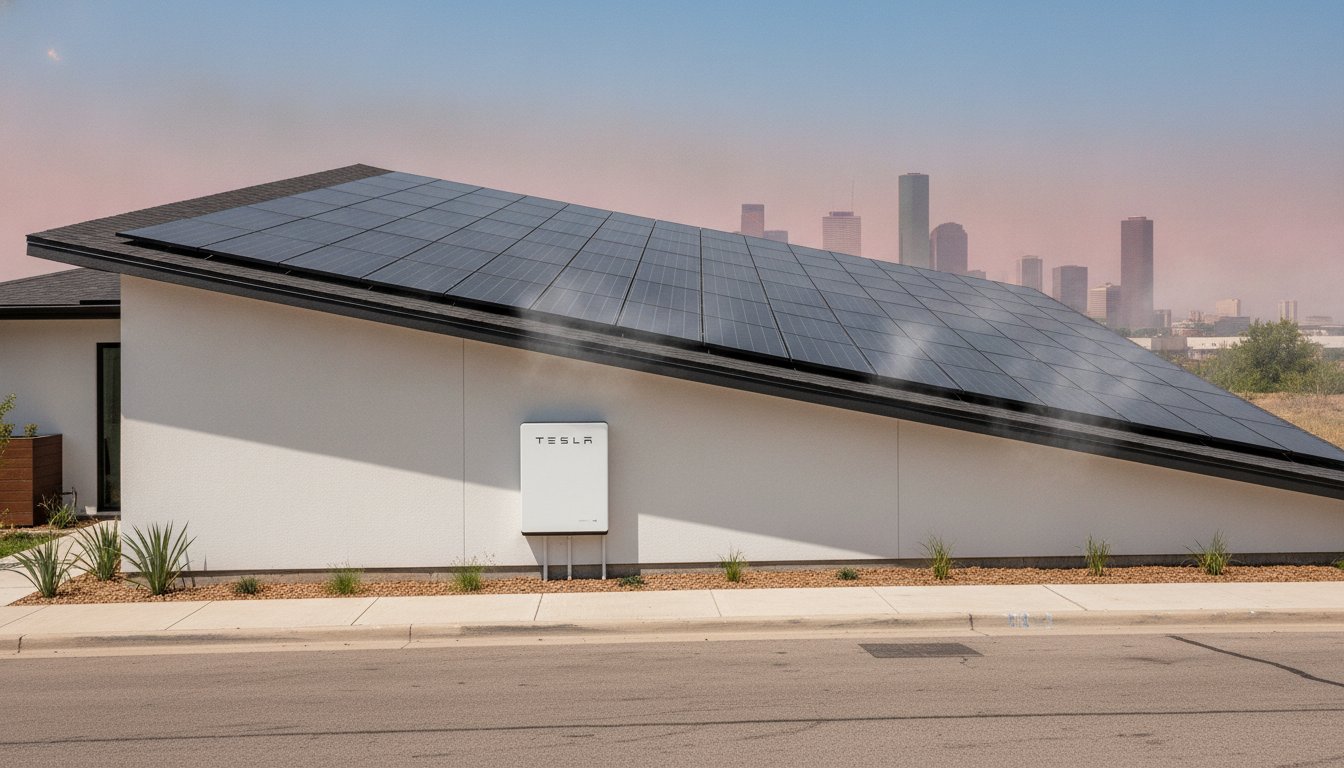
What if the intense sunlight your system relies on is actually the primary factor reducing its efficiency during the most critical months of the year? In the Texas energy market, solar panel performance in Houston summer is often hindered by a “Heat Tax” where extreme temperatures trigger thermal degradation. We understand the frustration of seeing energy production dip exactly when ERCOT demand alerts are at their peak and grid stability is most uncertain. It’s a complex challenge where high humidity and ambient heat intersect to test the limits of even the most robust residential power systems.
This technical guide provides the professional engineering insights required to maintain peak energy production during a Houston summer. You’ll discover how a deep understanding of the “Temperature Coefficient” and precision-engineered ventilation can protect your long-term ROI. We’ll examine the sophisticated strategies used to ensure system longevity against Texas weather extremes, moving beyond basic installation toward a comprehensive approach to energy independence. By the end of this analysis, you’ll have a clear roadmap for managing thermal loads and securing a stable, high-performing energy profile for your property.
Key Takeaways
- Analyze how the Temperature Coefficient impacts solar panel performance in Houston summer by reducing efficiency for every degree above standard testing conditions.
- Evaluate the technical advantages of monocrystalline panels and specific mounting heights in facilitating passive convection for rooftop cooling.
- Understand why Houston’s high humidity necessitates specialized engineering to manage heat index factors that differ significantly from dry climate requirements.
- Discover how integrating advanced storage solutions like the Tesla Powerwall 3 helps manage thermal loads while providing essential independence during ERCOT high-demand periods.
- Learn why PE-stamped engineering design is critical for ensuring your solar infrastructure withstands both extreme thermal stress and Gulf Coast wind loads.
Understanding Solar Panel Performance in Houston Summer
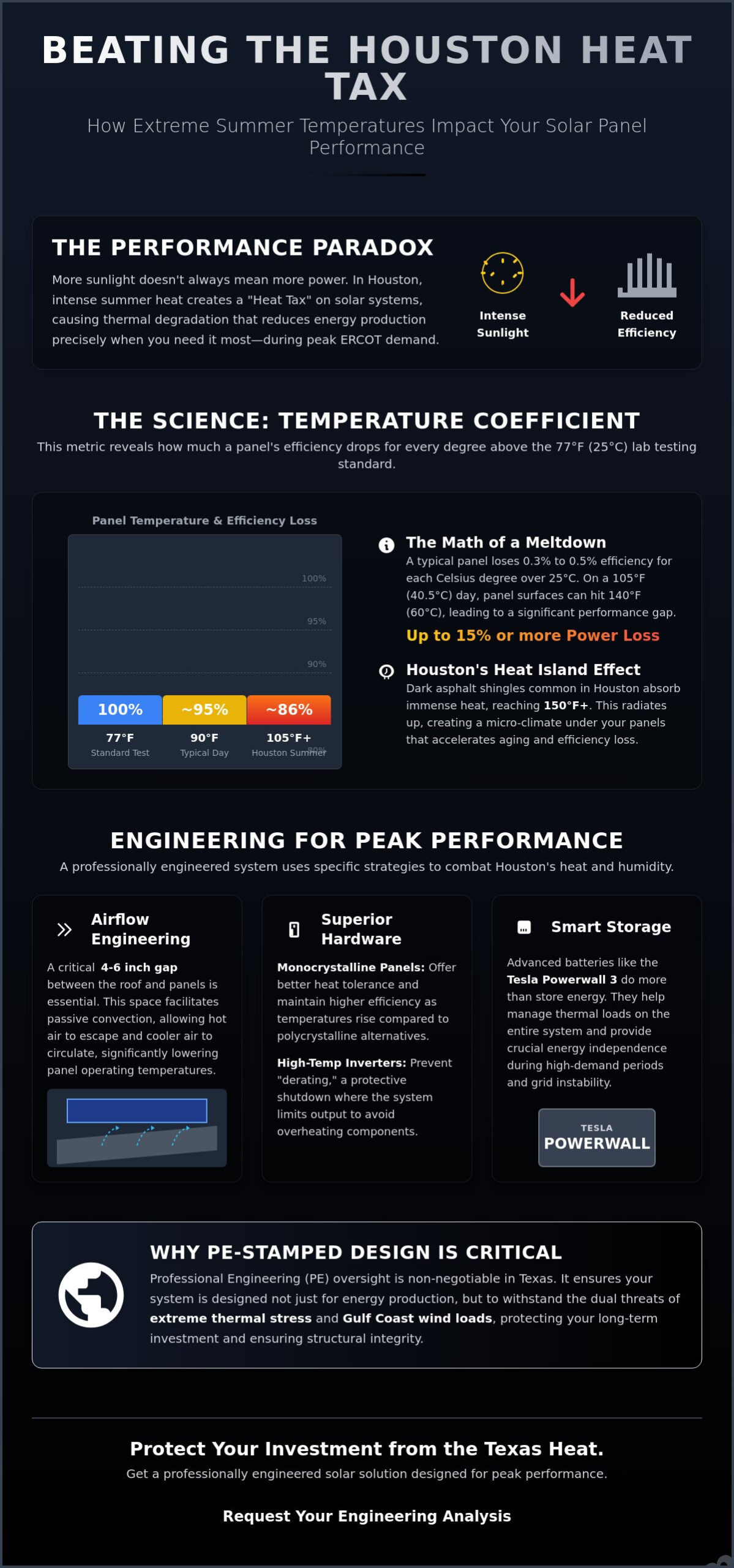
Solar manufacturers rate equipment based on Standard Test Conditions (STC), which assume a controlled laboratory temperature of 77°F (25°C). While these metrics provide a baseline for solar panel efficiency fundamentals, they rarely reflect the operational reality on a Texas rooftop. A common industry misconception suggests that higher ambient temperatures correlate with increased energy production. In reality, photovoltaic cells convert light, not heat, into electricity. Excessive thermal energy actually acts as a resistance factor within the system. This phenomenon, known as thermal degradation, occurs when high-intensity solar environments cause the semiconductor material to become less efficient at moving electrons. Consequently, solar panel performance in Houston summer requires a strategic engineering approach to mitigate the physical toll of extreme heat.
The Temperature Coefficient Explained
The temperature coefficient serves as the primary metric of a panel’s resilience to heat-induced voltage drops. Most modern panels feature a coefficient ranging from 0.3% to 0.5% for every degree Celsius above the 77°F baseline. On a standard 90°F afternoon, a panel might operate at approximately 5% below its rated capacity. However, when a Houston afternoon climbs to 105°F, the cell temperature often exceeds 140°F, leading to a significant performance gap. This results in a measurable reduction in output exactly when energy demand for HVAC systems is highest. Selecting hardware with a lower temperature coefficient is essential for maintaining consistent power delivery in the Gulf Coast region.
Why Houston Rooftops Reach 150°F
Urban and suburban Houston environments often experience the “Heat Island” effect, where concentrated infrastructure traps thermal energy. Asphalt shingles, common in local residential construction, are particularly problematic because they absorb high levels of solar radiation. These materials can easily reach 150°F or higher, radiating that heat directly back into the underside of the solar array. This creates a localized microclimate that accelerates equipment aging and reduces efficiency. To counter this, we often recommend Solar Reroofing as part of a comprehensive installation strategy. Using thermally stable materials and proper ventilation during the reroofing process provides a cooler foundation for the system. This proactive measure ensures that solar panel performance in Houston summer remains within optimal parameters despite the intense external environment.
Key Factors Influencing Summer Efficiency
Maximizing energy production in high-heat environments requires a sophisticated understanding of material science and hardware synergy. Monocrystalline panels remain the preferred choice for Houston installations because they generally offer superior heat tolerance compared to polycrystalline alternatives. These modules maintain higher efficiency levels as cell temperatures climb, which is a critical factor for long-term reliability. Inverter performance also plays a pivotal role in this equation. High ambient temperatures can cause inverters to derate, a protective measure where the system limits power output to prevent internal components from overheating. Ensuring your system utilizes high-efficiency inverters rated for extreme thermal environments is essential for maintaining consistent solar panel performance in Houston summer.
Age is another significant variable that impacts system output. The intense UV radiation and thermal cycling characteristic of the Texas sun can accelerate the degradation of internal circuitry over time. Older systems often experience a more pronounced drop in efficiency during peak sun months than modern, thermally-optimized arrays. By selecting hardware specifically designed for high-intensity solar environments, property owners can mitigate these effects and secure a more stable energy profile. Professional oversight ensures that every component, from the cells to the cabling, is selected for its ability to withstand sustained thermal stress.
Airflow and Ventilation Engineering
Engineering precision dictates that the physical installation method is as important as the hardware itself. Maintaining a 4-6 inch clearance between the roof surface and the solar modules is a critical requirement for Houston properties. This gap facilitates passive convection, allowing cooler air to displace the superheated air trapped beneath the array. Without this essential clearance, “dead air” pockets form. These pockets trap heat and can cause micro-inverters to throttle their output to prevent permanent hardware damage. We utilize specialized mounting hardware to promote consistent cross-ventilation, ensuring that thermal management remains a core component of our PE-stamped engineering design. This proactive approach to airflow prevents the system from reaching critical temperature thresholds that would otherwise compromise performance.
Panel Quality: Standard vs. High-Temperature Ratings
Not all Tier 1 modules are created equal when subjected to sustained 100°F+ days. High-temperature rated modules feature a lower temperature coefficient, which directly impacts the long-term ROI of the installation. While budget-tier alternatives may offer lower upfront costs, their accelerated degradation rates in the Texas sun often lead to higher lifetime expenses. In 2026, technical specifications should prioritize modules with a temperature coefficient below 0.30% per degree Celsius. This metric serves as a reliable indicator of a panel’s resilience. Investing in low-temp-co panels ensures that solar panel performance in Houston summer remains robust, providing the maximum possible energy independence during the most demanding months of the year. A comprehensive comparison framework should always account for these summer degradation rates to accurately forecast total system value.
The Houston Humidity Factor: A Unique Performance Barrier
While temperature is a primary driver of efficiency loss, the high humidity levels characteristic of the Gulf Coast introduce a distinct set of operational challenges. Humidity increases air density, which fundamentally alters the convective cooling process required to dissipate heat from photovoltaic cells. In drier climates, heat escapes the panel surface more readily. In Houston, the moisture-laden air acts as a thermal blanket, forcing equipment to operate at higher internal temperatures for extended periods. This “Heat Index” for solar hardware means that solar panel performance in Houston summer is under constant pressure from both ambient heat and the lack of effective atmospheric cooling.
Morning fog and persistent moisture also impact the physical state of the array. High humidity levels cause airborne pollutants and particulate matter to adhere more aggressively to the glass surface. This leads to faster soiling, which creates a barrier for light refraction and reduces overall photon absorption. We observe that panels in this region require a more rigorous maintenance schedule compared to those in arid environments to prevent significant output drops. Professional cleaning is not merely an aesthetic choice; it’s a technical necessity to maintain the precision of the system’s execution.
Humidity and Evaporative Cooling Limits
Houston panels stay hotter longer than systems located in West Texas due to the limited capacity for evaporative cooling. When the air is already saturated with moisture, the natural temperature exchange between the panel and the environment slows down. For properties situated closer to the coast, this moisture often carries salt content, which increases the risk of galvanic corrosion on mounting hardware and electrical connections. Our engineering designs prioritize corrosion-resistant materials and sealed electrical components to ensure long-term stability against these coastal weather extremes. High standards in material selection are non-negotiable for maintaining energy independence in this specific climate.
Managing Sudden Summer Storms and Cloud Cover
The rapid transition from intense sunlight to afternoon thunderstorms creates volatile production environments. Houston residents often notice production spikes during these transitions, a phenomenon known as the “Edge of Cloud” effect. This occurs when sunlight reflects off the edges of cumulus clouds, momentarily increasing the irradiance hitting the panels beyond standard levels. Modern inverters must be capable of handling these rapid fluctuations without tripping or entering a standby state. Utilizing storm-ready hardware, such as Tesla and Solar Roof solutions in Houston, ensures that the system remains resilient during the volatile weather patterns typical of a Gulf Coast summer. Precision-tuned power electronics are essential for managing these sudden shifts in solar panel performance in Houston summer, protecting the internal circuitry from voltage surges while maximizing every available minute of sunlight.
Optimizing Output: Batteries and Smart Energy Management
Integrating advanced storage solutions is the most effective way to mitigate the thermal efficiency losses discussed in previous sections. While high temperatures inevitably impact solar panel performance in Houston summer, a battery system allows you to decouple energy production from real-time consumption. This strategic separation ensures that your property remains powered by clean energy even when panel output dips due to thermal degradation during the hottest hours of the day. High-demand alerts from ERCOT often coincide with these peak temperature windows, making on-site storage a critical component of both grid resilience and financial stability. By capturing energy during the cooler morning hours, you can maintain maximum independence when the heat index is at its highest.
Real-time monitoring is equally essential for identifying thermal underperformance before it impacts your monthly utility costs. Modern management software provides granular data on how heat affects individual strings within an array. This allows for proactive adjustments to your energy profile. When you can see exactly how ambient heat correlates with production dips, you can make informed decisions about load management and system health. This level of oversight transforms a passive solar array into a dynamic power plant capable of navigating the complexities of the Texas energy market.
Tesla Powerwall 3: Thermal Management and Efficiency
The Tesla Powerwall 3 represents a significant advancement in thermal management technology for the Gulf Coast region. Unlike many residential batteries that rely on passive cooling, this unit features an active liquid cooling system engineered to thrive in sustained 100°F+ environments. This system prevents thermal throttling, ensuring the battery can charge and discharge at full capacity without internal hardware degradation. As a certified Tesla Powerwall installer in Houston, we ensure these systems are commissioned to handle the specific cooling requirements of our local climate. The integrated inverter within the Powerwall 3 further streamlines the energy conversion process, reducing the heat-related losses typically found in older, multi-component solar configurations.
Strategic Load Shifting for Houston Summers
Load shifting is a sophisticated energy management strategy that prioritizes the use of stored solar power during peak demand windows. In Houston, electricity rates and grid strain often surge during late afternoon hours when residential air conditioning loads are at their maximum. By utilizing a “Self-Consumption” mode, property owners can avoid high demand charges and maintain a stable power supply. Effective management of a solar-plus-storage system includes several key operational steps:
- Pre-cooling the property during early morning hours when panels operate at peak efficiency.
- Scheduling high-draw industrial or domestic appliances for mid-morning production peaks.
- Utilizing stored battery power from 3:00 PM to 8:00 PM to offset peak grid pricing.
- Monitoring real-time thermal data to identify when panels are entering high-heat protection modes.
This disciplined approach to energy usage maximizes the ROI of your infrastructure by ensuring you aren’t reliant on the grid when prices are at their peak. For a system tailored to your specific operational needs, consult with our engineering team for a customized energy storage solution.
Why Professional Engineering is Essential for Texas Solar
Achieving optimal solar panel performance in Houston summer requires more than high-quality hardware; it demands a foundation of rigorous engineering. While consumer-grade discussions often focus exclusively on panel brands, the structural and electrical architecture of the system determines its long-term viability. Professional engineering ensures that thermal management strategies are integrated into the physical layout of the array. This proactive design phase accounts for localized heat island effects and specific rooftop orientations to minimize efficiency losses. Without this level of technical oversight, systems often suffer from premature hardware fatigue and underperformance during the most critical energy production months of the year.
Specialized Solar Reroofing provides an additional layer of performance security. By evaluating and upgrading the roofing substrate before installation, we create a thermally stable foundation that resists the extreme radiant heat of the Texas sun. This integrated approach prevents the common issue of asphalt shingle degradation underneath solar arrays, which can trap heat and reduce the cooling efficiency of the panels. Our engineering team prioritizes these structural details to ensure that the entire installation functions as a unified, high-performance asset for the property owner.
The Value of PE-Stamped Engineering Design
Texas regulations and local municipal permitting often mandate professional oversight for renewable energy infrastructure. Utilizing PE stamped engineering for solar systems is the only way to verify that an installation can withstand the dual threats of extreme thermal expansion and Gulf Coast wind loads. A PE stamp serves as the ultimate guarantee of technical compliance and system safety, confirming that a licensed professional has calculated every stress point. These calculations are vital for preventing structural failure during hurricane season, where high-velocity winds test the integrity of mounting systems. Precision in the design phase ensures that your investment remains secure regardless of weather volatility.
Santiban’s Approach to Industrial-Grade Solar
Our organization brings over 24 years of experience in complex industrial electrical construction to every residential and commercial project. We operate as a disciplined entity, prioritizing consistent performance and safety over industry trends. By integrating sophisticated solutions from partners like EcoFlow and Tesla, we provide a comprehensive energy security profile that extends beyond basic power generation. This industrial-grade approach ensures that every operational detail is under expert control, from the initial PE-stamped design to the final commissioning of the system.
Maintaining peak solar panel performance in Houston summer is a continuous commitment to precision. We encourage property owners to move beyond standard labor services and partner with an established firm that values long-term stability. If you’re concerned about how heat is impacting your current production levels or are planning a new high-capacity installation, contact Santiban today for a comprehensive thermal performance audit and engineering consultation. Our team is ready to provide the customized results required to secure your energy independence.
Securing Your Energy Independence Through Professional Engineering
Achieving consistent solar panel performance in Houston summer requires a disciplined commitment to thermal engineering and strategic load management. We’ve examined how humidity, extreme heat, and urban heat islands create a complex operational environment for photovoltaic systems. Success is found in precise component selection and PE-stamped engineering designs that account for both thermal degradation and Gulf Coast wind loads. Integrating active cooling storage solutions further ensures that your energy profile remains stable during peak ERCOT demand windows.
Santiban Services Group leverages over 24 years of Texas industrial electrical experience to deliver technical rigor in high-heat environments. Our Tesla-certified installation expertise ensures your system is optimized for maximum efficiency and operational longevity. We invite you to Schedule Your High-Performance Solar Consultation with Santiban Services Group to secure a resilient and reliable energy future. Your property deserves the precision of an established engineering partner dedicated to consistent performance.
Frequently Asked Questions
Do solar panels work better in the summer in Houston?
Solar panels do not perform better in the summer; they actually experience reduced efficiency due to high ambient temperatures. While the increased hours of daylight provide more opportunities for total energy capture, the individual cells are less effective at converting that light into power when they exceed 77°F. Professional engineering focuses on maximizing total yield by managing these thermal losses during peak sun months.
How much efficiency do solar panels lose in 100-degree weather?
Most panels lose approximately 0.3% to 0.5% of their efficiency for every degree Celsius the cell temperature rises above 25°C. In 100-degree weather, rooftop temperatures can easily exceed 140°F, leading to a total efficiency drop between 10% and 20%. Selecting high-quality modules with a low temperature coefficient is the most effective way to preserve solar panel performance in Houston summer.
Is it worth getting solar panels in Houston if my roof gets extremely hot?
Yes, solar remains a highly viable investment in Houston, provided the system is designed to handle extreme thermal loads. Proper mounting techniques and the use of thermally stable roofing materials through solar reroofing prevent the heat tax from negating your ROI. High-performance systems are engineered to thrive in these conditions, ensuring long-term energy independence despite the challenging climate.
Does humidity affect the output of my solar energy system?
Humidity indirectly impacts system output by reducing the effectiveness of convective cooling and increasing the rate of panel soiling. Moisture-laden air holds heat closer to the panels, keeping them at higher operating temperatures for longer durations. Additionally, high humidity causes dust and industrial pollutants to adhere more firmly to the glass, which can obstruct sunlight and reduce photon absorption.
Can I use a Tesla Powerwall 3 to help with summer electricity bills?
The Tesla Powerwall 3 is specifically designed to manage summer electricity costs by shifting your energy load away from expensive peak-demand periods. Its active liquid cooling system ensures it operates at full capacity even when outdoor temperatures are extreme. This allows you to store solar energy during the morning and deploy it during late afternoon ERCOT high-demand windows.
What is a temperature coefficient and why should I care?
A temperature coefficient is a technical specification that quantifies how much power a panel loses for every degree of temperature increase. You should prioritize this metric because it dictates how much energy your system will actually produce during a Texas July or August. Hardware with a lower coefficient ensures more stable power delivery and a better long-term return on your infrastructure investment.
Do I need to clean my solar panels more often during a Houston summer?
We recommend more frequent cleaning during the summer months to combat the buildup of humidity-trapped debris and salt-air particulates. In the Gulf Coast region, a layer of grime can quickly form on the glass, obstructing sunlight and further raising cell temperatures. Regular professional maintenance ensures that your solar panel performance in Houston summer remains at its precision-engineered peak.
How does Santiban ensure my solar panels don’t overheat?
We utilize PE-stamped engineering designs that prioritize passive convection and airflow to prevent hardware from reaching critical temperature thresholds. Our installations maintain a specific clearance from the roof deck to facilitate cooling cross-ventilation. By combining these structural standards with high-temperature rated components, we ensure that every operational detail remains under expert control for consistent performance.