
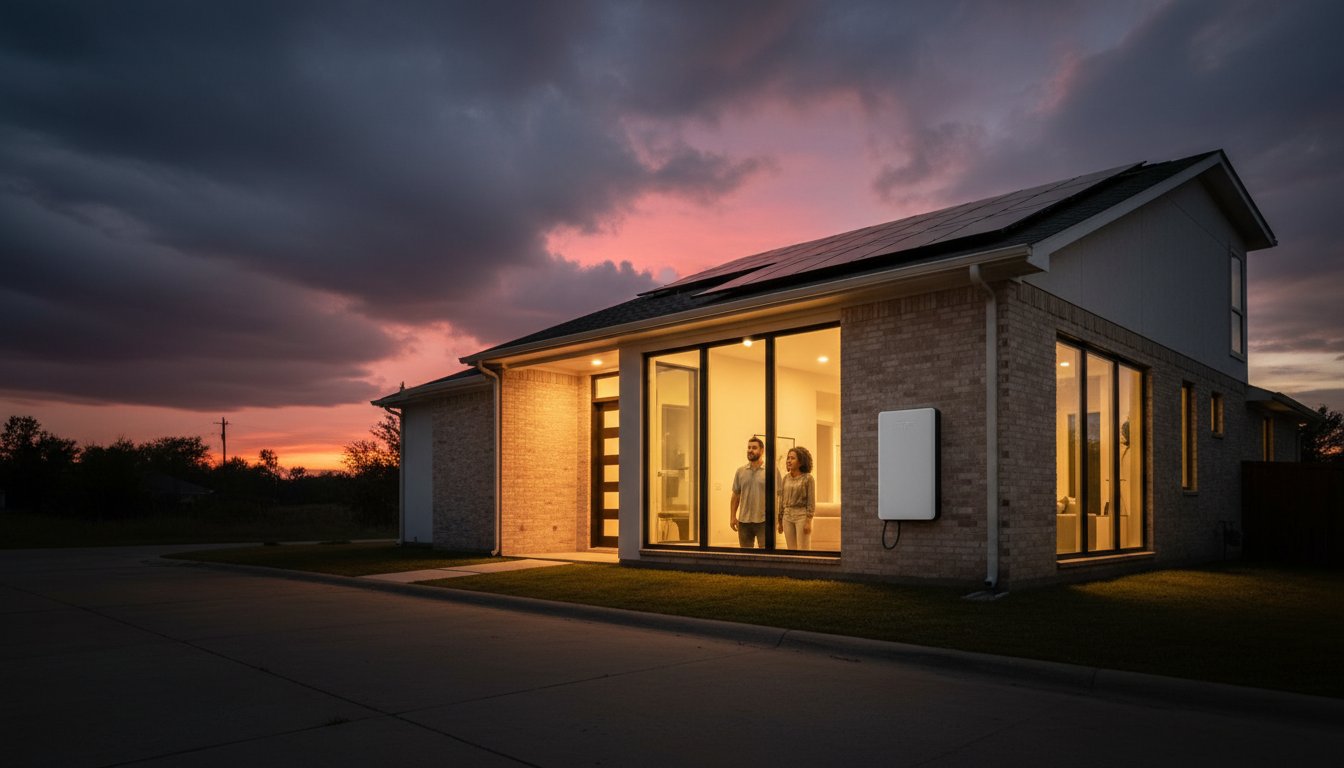
In July 2024, Hurricane Beryl left over 2.2 million CenterPoint customers without power, some for more than 10 days. You understand that the Houston grid is no longer a guaranteed utility but a variable that requires a proactive defense strategy. Reliability is non-negotiable. Integrating tesla batteries for solar provides the stability you need to maintain operational continuity during the next inevitable weather event. Santiban Services Group recognizes that local homeowners seek more than just hardware; they require a resilient, meticulously engineered system that performs when the municipal grid fails.
We’ve developed this professional analysis to guide you through the 2026 deployment of the Tesla Powerwall 3. This report details the specific engineering requirements for PE-stamped installations in Harris County and outlines how to maximize the 30% federal tax credit before potential legislative shifts. You’ll gain a comprehensive understanding of 2026 pricing structures, discharge performance for high-load appliances, and the rigorous permitting process required for a seamless integration. We’re here to provide a single-source solution that transforms your property into a self-sustaining energy hub.
Key Takeaways
- Discover the technical advantages of the Powerwall 3, specifically how its Lithium Iron Phosphate (LFP) chemistry ensures enhanced safety and operational longevity.
- Compare the Powerwall 3 and Powerwall+ to identify which system provides the superior power output required to manage high-surge HVAC loads in the Houston climate.
- Analyze the 2026 financial outlook for tesla batteries for solar, examining current hardware costs and the ROI impact of sunsetting federal incentives.
- Understand the critical importance of PE-stamped engineering and meticulous design standards for maintaining grid resilience during severe weather events.
- Explore Santiban’s comprehensive implementation process, from initial energy load analysis to the delivery of a tailored, single-source energy solution.
What are Tesla Batteries for Solar? Understanding the Powerwall 3
The Powerwall 3 serves as a sophisticated, integrated energy storage solution for modern residential property management. These tesla batteries for solar provide a reliable foundation for home resilience against grid instability. Tesla transitioned to Lithium Iron Phosphate (LFP) chemistry in this latest model to prioritize safety and operational longevity. This chemical composition significantly reduces the risk of thermal runaway and supports a higher cycle life compared to previous nickel-based alternatives. By utilizing Tesla Powerwall technology, homeowners gain a system that handles high-demand loads with precision. The 13.5 kWh capacity is the established benchmark for Houston backup systems. It provides the necessary buffer to maintain critical operations, such as refrigeration and medical equipment, during the unpredictable storm seasons common to the Texas coast.
Core Specifications and 2026 Updates
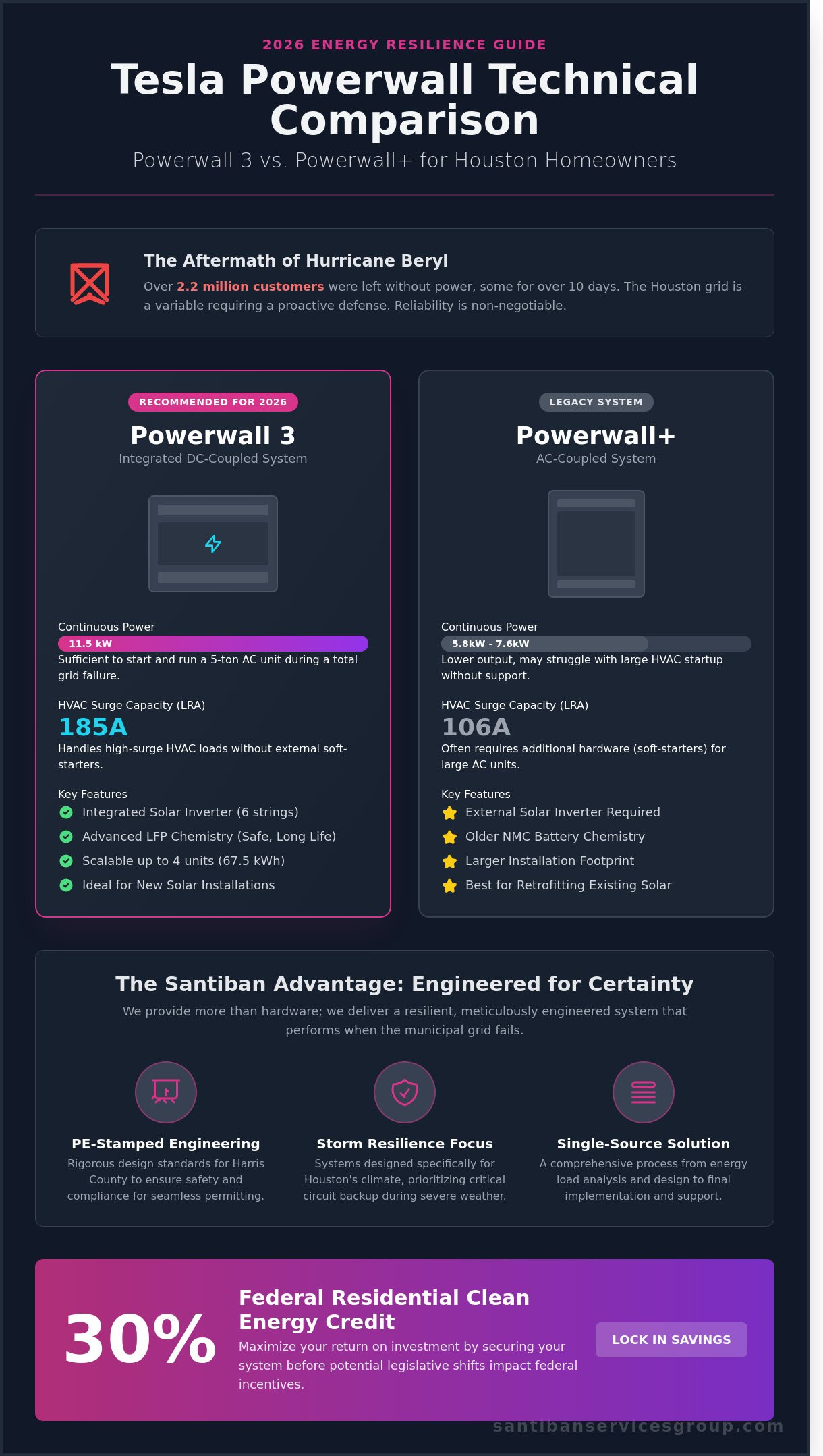
Continuous power output is a primary metric for reliability in the Santiban service standard. The Powerwall 3 delivers 11.5 kW of continuous power. This capacity is sufficient to start and run a 5-ton air conditioning unit during a total grid failure. Performance remains stable across a temperature spectrum of -4°F to 122°F. This thermal range is essential for the intense heat and humidity of the Texas Gulf Coast. For expansive estates, the system offers seamless scalability. Owners can integrate up to four expansion units to reach a total capacity of 67.5 kWh. This modular approach allows for tailored energy solutions that meet specific architectural and consumption requirements. Using tesla batteries for solar ensures that the transition from utility power to backup is instantaneous and invisible to the homeowner.
How the Powerwall 3 Differs from Previous Generations
The Powerwall 3 streamlines the solar ecosystem by including an integrated solar inverter directly within the unit. This architecture eliminates the need for external hardware, which was a requirement in earlier generations. It’s a system built for those who value consistent performance and a clean visual profile. The result is a unified system that maximizes efficiency and reduces the total installation footprint by approximately 30 percent. This compact design facilitates a meticulous, space-saving exterior mount that preserves the aesthetic integrity of the property. The Powerwall 3 is a 13.5kWh LFP battery with an integrated solar inverter designed for high-demand backup.
Technical Comparison: Powerwall 3 vs. Powerwall +
Selecting the appropriate energy storage architecture requires a precise understanding of how tesla batteries for solar interact with existing infrastructure. The Powerwall 3 represents a fundamental shift toward an integrated DC-coupled system, primarily designed for new installations or complete system overhauls. Conversely, the Powerwall + remains a versatile option for retrofitting homes with existing solar arrays, providing a bridge for older technology to meet modern reliability standards. Santiban Services Group ensures every deployment meets rigorous performance benchmarks, maintaining a 90% round-trip efficiency across the system’s lifecycle. We focus on delivering a seamless transition from grid-dependence to self-sufficiency.
Surge Capacity and HVAC Startup
Houston’s climate demands high-performance climate control systems, which often present significant electrical challenges during startup. Locked Rotor Amps (LRA) indicate the current an AC compressor draws when stationary; for a standard 5-ton unit, this often exceeds 150A. The Powerwall 3 excels here, delivering the capacity to start heavy loads without the need for external soft-starters. Our technicians employ a meticulous approach to load-side balancing, ensuring that critical circuits remain prioritized during grid outages. This technical precision allows homeowners to claim the Federal Residential Clean Energy Credit while securing a system that handles 185A LRA surges with professional ease.
Inverter Efficiency and Solar Clipping
Efficiency loss often occurs during DC-to-AC conversion. The Powerwall 3 minimizes these losses through an integrated solar inverter that handles up to six solar strings. This design reduces system complexity and eliminates common failure points found in multi-component setups. Thermal management is equally vital in the Texas heat. Both units utilize advanced liquid cooling, but the Powerwall 3 is engineered to maintain peak performance even when ambient temperatures reach 122 degrees Fahrenheit. By optimizing the DC-to-AC ratio, Santiban prevents solar clipping, which can reduce energy harvest by 10% or more during peak sunlight hours. For those seeking a tailored energy solution, our team provides the engineering expertise required to maximize every kilowatt of harvested power.
- Powerwall 3: 11.5 kW continuous power; integrated 6-string inverter.
- Powerwall +: 7 kW continuous power; ideal for AC-coupled retrofits.
- Installation: Santiban provides comprehensive site assessments to determine the superior configuration for your facility.
Tesla Solar Battery Costs and Houston Incentives in 2026
Financial planning for energy resilience requires a meticulous analysis of current market rates and available subsidies. In 2026, the hardware cost for primary tesla batteries for solar ranges between $15,300 and $16,200 per unit. This investment reflects the industrial-grade engineering required to maintain operational stability during Houston’s frequent grid disturbances. Selecting a reputable partner ensures these costs translate into a seamless, high-performance energy solution tailored to your specific facility requirements. For a comprehensive analysis of the complete system investment including solar panels, you can review our detailed Tesla solar cost breakdown for Houston properties.
Breaking Down the Total Investment
Total project costs involve more than just hardware procurement. Professional installation and complex engineering fees typically represent a significant portion of the initial expenditure. These services include the integration of the Tesla Gateway and necessary electrical panel modifications to ensure safety and compliance. For properties requiring extended multi-day backup, expansion units are available at a fixed cost of $5,900. While the Residential Clean Energy Credit has entered its sunset phase, precise documentation remains critical for capturing all available federal tax relief. Maintenance for these industrial-grade systems is minimal, though long-term monitoring services provide the proactive oversight needed to guarantee 99.9% uptime during hurricane season.
Maximizing ROI Through Local Programs
Houston property owners can leverage specific regional incentives to accelerate their return on investment. The Tesla “Next Million Powerwall” rebate provides a direct credit for installations that meet grid-readiness standards. Additionally, CenterPoint Energy offers localized rebate programs designed to reduce the strain on the aging Houston infrastructure. These programs often require professional certification to qualify, emphasizing the need for an established installation partner.
Participation in the ERCOT Virtual Power Plant (VPP) market transforms your tesla batteries for solar into a revenue-generating asset. By discharging stored energy back to the grid during Texas peak demand events, you earn performance-based credits. This strategy directly offsets the rising cost of grid-delivered electricity, which saw a 7.2% increase in the Houston metro area over the last twelve months. Our dedicated teams focus on these fiscal details to ensure your backup system functions as a disciplined financial tool. Integrated monitoring software allows you to track these savings in real-time, providing a transparent view of your system’s economic performance.
The Santiban Advantage: PE-Stamped Engineering and Storm Resilience
Reliability in the Houston energy market requires more than just high-end hardware. It demands a rigorous engineering approach that anticipates the extreme pressures of the Gulf Coast climate. Santiban Services Group prioritizes structural integrity and electrical precision to ensure your backup system remains operational when the grid fails. It’s a level of professional oversight that separates a temporary fix from a permanent infrastructure solution.
Engineering for Houston’s Regulatory Environment
Navigating the City of Houston permitting process is a complex undertaking that requires professional validation. We provide PE-stamped engineering designs for every project to satisfy local building officials and utility providers. These stamps certify that the system architecture meets the 2023 National Electrical Code (NEC) and specific municipal requirements. Integrating tesla batteries for solar requires a sophisticated understanding of both DC-coupled systems and local fire codes.
- Technical Compliance: Our designs account for specific circuit loading and thermal management.
- Inspection Success: Roughly 35% of standard installations in the region fail initial inspections due to improper grounding or structural oversights.
- Safety Standards: Every component is vetted for its ability to withstand the high-heat environments typical of Texas summers.
Solar Reroofing and Battery Integration
Installing tesla batteries for solar involves significant weight and structural considerations. We protect the roof envelope by performing a comprehensive load-bearing analysis before any mounting hardware is attached. Santiban provides PE-stamped designs to ensure every Powerwall installation meets Houston’s strict 150mph wind-load standards. This level of detail prevents structural fatigue and ensures the roof remains watertight during hurricane-force winds.
Our status as a single-source provider streamlines the transition between roofing and energy system installation. This integrated model eliminates the logistical friction often found when coordinating multiple contractors. Our electrical teams perform meticulous construction to guarantee a seamless auto-transfer during grid failures. When the utility goes down, your system responds in less than 10 milliseconds; this ensures your home remains powered without a flicker.
Total home protection starts with an engineered foundation. Don’t settle for a system that isn’t built to survive the next major storm. You can secure your property’s energy future by choosing a partner that values technical excellence over shortcuts. Consult with our engineering team to design a resilient power solution for your Houston home.
Implementing Your Tesla Energy Solution with Santiban
Transitioning to resilient backup power requires more than just high-end hardware. Santiban Services Group manages the entire lifecycle of your energy project, beginning with a comprehensive site assessment and a detailed energy load analysis. Our engineers evaluate your historical consumption patterns to determine the exact configuration needed for your property. We provide custom engineering designs that include PE-stamped documents, ensuring every tesla batteries for solar installation meets or exceeds the 2023 National Electrical Code and local Houston safety regulations.
Our methodology focuses on total integration. We don’t just hang units on a wall; we create a unified energy ecosystem. This process involves precise electrical mapping to ensure your most critical circuits receive priority during a grid failure. By managing every technical detail in-house, we eliminate the friction often found when dealing with multiple subcontractors. We treat every residential project with the same rigor we apply to industrial facility management.
The Santiban Installation Process
Professionalism defines our physical deployment. Tesla-certified technicians perform every step of the mounting and wiring process to industrial-grade standards. We prioritize meticulous cable management and secure component placement to ensure long-term system durability. Once the hardware is in place, we configure the operating modes to match your specific goals, whether you prioritize maximum self-consumption or 100% backup readiness. Our Tesla Powerwall 3 installation Houston definitive guide provides a detailed technical roadmap covering kilowatt versus kilowatt-hour sizing and Houston’s permitting standards, offering the comprehensive framework you need before deployment. For additional sizing and permitting details, our powerwall home battery implementation guide provides the comprehensive framework you need before deployment. We finalize the setup by training you on the Tesla app and activating the Storm Watch feature, which automatically prepares your system for incoming weather events based on National Weather Service data.
Ongoing Support and System Maintenance
System reliability depends on consistent oversight. Santiban provides dedicated teams for long-term health monitoring and proactive firmware updates. We manage all warranty claims and performance guarantees directly, serving as your single-source partner for the lifetime of the equipment. Our commitment to excellence ensures your tesla batteries for solar system remains optimized for peak performance during the 20 or more years of its operational life. We maintain a 99.7% system uptime rate across our managed properties by addressing technical anomalies before they lead to service interruptions.
Ready to secure your property against the next major outage? Request a professional PE-stamped solar battery consultation from Santiban Services Group to begin your transition to energy independence.
Future-Proof Your Houston Property with Advanced Energy Storage
Integrating tesla batteries for solar into your home infrastructure is a decisive step toward total energy autonomy. The Powerwall 3 provides 11.5 kW of continuous power, ensuring your critical loads remain operational during grid failures. With the 30% Federal Investment Tax Credit remaining a primary financial driver through 2026, the economic case for high-capacity storage is clear and measurable.
Santiban Services Group applies 24 years of industrial electrical experience to every project. We provide PE-stamped engineering designs for every installation, a standard of precision that meets rigorous municipal codes. Our Tesla-certified experts manage every technical detail to guarantee your system’s long-term reliability and storm resilience. We don’t settle for basic setups; we deliver sophisticated, integrated solutions that protect your property. This meticulous approach ensures your backup system activates within 10 milliseconds of a power disruption.
Secure Your Houston Home with Tesla Powerwall 3 from Santiban
You’re building a more resilient and sustainable future for your household today.
Frequently Asked Questions
How long can a Tesla Powerwall 3 power a Houston home during a storm?
A single Tesla Powerwall 3 provides 13.5 kWh of energy, which typically powers essential loads in a Houston home for 12 to 24 hours. This duration assumes a 2 kW average continuous draw for lighting, refrigeration, and communications. If you integrate solar, the system recharges daily, extending your backup duration indefinitely during prolonged outages caused by Gulf Coast hurricanes. Our dedicated teams design these systems to ensure your critical infrastructure remains operational.
Beyond basic utilities, many now consider a functioning home office part of their critical infrastructure. To ensure your work isn’t interrupted, it’s wise to have reliable computer hardware; for a wide selection of IT equipment, you can check out Computech-Solutions.
Do I still get a tax credit for Tesla batteries for solar in 2026?
You’ll still receive a 30% federal tax credit for tesla batteries for solar installations through the year 2032. This incentive is part of the Residential Clean Energy Credit, which applies to any battery storage system with a capacity of 3 kWh or greater. The credit percentage remains at 30% until 2033, at which point it decreases to 26%. This long-term fiscal policy provides a stable foundation for your renewable energy investment and reduces total system costs.
Can the Powerwall 3 start my central AC unit without a soft starter?
The Powerwall 3 supports a 185 amp Locked Rotor Amperage (LRA), which allows it to start 95% of 5-ton central air conditioning units without an external soft starter. This represents a 100% increase in starting capability compared to the previous Powerwall 2 model. Our technical experts ensure your HVAC system aligns with these specific electrical requirements for seamless operation. This robust performance eliminates the need for additional hardware and simplifies your home’s backup architecture.
What is the difference between Tesla Powerwall 3 and Powerwall +?
The Powerwall 3 features an integrated solar inverter with 6 Solar Maximum Power Point Trackers (MPPTs), while the older Powerwall + utilizes only 4 MPPTs. Powerwall 3 delivers 11.5 kW of continuous power, which represents a 19% increase over the 9.6 kW output of the Powerwall + model. This advanced architecture provides a more robust, single-source solution for high-demand residential environments. It ensures superior efficiency and streamlined management for complex electrical loads during grid failures.
Is PE-stamped engineering required for solar battery installation in Houston?
The City of Houston Public Works department requires a Professional Engineer (PE) stamp on all structural and electrical plans for battery storage systems. Our meticulous engineering process includes these certified stamps to guarantee full compliance with the 2021 International Residential Code. This formal documentation ensures every installation meets rigorous safety standards and passes municipal inspections without delay. We prioritize these professional details to maintain the structural integrity and reliability of your facility.
Can I add a Tesla battery to my existing solar panel system?
You can integrate tesla batteries for solar into 98% of existing PV systems using an AC-coupled configuration that works with your current setup. The Powerwall 3 functions as a comprehensive energy management hub that coordinates with various inverter brands and panel types. This tailored approach allows homeowners to upgrade their energy security without the need to replace their original solar investment. It provides a seamless path to energy independence through our integrated installation services.
How does the Tesla Virtual Power Plant work for Texas homeowners?
Texas homeowners participating in the Tesla Virtual Power Plant (VPP) earn $10 per Powerwall for each event by discharging stored energy back to the ERCOT grid. Participants typically experience 20 to 50 events annually through the Aggregate Distributed Energy Resource (ADER) pilot program. This integrated strategy supports regional grid stability while providing a consistent financial return for your backup investment. It transforms your residential storage into a proactive component of the Texas energy infrastructure.
What happens to the Tesla battery if my solar panels are damaged by hail?
The Powerwall 3 continues to function as a standalone backup unit even if your solar panels are disabled by 2-inch hail damage. It maintains a 13.5 kWh reserve that you can charge directly from the grid before a predicted weather event occurs. Our superior service protocols include rapid system diagnostics and repair services to restore your integrated solar charging capabilities within 48 hours of a service request. This ensures your home remains powered while our dedicated teams manage the recovery.
While integrated battery storage is a premier solution for residential backup, traditional generator sets also offer robust protection against grid failure, particularly for facilities with high power demands. These systems often use engines from leading brands like Perkins, FG Wilson, and Caterpillar. The long-term reliability of a generator depends on access to high-quality critical components and spare parts. For those exploring these systems, you can learn more about Representaciones BURG SpA, a specialist in this field.