

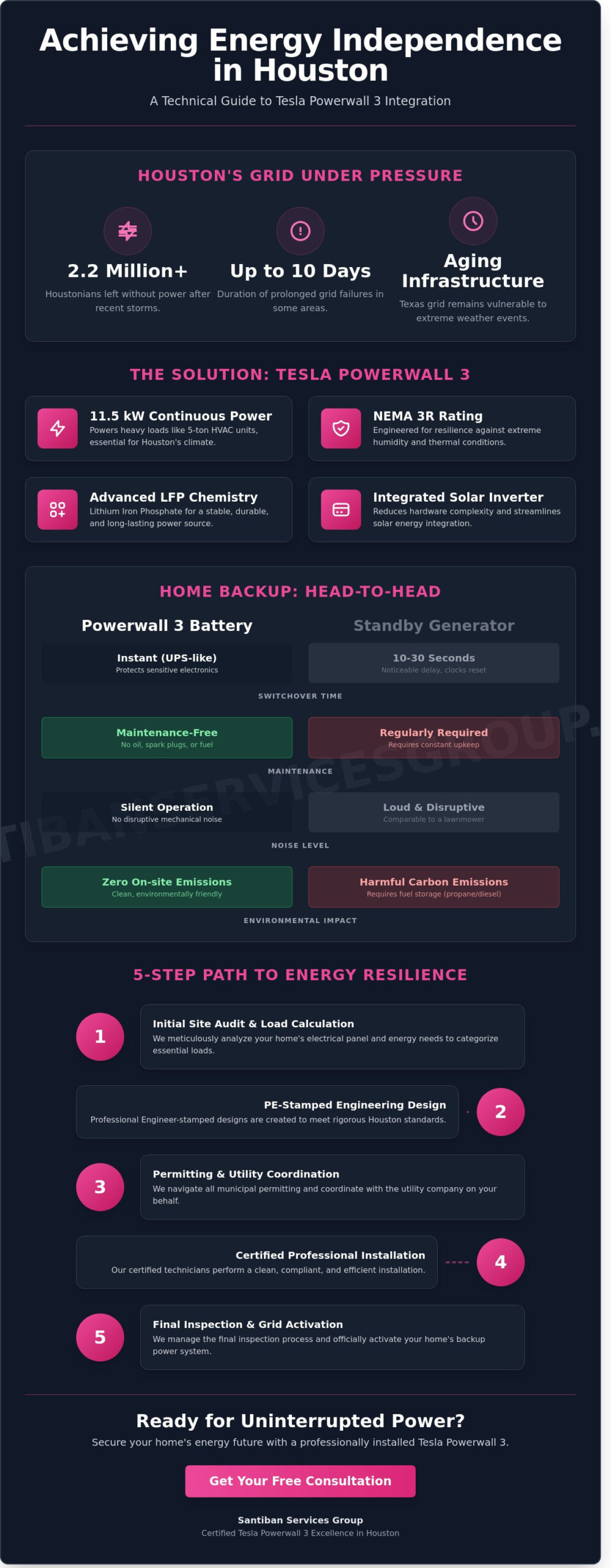
During the May 2024 derecho and subsequent Hurricane Beryl, more than 2.2 million Houstonians experienced prolonged grid failures that lasted up to 10 days. You likely recognize that relying solely on the aging Texas infrastructure is a vulnerability your household cannot afford. Integrating a powerwall home battery system offers a sophisticated solution to this instability. Our team understands that true resilience requires more than just hardware; it demands a disciplined approach to energy management and technical precision.
This implementation guide provides a comprehensive technical roadmap for deploying the Tesla Powerwall 3 to achieve total energy independence. You’ll gain clarity on the essential metrics of kilowatts versus kilowatt-hours to ensure your tailored solution is sized for your specific load requirements. We’ll also outline the meticulous process of securing PE-stamped engineering and navigating Houston’s rigorous permitting standards. This professional overview ensures your transition to a resilient home backup is executed with precision and operational excellence for the 2026 season and beyond.
Key Takeaways
- Analyze why Houston’s escalating grid volatility necessitates an integrated energy storage solution to achieve true residential energy independence.
- Discover how to calculate essential electrical loads to select the optimal whole-home backup configuration for your powerwall home battery.
- Navigate the technical requirements for Houston-area permitting, including the mandatory PE-stamped engineering designs required for professional installation.
- Follow a structured five-step roadmap from initial site audit to final grid activation to ensure a seamless and compliant transition to backup power.
- Learn how to leverage industrial-grade expertise and certified technical proficiency to guarantee long-term reliability and excellence in every detail.
The Houston Homeowner’s Guide to Powerwall Home Battery Systems in 2026
Santiban Services Group provides comprehensive energy solutions designed for the specific demands of the Texas Gulf Coast. A powerwall home battery serves as a fully integrated energy storage solution, available in both AC-coupled and DC-coupled configurations to ensure maximum system efficiency. For Houston residents, the transition from traditional grid reliance to independent storage has become a strategic necessity. Recent reports from the North American Electric Reliability Corporation (NERC) indicate that the Texas grid remains susceptible to extreme weather events, making home energy security a primary concern for property owners.
The 2026 market recognizes the Tesla Powerwall as the premier standard for residential energy density. Our team focuses on delivering whole-home resilience, a state where your household operates seamlessly regardless of external utility failures. By utilizing advanced lithium iron phosphate (LFP) chemistry, these systems offer a stable and durable power source that withstands the rigorous demands of the local climate. We provide tailored installations that transform a standard residence into a self-sustaining facility.
Why Powerwall 3 is the Preferred Choice for Texas
The Powerwall 3 delivers 11.5 kW of continuous power output, providing the high current required to start heavy inductive loads. This capacity is specifically engineered to support 5-ton HVAC units, which are essential for maintaining habitable indoor temperatures during Houston heatwaves. The system features a superior NEMA 3R rating, ensuring meticulous protection against high humidity levels and extreme thermal conditions. Because the unit includes an integrated solar inverter, our technicians can implement a more efficient tesla solar energy strategy, reducing hardware complexity and installation timelines.
Battery Storage vs. Traditional Standby Generators
Choosing a powerwall home battery over a conventional gas generator offers several operational advantages. While generators often require 10 to 30 seconds to engage after a blackout, the Powerwall provides an instant switchover that functions like a large-scale Uninterruptible Power Supply (UPS). This prevents digital clocks from resetting and protects sensitive electronic equipment from power surges. Santiban Services Group prioritizes these meticulous details to ensure your home remains a silent, zero-emission environment. Key benefits include:
- Maintenance-Free Operation: LFP technology eliminates the need for oil changes, spark plug replacements, or fuel stabilization.
- Silent Performance: The system operates without the mechanical noise associated with internal combustion engines.
- Environmental Excellence: Users eliminate on-site carbon emissions and the risks associated with storing volatile fuels like propane or diesel.
Our dedicated teams ensure that every aspect of the energy storage integration meets our high standards for reliability. We handle the logistical challenges of permitting and system design, allowing you to focus on the long-term stability of your home. This proactive approach to facility management is why Houston homeowners trust us for their critical power needs.
Selecting the Optimal Configuration for Whole-Home Backup
Precision in system design ensures operational continuity for your powerwall home battery installation. Homeowners must first categorize electrical loads into essential and non-essential groups to determine the necessary equipment scale. Essential loads typically include refrigeration, lighting, and medical equipment. In the Houston climate, air conditioning often shifts from a luxury to a necessity during extended summer outages. Our team conducts a meticulous audit of your panel to identify these high-draw appliances before recommending a final layout.
A partial backup configuration isolates specific critical circuits via a dedicated sub-panel. Conversely, a whole-home backup provides seamless power to every outlet in the residence. For a standard 2,500 sq. ft. Houston residence, achieving full autonomy usually requires two or three units. This configuration provides the high surge currents required to start central AC compressors without tripping the system. It’s a robust approach that ensures the property remains fully functional regardless of grid status.
Financial feasibility remains a core pillar of the decision-making process. Analyzing the tesla solar cost in Houston helps owners determine the long-term ROI of their energy independence. To further improve the investment profile, homeowners should utilize the Residential Clean Energy Credit, which currently allows for a 30% federal tax credit on battery storage technology. This incentive significantly reduces the net capital requirement for sophisticated backup systems.
Sizing Your System for Multi-Day Outages
Days of Autonomy refers to the specific duration a system sustains a household’s total electrical demand without grid support or solar replenishment. Each powerwall home battery unit provides 13.5 kWh of usable energy capacity. Stacking multiple units scales the system’s performance by increasing both the total energy reservoir and the continuous power output. This integrated approach allows the system to handle heavier electrical loads simultaneously while extending the duration of the backup during cloudy periods.
Load Management and Smart Energy Orchestration
The Tesla app serves as a sophisticated command center for managing energy flow during a failure. It allows users to monitor consumption in real time and prioritize specific appliances to conserve energy. The Storm Watch feature provides a proactive defense by detecting National Weather Service alerts automatically. It charges the battery to its maximum capacity before a hurricane or tropical storm reaches the Gulf Coast. For clients requiring even greater flexibility, integrating EcoFlow portable units offers a tailored solution for supplementary or mobile power needs.
Our dedicated technical teams provide the meticulous planning and execution required to deploy these complex energy solutions with absolute reliability.
Navigating Houston Permitting and PE-Stamped Engineering Design
The most frequent objection homeowners raise involves the regulatory hurdle. Many ask if their HOA or the City of Houston will actually allow a powerwall home battery installation. The answer is yes, provided the project adheres to strict technical standards. Houston-area jurisdictions require professional engineering documents for all battery storage systems to ensure they don’t compromise the local grid or public safety. These regulations aren’t merely red tape. They’re essential safety protocols.
A PE-stamped design acts as a certified validation of the system’s structural integrity and electrical configuration. This stamp confirms that a licensed Professional Engineer reviewed the plans and verified they meet the 2023 National Electrical Code (NEC) and local amendments. Without this certification, securing a permit in Harris or Fort Bend County is virtually impossible. For a deep dive into these requirements, review our guide on PE stamped engineering for solar systems to see how 2026 compliance standards affect your project.
The Permitting Landscape in Greater Houston
CenterPoint Energy has established rigorous Interconnection Agreement requirements for 2026. These rules mandate that every powerwall home battery communicates correctly with the utility’s infrastructure to prevent backfeeding during grid repairs. Municipalities like Sugar Land and The Woodlands have specific codes regarding battery placement, often requiring specific clearances from windows or gas meters. Santiban’s in-house engineering team streamlines this approval process. We handle the entire submission, ensuring that technical drawings align with the unique demands of each city’s building department.
Structural Integrity and Solar Reroofing
A single battery unit weighs approximately 251 pounds. When you combine this with a full solar array, the cumulative weight on a residential structure is substantial. Our engineers evaluate the load-bearing capacity of your home during the initial site audit. If your roof shingles are older than 12 years, we often recommend solar reroofing before the installation begins. It’s a strategic move. Installing a system designed to last 25 years on a roof with only 5 years of life remaining leads to expensive removal and reinstallation costs later.
Every industrial and residential project we undertake begins with a meticulous site audit. We examine the rafters, the existing electrical panel, and the foundation to ensure the home can safely support the hardware. Beyond the technical safety, understanding the benefits of battery storage helps homeowners realize the long-term value of this investment, especially regarding energy independence and emergency backup. Our disciplined approach ensures that your system is not only legal but also structurally sound for the decades of service it will provide.
The Installation Roadmap: From Site Audit to Grid Activation
The transition from a standard electrical setup to a resilient energy system requires a methodical, multi-phase approach. Engaging a certified Tesla Powerwall installer is the primary step in ensuring the project meets the rigorous standards mandated by both Tesla and Houston regulatory bodies. This professional oversight guarantees that the integration of your powerwall home battery is handled with technical precision, from the initial conduit runs to the final software commissioning. Santiban Services Group prioritizes these protocols to ensure every installation functions as a dependable asset for the property owner.
Step 1 & 2: Site Analysis and Engineering Design
The process initiates with a comprehensive electrical audit of the property. Technicians identify necessary infrastructure upgrades, such as reinforcing the service entrance or upgrading to a 200-amp panel to handle modern energy loads. Following the audit, engineering teams develop PE-stamped blueprints tailored to the specific structural requirements of the home and local Houston building codes. These plans are essential for securing the necessary permits from the City of Houston. A critical distinction during this design phase is the choice between a Main Lug Assembly, which connects the system directly to the busbar without a dedicated service disconnect, and a Main Breaker configuration that provides a centralized shut-off for the entire electrical system.
Step 3 to 5: Installation, Testing, and Permission to Operate (PTO)
The physical installation phase generally concludes within a 24 to 48-hour window. During this time, the dedicated team mounts the battery units and installs the Gateway 3, the intelligent controller that manages energy flow between the grid and the home. After the hardware is integrated, the system undergoes a rigorous commissioning process. This includes an off-grid test where the installer simulates a power failure to verify the powerwall home battery response time and load-handling capabilities. It’s a vital step to ensure the backup system activates in less than 10 milliseconds. The final milestone is the utility walk-through. Local authorities and utility representatives conduct a site inspection to grant the official Permission to Operate (PTO). This ensures the system is fully compliant with grid interconnection protocols and safety regulations. For a complete technical breakdown of this process, our Tesla Powerwall 3 installation Houston definitive guide covers every phase from engineering design to final grid activation.
Santiban Services Group: Certified Tesla Powerwall 3 Excellence in Houston
Santiban Services Group operates with a level of precision that redefines residential energy expectations. With over 24 years of industry experience, we function as a premier industrial-grade contractor for the Houston area. Our firm provides a comprehensive, single-source solution for homeowners seeking sophisticated energy systems. We manage every phase, including engineering, solar integration, and battery storage, ensuring a seamless transition to energy independence. We don’t outsource critical components of your project. This integrated model allows us to maintain excellence in every detail across the entire lifecycle of your powerwall home battery installation.
Our Industrial Standards for Your Home
Santiban applies industrial electrical construction rigor to every residential project we undertake. Our teams treat your home with the same meticulous attention to safety and performance required in high-stakes commercial environments. To help clients make data-driven decisions, we offer access to tesla batteries for solar performance data for 2026 models. This forward-looking approach ensures your system remains relevant as technology evolves over the next decade. Our dedicated teams are the backbone of our service model. They provide a personalized experience in Houston, ensuring that your specific electrical layout is optimized for maximum efficiency. We focus on tailored solutions that address the unique load requirements of your property rather than offering generic, one-size-fits-all packages.
Secure Your Whole-Home Resilience Today
The Texas energy market presents unique challenges that demand a robust, proactive response. Investing in a powerwall home battery provides a measurable long-term ROI by protecting your household from rising utility costs and frequent grid instability. A professionally engineered system acts as a silent engine; it maintains your home’s functionality during extreme weather events without any manual intervention. We prioritize reliability and corporate stability, giving you a partner that will be here for the decades your system is in operation.
Our methodical process eliminates the guesswork, replacing it with a sober, factual assessment of your energy needs. We provide the peace of mind that only comes from superior craftsmanship and high-end strategic planning. Secure your whole-home resilience today. We invite you to follow a clear path toward energy security by contacting our office. Our staff is ready to help you schedule a comprehensive site evaluation with our technical experts to finalize your transition to a superior energy future.
- 24+ years of industrial-grade electrical expertise.
- Single-source engineering and installation.
- Direct access to 2026 performance benchmarks.
- Dedicated Houston-based project teams.
Securing Your Houston Energy Future with Precision Engineering
Houston’s energy landscape requires more than just a battery; it demands a meticulously engineered system designed for resilience. Implementing a powerwall home battery in 2026 involves navigating complex municipal permitting and ensuring your configuration supports a full load during grid instability. Santiban Services Group brings over 24 years of industrial electrical experience to every residential project, ensuring your installation meets the highest technical standards. We provide comprehensive PE-stamped engineering designs that streamline the approval process with Houston’s building departments. This professional approach guarantees that your Tesla Powerwall 3 system operates with the reliability of an industrial-grade facility.
Our dedicated teams manage every detail from the initial site audit to the final grid activation. You’ll gain a seamless energy solution that protects your household through every season. As a Tesla Certified Installer, we prioritize excellence in every detail to deliver a system that performs when you need it most. Take the definitive step toward energy independence with a partner that values long-term performance and corporate-level stability.
Request a Professional PE-Stamped Powerwall Proposal from Santiban Services Group
It’s the right time to build a stable and independent energy future for your home.
Frequently Asked Questions
Is one Tesla Powerwall 3 enough to run my whole Houston home?
A single unit provides 11.5 kW of continuous power, which isn’t enough to run a full Houston home with high-tonnage HVAC systems. Most local residences require two or three units to support 4-ton or 5-ton air conditioning units during peak summer heat. We provide a tailored analysis of your electrical load to ensure your configuration delivers reliable performance during extended outages.
How much does a Powerwall home battery cost in Houston for 2026?
Industry projections from the National Renewable Energy Laboratory suggest storage costs will continue to decline by approximately 5% annually through 2030. According to EnergySage data from 2024, the average installed price for a powerwall home battery ranges from $14,000 to $18,000 before federal tax credits. Expect 2026 pricing to reflect these adjusted market rates and the 30% Residential Clean Energy Credit.
Can the Powerwall 3 be installed without solar panels in Texas?
Yes, the Powerwall 3 functions as a standalone backup system without requiring a solar array. It captures energy directly from the Texas grid during stable periods to provide a reliable secondary power source. This configuration ensures your facility maintains operation during ERCOT load-shedding events or localized distribution failures through a seamless, integrated transition that prioritizes consistent performance.
How long will a Powerwall 3 last during a total grid outage?
A single unit provides 13.5 kWh of usable capacity, which sustains critical loads like refrigeration and security systems for 12 to 24 hours. Houston homeowners who prioritize central air conditioning will see reduced durations of 4 to 8 hours per unit. System longevity depends on your specific energy management strategy and the meticulous calibration of your backup priorities.
What is the lifespan and warranty of the Tesla Powerwall 3?
Tesla provides a 10-year warranty that guarantees the powerwall home battery will retain 70% of its original capacity at the end of the term. The hardware is engineered for a functional lifespan exceeding 15 years under standard operating conditions. Our meticulous installation process ensures the unit operates within optimal temperature parameters to maximize this operational longevity and protect your investment.
Does CenterPoint Energy offer incentives for home battery storage?
CenterPoint Energy facilitates the Residential Battery Pilot Program, which offers financial incentives for customers who allow limited grid support during peak demand. Participants receive recurring credits or upfront rebates depending on the specific program cycle. You should also leverage the 30% federal tax credit established by the Inflation Reduction Act of 2022 to offset the total project costs.
Can I install a Powerwall 3 myself to save on labor costs?
No, Tesla requires installation by certified professionals to maintain warranty validity and ensure safety compliance. The process involves complex high-voltage electrical work and integration with the Tesla Gateway. Our dedicated teams manage every technical detail to meet the rigorous standards of the Houston Permitting Center and the National Electrical Code, ensuring a superior and safe installation.
What happens to my Powerwall when the Texas grid is restored?
The system automatically detects grid stability and reconnects your home to the utility provider within milliseconds. It immediately prioritizes recharging the battery back to your designated backup reserve level using an integrated management protocol. This seamless transition ensures your energy storage is prepared for the next potential disruption without requiring manual intervention or any system resets from the homeowner.