
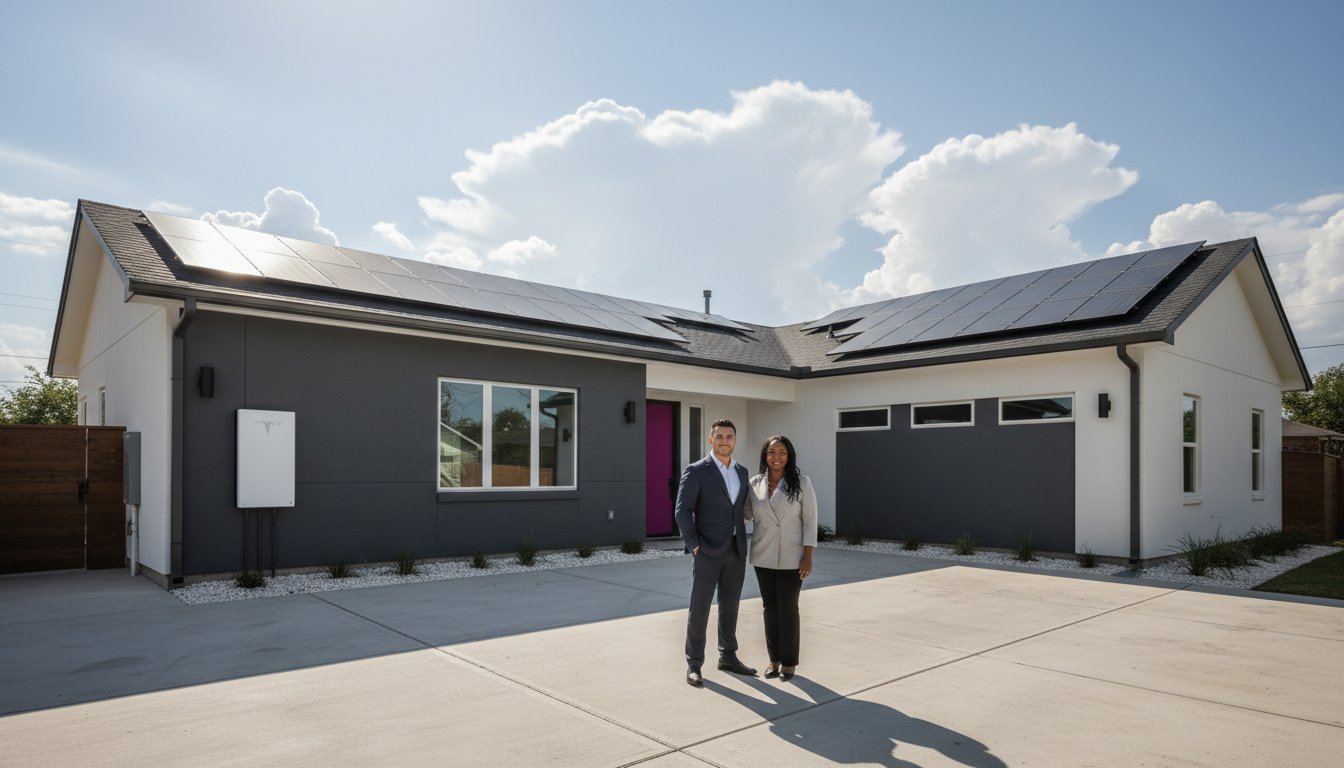
A standard residential solar array is not a guarantee of power during a Category 3 hurricane. For many Houston homeowners, the 2024 storm season proved that traditional grid reliance is a liability, leaving over 2.2 million residents without electricity for multiple days. You likely recognize that adopting solar energy in texas represents a necessary shift toward self-sufficiency, yet the fear of structural failure or complex regulatory hurdles often stalls progress. It’s a valid concern; a system is only as reliable as the meticulous engineering and professional oversight behind its installation.
The Santiban Services Group provides this 2026 readiness checklist to ensure your transition is seamless and structurally sound. We’ve developed a comprehensive technical and regulatory roadmap to help you achieve complete energy independence while securing a system rated for 150 mph wind loads. This guide details the specific permitting requirements, battery integration strategies, and moisture-protection protocols required to maintain your property’s integrity and long-term value.
Key Takeaways
- Assess the 2026 landscape of solar energy in texas to understand why property owners are shifting their focus toward integrated energy storage for enhanced resilience.
- Identify critical structural and electrical prerequisites, such as roofing integrity and panel capacity, required to support a sophisticated solar and EV charging ecosystem.
- Evaluate the technical specifications necessary for Gulf Coast environments, including high wind-load ratings and Tier-1 hardware designed for high-humidity climates.
- Navigate the complexities of Houston’s regulatory framework and the mandatory requirement for PE-stamped engineering designs to ensure full code compliance.
- Discover the strategic advantages of an industrial-grade installation approach through a Tesla-certified partnership dedicated to meticulous execution and long-term reliability.
The State of Solar Energy in Texas and Houston in 2026
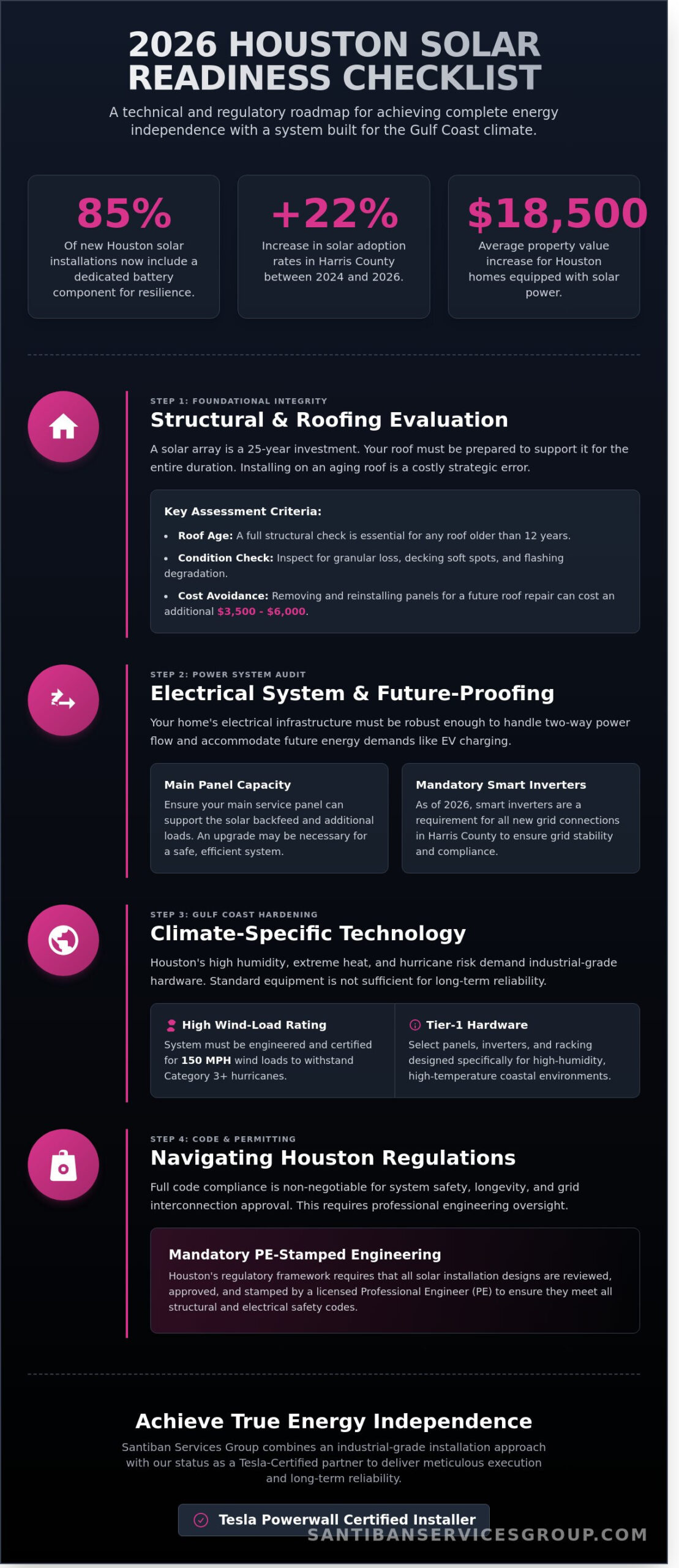
The Texas energy landscape has undergone a fundamental transformation as of early 2026. ERCOT now manages a grid where distributed energy resources provide a critical buffer against record-breaking peak demand. In Houston, property owners have shifted their focus from simple generation to integrated energy management systems. This transition reflects a sophisticated understanding of market volatility and the necessity of operational continuity. Local utilities like CenterPoint Energy have adapted their infrastructure to accommodate a seamless two-way flow of power, facilitating a more resilient urban grid. Residential and commercial adoption rates in Harris County increased by 22% between 2024 and 2026, signaling a permanent move toward energy self-sufficiency.
The current market favors property owners who view solar as a long-term asset rather than a temporary cost-saving measure. Houston’s specific climate challenges require a proactive approach to facility management. Our 2026 data indicates that 85% of new solar installations in the Houston metropolitan area now include a dedicated battery component. This shift ensures that solar energy in texas serves as a reliable foundation for both residential comfort and commercial productivity. For a comprehensive overview of how Hurricane Beryl’s impact accelerated this transition, our detailed analysis of texas solar resilience strategies for Houston homeowners provides critical insights into the infrastructure vulnerabilities that drove this market transformation. The following sections detail the specific drivers behind this unprecedented growth.
Understanding the Texas “Solar Surge”
Texas reached a milestone of 31,000 megawatts of installed capacity by the first quarter of 2026. This growth isn’t a temporary trend; it’s a structural realignment of the state’s power profile. Detailed records on Solar Power in Texas illustrate how the state surpassed all other regions in utility-scale growth, providing a blueprint for local grid stability. For Houston businesses, these tailored solar solutions offer a 15% to 18% reduction in long-term operational expenditures. High-performance energy infrastructure is no longer a peripheral upgrade. It’s an essential component of professional facility management and corporate strategy.
Local Houston Grid Resilience
The Gulf Coast region faced five major weather-related grid disruptions since 2024. These events proved that generation alone is insufficient without meticulous storage planning. Houston property managers now prioritize battery integration to mitigate risks during extreme heat or tropical storms. By June 2026, over 14,500 Harris County households enrolled in virtual power plant (VPP) programs. These initiatives allow participants to contribute excess stored energy back to the grid during peak demand periods. This proactive approach ensures that residential units remain functional when centralized systems fail. Santiban Services Group recognizes these systems as the silent engine of modern property stability, providing excellence in every detail of energy security.
- Grid Stability: Distributed solar reduced local brownout risks by 12% in the summer of 2025.
- Economic Impact: Property values for solar-equipped homes in Houston rose by an average of $18,500.
- Technological Integration: Smart inverters are now mandatory for all new Harris County grid connections.
Structural and Electrical Readiness: The Pre-Installation Checklist
Preparing a Houston residence for a photovoltaic transition requires a meticulous assessment of existing physical assets. Many homeowners focus on panel efficiency while neglecting the structural integrity of their property. A successful deployment of solar energy in texas begins with a comprehensive audit of the roof and electrical system to ensure long-term reliability. Santiban Services Group prioritizes these operational details to prevent costly mid-cycle repairs. Our approach ensures that every component of your infrastructure is ready to support a 25-year investment.
Before any structural audit, it’s wise to ensure the roof and exterior surfaces are clean, as dirt, algae, or mildew can conceal underlying damage. If you’re looking for professional exterior cleaning services to prepare your property, you can check out Poseidon Power Washing LLC.
An often-overlooked step in this readiness check is optimizing your home’s existing energy efficiency. Reducing your overall energy consumption means you can install a smaller, less expensive solar system. One effective way to lower cooling demands, especially in the Texas heat, is by applying solar control window films. For instance, services like those offered by Sun Guard Tint can block a significant amount of solar heat and UV rays, directly reducing the load on your air conditioning system and complementing your solar investment.
The Solar Reroofing Evaluation
Installing a high-end solar array on a roof with less than 10 years of remaining life is a strategic error. Removing and reinstalling a standard 8-kW system for a roof repair can cost between $3,500 and $6,000 in additional labor. We recommend a full structural integrity check for any roof older than 12 years. Our teams look for granular loss, decking soft spots, and flashing degradation. Integrated solar reroofing services provide a seamless transition, often qualifying the entire roofing project for certain Texas Solar Incentives when performed as a single energy improvement. For homeowners seeking a roofing solution that simultaneously generates power, our comprehensive guide on tesla and solar roof solutions for Houston properties details the structural specifications and aesthetic advantages of this integrated approach. This proactive measure secures the building envelope before the mounting hardware is permanently secured.
- Decking Thickness: Ensure a minimum of 7/16-inch OSB or plywood for secure lag bolt attachment.
- Shading Analysis: Utilize LIDAR data to identify 90% or greater solar access zones.
- Load Bearing: Verify the trusses can support an additional 3 to 4 pounds per square foot.
Electrical Infrastructure Audit
Modern energy demands require sophisticated distribution. Most Houston homes built before 2010 utilize 100-amp or 150-amp main panels, which are often insufficient for 2026-grade solar arrays and Level 2 EV charging stations. A Main Panel Upgrade (MPU) to a 200-amp or 225-amp busbar is frequently necessary to comply with the 120% rule in the National Electrical Code. This ensures your home can safely manage the bidirectional flow of electricity. We also evaluate the feasibility of commercial-grade EV infrastructure, which requires dedicated 40-amp to 60-amp circuits. Adhering to 2026 NEC standards isn’t just about compliance; it’s about establishing a resilient foundation for your home’s future power needs.
A thorough audit identifies potential bottlenecks in your home’s wiring before they become safety hazards. If your current system shows signs of thermal stress or outdated grounding, it’s vital to address these during the solar preparation phase. For homeowners seeking a tailored facility solution, our dedicated teams provide the precision required for complex electrical retrofits. Integrating solar energy in texas demands this level of professional oversight to guarantee seamless performance during peak summer demand. We focus on excellence in every detail, ensuring your electrical system remains a silent, reliable engine for your household.
Selecting Technology for Houston’s Gulf Coast Climate
Houston homeowners must prioritize hardware resilience to ensure a high return on investment. The local climate presents unique stressors, including humidity levels that frequently exceed 90% and hurricane-force winds that can reach 150 miles per hour. Selecting Tier-1 solar panels is a non-negotiable standard for any professional installation. These manufacturers demonstrate financial stability and utilize superior materials that resist Potential Induced Degradation, a common issue in sweltering Texas summers. According to this Texas solar energy overview, the state’s utility-scale and residential capacity continues to expand, yet system longevity depends entirely on meticulous component selection.
Battery Backup: Tesla Powerwall 3 vs. Alternatives
The Tesla Powerwall 3 represents the current benchmark for integrated energy storage in 2026. Its primary advantage is the integrated solar inverter, which eliminates the need for separate hardware and reduces potential failure points. For homeowners requiring comprehensive protection, a certified Tesla Powerwall installer can configure a system that manages a 13.5 kWh capacity per unit. This specific model provides the necessary surge power to start 5-ton air conditioning units during a grid failure. While EcoFlow solutions offer modularity for smaller properties or partial-load backups, the Powerwall 3 remains the superior choice for seamless whole-home resilience during multi-day outages.
Weatherproofing Your Solar Investment
Mounting systems must meet ASCE 7-22 standards to withstand the intense uplift forces of a Category 4 storm. Our technical teams specify anodized aluminum racking and stainless steel fasteners to prevent the galvanic corrosion typical in coastal environments. Reliability requires more than physical strength; it demands constant visibility. Integrated monitoring software provides real-time data, allowing homeowners to track performance and detect anomalies immediately after a storm event. This proactive approach ensures that solar energy in texas remains a dependable asset. We focus on three critical weatherproofing pillars:
- Mechanical Fastening: Utilizing flashing-free or double-flashed mounts to maintain roof integrity.
- Corrosion Resistance: Deploying salt-mist rated modules for properties within 5 miles of the coast.
- Thermal Management: Ensuring adequate airflow beneath panels to maintain efficiency when ambient temperatures exceed 100 degrees.
A disciplined focus on these technical specifications protects the system from the volatile Gulf Coast environment. Every component, from the racking to the micro-inverters, must function as a unified, hardened system. This level of engineering excellence ensures that solar energy in texas provides consistent value for the full 25-year lifespan of the hardware. Homeowners who want to understand the full technical scope of commissioning a Gulf Coast-ready power system will find our detailed breakdown of solar electric texas deployment strategies for Houston properties an essential resource for evaluating hardware specifications and PE-stamped engineering requirements.
Navigating Texas Regulations, Permits, and PE-Stamped Engineering
Deploying solar energy in texas requires a disciplined approach to regulatory compliance. Houston homeowners can’t simply install panels; they must adhere to a rigorous permitting process that begins long before a single bracket is mounted. This framework ensures your system meets the 2023 National Electrical Code (NEC) standards, which remain the baseline for 2026 safety protocols. Precision in the planning phase prevents costly delays during municipal inspections.
Why Your Project Needs a PE Stamp
A Professional Engineer (PE) stamp is a mandatory certification for residential solar permits in Harris County. This stamp validates that a licensed engineer reviewed your structural and electrical plans. It confirms your roof can support the dead load of the equipment and withstand wind speeds exceeding 150 mph. Without this, your permit application will face immediate rejection. For a technical deep dive, review our guide on PE stamped engineering for solar systems.
Incentives and Financing in 2026
The Federal Investment Tax Credit (ITC) remains a primary driver for ROI. In 2026, you can claim a 30% credit on total system costs, including integrated battery storage. Local benefits provide further relief. Under Texas Tax Code Section 11.317, the value added by your solar installation is exempt from property tax assessments. We offer financing structures modeled after industrial electrical construction standards, allowing for milestone-based payments that protect your capital throughout the installation cycle.
Houston’s permitting office requires a comprehensive submittal package to authorize solar energy in texas. You’ll need an Interconnection Agreement with CenterPoint Energy or your specific retail electric provider. This document governs how your system interacts with the local grid. It’s a critical safety step that ensures your system won’t backfeed power during grid maintenance, protecting utility workers and your home’s circuitry. For homeowners who want a complete technical roadmap covering both the regulatory and engineering dimensions of going solar, our guide on building a resilient solar electric texas system in the Houston metro area addresses the interconnection process, PE-stamped design requirements, and battery integration in a single comprehensive resource.
- Secure PE-stamped structural and electrical blueprints.
- Obtain a City of Houston building permit and a separate electrical permit.
- Submit the signed Interconnection Agreement to your utility provider.
- Confirm compliance with your Homeowners Association (HOA) bylaws.
- Schedule a final inspection with a municipal official post-installation.
Reliability is the product of meticulous preparation. Our teams manage these administrative complexities so you don’t have to deal with the friction of municipal bureaucracy. Contact Santiban Services Group for integrated solar engineering solutions that guarantee your project meets every regulatory milestone with excellence.
Achieving Independence with Santiban Services Group
Transitioning to solar energy in texas requires a partner capable of executing industrial-grade precision on a residential scale. Santiban Services Group applies the same rigorous standards to home installations that we use for large-scale electrical infrastructure. Our teams manage every variable from structural load-bearing assessments to high-voltage wiring integration. As a Tesla-certified installation partner, we provide homeowners with direct access to superior energy storage technology. This ensures your system operates with the reliability of a utility-grade power plant. We don’t just install panels; we build integrated power systems designed for the specific demands of the Gulf Coast climate.
Our methodology follows a disciplined, linear path. We begin with comprehensive engineering designs that account for Houston’s specific wind load requirements; these often exceed 150 mph standards in coastal zones. Following the design phase, our certified technicians execute the installation. This is followed by a multi-point final inspection to guarantee compliance with the 2023 National Electrical Code. We handle the permitting and utility interconnection paperwork, providing a seamless transition to self-sufficiency. This professional oversight eliminates the logistical friction often associated with complex energy upgrades.
Expertise in Complex Energy Projects
Our industrial division brings over 24 years of operational experience to the solar energy in texas market. We have managed complex electrical systems for facilities exceeding 500,000 square feet; we translate this technical depth into every Houston rooftop we service. We maintain a commitment to excellence in every detail. This means conduit runs are clean, penetrations are triple-sealed, and monitoring systems are calibrated for 99.9% uptime. Our corporate stability ensures we remain a dependable partner for the entire lifespan of your system, offering a level of security that smaller contractors cannot match.
Start Your Solar Journey Today
Securing your energy future begins with a technical foundation. You can request a comprehensive site assessment and engineering audit to determine your property’s exact solar harvest potential. Our specialists are available to schedule consultations for the Tesla Powerwall 3 or EcoFlow backup systems. These integrated solutions provide a critical buffer for the 4.7 million residents in the Greater Houston area who face increasing grid instability. We offer tailored solutions that align with your specific consumption patterns and financial goals.
Contact Santiban Services Group today to finalize your 2026 energy strategy. Our dedicated teams are ready to transform your property into a self-sustaining power hub. We provide the professional expertise and industrial-grade hardware required to achieve total energy independence.
Secure Your Energy Future with Precision Engineering
Transitioning to solar energy in texas requires a meticulous approach to structural readiness and regulatory compliance. The 2026 landscape demands specific technology that withstands the high humidity and 130 mph wind loads common to the Gulf Coast. Homeowners must prioritize systems backed by PE-stamped engineering designs to ensure long-term stability and safety. Santiban Services Group brings over 24 years of Texas industrial experience to every residential project, providing a level of corporate stability that’s rare in the renewables sector. Our team provides comprehensive, tailored solutions that simplify complex permitting processes and technical installations. We utilize Tesla-certified installation experts to deliver seamless integration and superior performance for your property. You’ll receive a professional assessment that addresses every operational detail of your home’s unique energy profile. It’s time to move beyond basic labor and embrace a high-end strategic partnership for your utility needs.
Contact Santiban Services Group for a Professional Solar Assessment
Energy independence is within reach when you have a disciplined, hardworking partner managing the technical complexities of your installation.
Frequently Asked Questions
Is solar energy worth it in Texas given the current 2026 utility rates?
Solar energy in Texas remains a financially sound investment in 2026 as average residential utility rates have reached $0.16 per kWh. Homeowners typically see a full return on investment within 7.4 years when they apply the 30% federal investment tax credit. This transition provides a fixed energy cost that protects your household budget from the 4% annual price increases projected by the Public Utility Commission of Texas.
Can solar panels withstand a Category 4 or 5 hurricane in Houston?
Properly engineered solar panels withstand wind speeds up to 160 mph, which meets the requirements for Category 4 and 5 hurricanes. Santiban Services Group utilizes heavy duty racking systems and stainless steel fasteners to ensure structural integrity during extreme weather events. We adhere to the 2024 International Building Code standards to guarantee your array stays secured to the roof deck even during sustained 157 mph gusts.
How much does a Tesla Powerwall 3 installation cost in Houston?
A single Tesla Powerwall 3 installation in Houston currently costs between $14,500 and $16,000, including the necessary Gateway hardware and professional labor. Prices vary based on your existing electrical panel capacity and the complexity of the backup load integration. This 13.5 kWh unit provides a continuous power output of 11.5 kW; it’s a robust solution for maintaining essential services during periods of grid instability.
What is the difference between a standard solar install and a solar reroof?
A standard solar install mounts panels on your existing roof, while a solar reroof involves replacing the entire roofing substrate before the array is commissioned. We recommend a reroof if your current shingles are more than 12 years old to ensure the 25 year solar lifecycle matches the roof’s longevity. This integrated approach prevents the $3,000 expense of removing and reinstalling panels for future roof repairs. Regardless of the method, ensuring the roof is professionally cleaned beforehand is a critical preparatory step; to see examples of this work, you can visit Warrens Power Washing.
Do I need a special permit for commercial EV charging infrastructure in Texas?
You must obtain a specific electrical permit and an occupancy permit from the City of Houston for any commercial EV charging infrastructure. Texas Department of Licensing and Regulation standards require a master electrician to oversee the installation of Level 2 or Level 3 chargers. These projects must comply with the 2023 National Electrical Code to ensure safety and regulatory alignment for all high voltage equipment.
What happens to my solar energy system during a city-wide power outage?
Standard solar energy in Texas shuts down automatically during a city wide power outage to prevent backfeeding electricity into the grid. You require an integrated battery storage system, such as a Tesla Powerwall, to maintain power to your home when the grid fails. This setup utilizes an automatic transfer switch that isolates your home in 10 milliseconds, allowing the solar array to continue generating and storing energy independently.
How long does the permitting process take for solar in Harris County?
The permitting process for solar installations in Harris County currently takes between 14 and 21 business days for residential applications. This timeline includes the initial structural review and the electrical plan examination by the Harris County Engineering Department. Our team manages the entire administrative workflow to ensure your project meets the 2021 International Energy Conservation Code requirements without any unnecessary delays.
Is there a difference between residential and industrial electrical construction for solar?
Residential solar construction focuses on 120/240V single phase systems, while industrial solar utilizes 480V three phase power for heavy machinery and large scale distribution. Industrial projects require specialized switchgear and more complex grounding systems to manage higher current loads. Santiban Services Group deploys dedicated industrial teams for these high capacity installations to maintain the rigorous safety standards required for 500kW plus systems.