
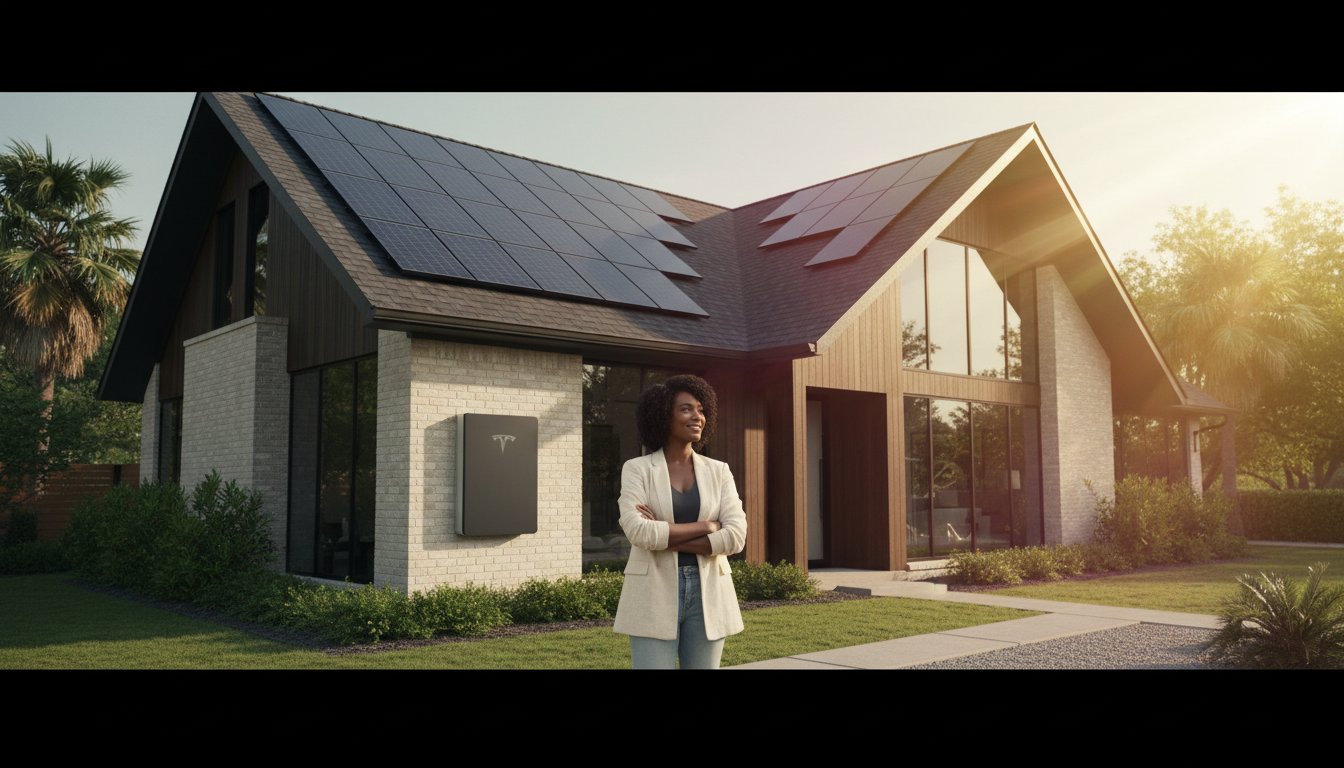
In 2024, the ERCOT grid faced record-breaking demand that pushed Houston’s infrastructure to its absolute limit, leaving thousands of residents vulnerable to rolling outages. You understand that relying solely on a centralized utility is no longer a viable strategy for maintaining a stable, climate-controlled home. By investing in solar electric texas, you’re not just installing panels; you’re commissioning a sophisticated power plant designed to withstand the unique pressures of the Gulf Coast. We recognize that true energy independence requires more than just hardware. It demands a meticulous approach to engineering and a commitment to long-term structural integrity.
This guide provides the technical roadmap you need to deploy a high-performance system that prioritizes professional safety and operational excellence. We’ll explain the critical necessity of PE-stamped engineering to protect your roof and detail how the Tesla Powerwall 3 provides a seamless transition during grid failures. You’ll gain a comprehensive understanding of the 2026 requirements for building a resilient, autonomous energy solution that secures your home’s future. From permitting logistics to hardware integration, we’ve organized the essential data to help you master your home’s power requirements.
Key Takeaways
- Understand the critical integration of PV panels and advanced storage systems to maintain resilience against the evolving challenges of the Houston energy grid.
- Master the technical requirements for high-performance systems, including the necessity of PE-stamped engineering for guaranteed structural and electrical safety.
- Explore the “Solar Reroofing” methodology to ensure your infrastructure is meticulously prepared to support a long-term renewable energy investment.
- Leverage professional insights to navigate the 2026 Federal Investment Tax Credit and specific property tax exemptions for your solar electric texas project.
- Discover the operational benefits of a single-source solution that utilizes industrial-grade expertise to deliver a seamless and tailored energy strategy.
The State of Solar Electric in Texas (2026)
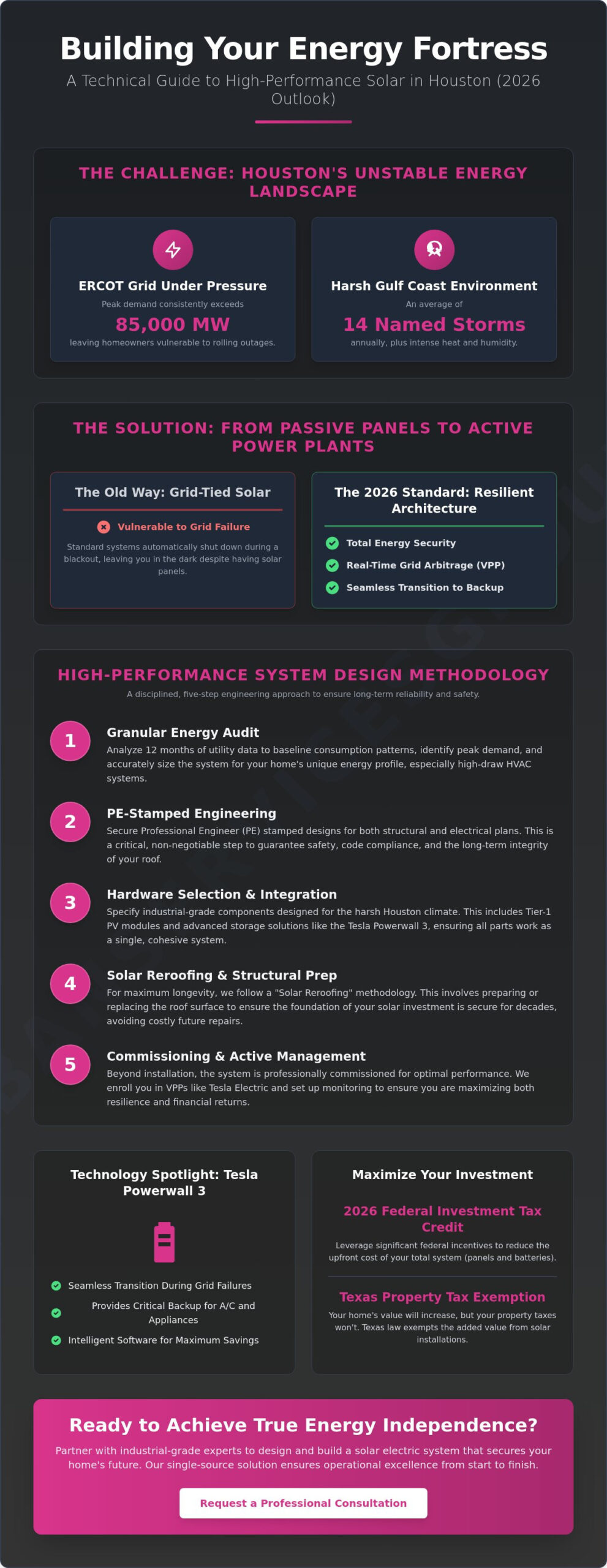
As we move through 2026, the definition of a residential power system has undergone a fundamental transformation. A modern solar electric texas installation is no longer defined merely by its photovoltaic panels. It now represents a sophisticated, integrated architecture that combines high-efficiency modules with advanced energy storage and intelligent management software. This evolution responds to an environment where the Electric Reliability Council of Texas (ERCOT) faces unprecedented pressure. With peak demand consistently exceeding 85,000 MW during summer months, the centralized grid operates under a permanent state of high utilization. Homeowners have recognized that simple grid-tied systems are insufficient for the current energy landscape.
The 2026 outlook for energy independence in the Lone Star State focuses on decentralized resilience. Data shows that Solar power in Texas has transitioned from a supplemental utility to a primary defense against grid volatility. Current installations prioritize “resilience-first” designs, ensuring that homes remain operational regardless of external infrastructure status. This strategic shift allows residents to secure their energy future through meticulous planning and superior hardware integration.
Why Houston is the Epicenter of Texas Solar Growth
Houston presents a unique set of challenges that demand high-performance energy solutions. The combination of intense humidity and high sun exposure creates a harsh operating environment for standard electrical equipment. Additionally, the recurring threat of the Atlantic hurricane season, which averages 14 named storms annually, exposes the inherent vulnerability of the traditional “Reliability Gap.” Standard grid-tied solar systems without battery integration automatically shut down during a blackout to protect utility workers. This leaves homeowners in the dark despite having panels on their roofs. By treating Texas solar as a strategic home asset rather than a basic utility, Houston residents are closing this gap. Integrated systems provide a seamless transition to backup power, ensuring that critical climate control and medical equipment remain active during extended outages.
The Shift from Passive Solar to Active Energy Management
The 2026 technological landscape has moved beyond passive energy collection toward active management and real-time grid arbitrage. Modern solar electric texas systems utilize automated peak shaving to reduce costs during high-rate periods. Homeowners now participate in the Texas virtual power plant (VPP) ecosystem, specifically through platforms like Tesla Electric. This allows individual households to act as a collective battery for the state, discharging stored energy back to the grid when prices are highest. This transition delivers several key benefits:
- Real-time Arbitrage: Systems automatically sell power when grid prices spike and charge when rates are low.
- VPP Participation: Homeowners earn credits by supporting grid stability during frequency fluctuations.
- Total Energy Security: Advanced software ensures a “reserve margin” is always maintained for emergency use.
This proactive approach ensures that facility management at the residential level is handled with the same precision as a corporate data center. The focus has shifted from simple monthly savings to a comprehensive model of total energy security and performance excellence.
How to Design a High-Performance Solar Electric System
Designing a resilient solar electric texas system for the Houston climate requires a disciplined engineering approach. It starts with a comprehensive energy load analysis of the property. We analyze 12 months of historical utility data to determine peak demand and seasonal fluctuations. This ensures the configuration provides sufficient capacity for high-draw components like HVAC systems during the extreme humidity of July and August. A system that is not sized correctly will fail to provide the necessary autonomy during a grid failure.
The project development cycle follows a structured five-step methodology to ensure long-term reliability:
- Conducting a granular energy audit to baseline consumption patterns.
- Securing PE-stamped engineering designs for structural and electrical safety.
- Selecting high-efficiency PV modules and Tesla Powerwall 3 storage units.
- Managing the Houston permitting process with professional documentation.
- Executing the installation using certified industrial electricians.
The Critical Role of PE-Stamped Engineering
Houston building codes require rigorous technical documentation. A Professional Engineer (PE) must review and stamp all structural and electrical plans before any work begins. This verification confirms the roof structure can support the static load of PV modules and withstand wind gusts up to 150 mph. Utilizing PE stamped engineering for solar systems is a mandatory safety protocol that prevents structural failure during severe weather. Santiban manages this engineering in-house to maintain strict quality control and accelerate the approval timeline with the City of Houston.
Integrating Tesla Powerwall 3 for Whole-Home Backup
The 2026 energy landscape demands superior storage capabilities. The Tesla Powerwall 3 offers a 13.5 kWh capacity and features an integrated solar inverter, achieving higher efficiency than previous AC-coupled generations. This “Solar-to-Battery” architecture reduces conversion losses; it provides more usable power during extended grid outages. Its advanced thermal management system is specifically engineered for the high-heat Texas environment. Homeowners can also leverage the Federal Residential Clean Energy Credit to offset 30% of the total system cost. This incentive makes the transition to a solar electric texas solution more financially viable for the average household.
The final execution relies on certified industrial electricians who follow a meticulous checklist. They ensure every connection is secure and every component is optimized for long-term performance. This structured methodology transforms a standard installation into a high-performance asset. For those seeking a reliable energy partner, our tailored solar solutions provide the stability required for modern property management.
Solar Reroofing: Protecting Your Investment in Houston
A solar electric texas installation represents a significant capital improvement to your property. Santiban Services Group views this transition as a structural commitment rather than a simple equipment upgrade. Mounting a sophisticated energy system on an aging or compromised roof creates an avoidable liability. If a roof requires replacement midway through the solar system’s lifespan, the homeowner faces the high cost of decommissioning, storing, and reinstalling the panels. We define solar reroofing as a proactive, integrated construction strategy that aligns the lifespan of your roof with the 25-year performance cycle of your solar modules.
Our project managers evaluate roof health before any solar electric texas project begins. This meticulous assessment prevents the structural failures that occur when heavy equipment is placed on weakened decking. Combining roofing and solar work into a single workflow reduces labor redundancies and ensures that all penetrations are sealed using industrial-grade standards. According to Texas solar market data, the state’s residential capacity is growing rapidly, but long-term resilience depends entirely on the integrity of the underlying structure.
When to Consider a Solar Reroof
Homeowners should inspect for signs of advanced wear such as granular loss, curling shingle edges, or previous minor leaks. Houston’s extreme UV exposure, which often reaches an index of 10 or higher during summer months, accelerates the degradation of standard asphalt materials. Panels provide shade that can protect shingles, but they also make it impossible to address existing rot. For those seeking maximum durability, tesla and solar roof solutions provide a unified warranty that covers both the energy generation and the waterproof barrier. This single-source approach eliminates the finger-pointing that often occurs between separate roofing and solar contractors.
The Santiban Approach to Integrated Roofing
The Santiban Services Group utilizes specialized flashing and mounting hardware engineered specifically for Gulf Coast wind loads and high-velocity hurricane zones. Our dedicated teams coordinate the mounting process with leak-proof roofing techniques to ensure every attachment point is a fortress against moisture. We don’t just install panels; we reinforce the building envelope. This integrated method ensures your roof lasts as long as your solar technology. By choosing a tailored solution that addresses both components simultaneously, you secure a seamless transition to energy independence while maintaining the structural excellence of your home.
Navigating Texas Incentives and Local Houston Regulations
Implementing a solar electric texas system requires a strategic understanding of the financial and regulatory frameworks governing the Houston market. In 2026, homeowners benefit from a stable federal landscape, though local utility choices dictate the long-term profitability of the investment. Success depends on meticulous adherence to both municipal codes and utility-specific interconnection standards. Our dedicated teams ensure every operational detail aligns with current state and local mandates.
Maximizing ROI with Federal and Local Credits
The Federal Investment Tax Credit (ITC) remains the primary driver for solar adoption in 2026. This credit allows taxpayers to deduct 30% of the total cost of solar and battery storage systems from their federal tax liability. To claim this incentive, owners must file IRS Form 5695 during their annual tax submission. For commercial entities, integrating solar energy in texas offers additional advantages through the Modified Accelerated Cost-Recovery System (MACRS), which permits rapid depreciation of assets. Additionally, Texas Tax Code Section 11.315 ensures that the added value of a renewable energy installation is exempt from property tax assessments; this protects owners from increased annual levies despite the rise in property valuation.
Utility Interconnection in the CenterPoint Service Area
Houston residents operate within a deregulated market where CenterPoint Energy manages the physical infrastructure. While Texas lacks a state-mandated net metering policy, individual Retail Electric Providers (REPs) offer varied buy-back programs. Selecting an REP with favorable terms is critical for offsetting night-time consumption. The technical requirements for a safe grid-tie connection in Harris County involve several key steps:
- Submission of a formal Interconnection Agreement to CenterPoint Energy for system approval.
- Installation of a UL 1741-certified smart inverter to ensure grid stability and safety.
- Compliance with the 2023 National Electrical Code (NEC) as adopted by the City of Houston.
Professional engineering oversight is mandatory to secure these approvals. Meticulous design documentation reduces the risk of rejection by municipal inspectors and speeds up the Permission to Operate (PTO) timeline. The City of Houston (COH) maintains specific structural requirements for solar electric texas arrays; permits must account for wind load calculations, ensuring systems withstand 150 mph gusts common in coastal regions. We provide integrated solutions that manage every phase of this bureaucratic process to ensure seamless installation and compliance.
Secure your 2026 energy independence by contacting our experts for a tailored solar consultation.
Implementing Your Solar Strategy with Santiban Services Group
Santiban Services Group serves as the definitive single-source provider for homeowners seeking a sophisticated transition to solar electric texas systems. We recognize that residential energy independence is a complex logistical challenge that requires more than just hardware installation. It demands a strategic partner capable of managing the intersection of electrical engineering, structural integrity, and long-term facility maintenance. By consolidating these services under one roof, we provide a streamlined experience that removes the risks associated with fragmented subcontracting.
The Santiban Advantage: Industrial Precision for Residential Solar
Our organization brings over 24 years of industrial electrical experience to the Houston residential market. This history in large-scale industrial construction translates directly to higher safety standards and more robust system architectures for your home. We employ dedicated teams that handle every phase of the project, including meticulous system design, professional reroofing, and advanced electrical integration. This comprehensive oversight ensures that your roof is structurally prepared to house a solar array for its entire 25-year lifespan. Every technician on our staff adheres to a culture of disciplined performance, maintaining our core promise of excellence in every detail.
Your Path to Energy Independence in 2026
The journey toward a resilient home power strategy begins with a technical consultation focused on data rather than estimates. Our engineers perform a detailed load analysis of your property to identify peak demand periods and essential circuits. As a Tesla-certified installer, we offer specialized expertise in the deployment of the Tesla Powerwall, ensuring your energy storage is optimized for the specific climate challenges of the Gulf Coast. This certification guarantees that your installation meets the rigorous technical standards required for valid warranties and peak system efficiency.
Our methodical process covers every milestone:
- Initial site evaluation and structural assessment.
- Customized engineering and load-matching for Tesla Powerwall integration.
- Management of all municipal permits and utility interconnection agreements.
- Professional installation and final commissioning.
- Ongoing monitoring and proactive maintenance support.
We remain a stable partner long after the initial installation is complete. Our support teams provide the technical continuity necessary to keep your solar electric texas investment performing at its theoretical maximum. It’s vital to choose a provider that values consistent performance over quick turnarounds. To begin your transition with a partner defined by reliability and professional precision, Schedule your professional solar assessment today.
Future-Proof Your Houston Property with Professional Engineering
Transitioning to a resilient energy model requires more than just panels; it demands a comprehensive strategy that prioritizes technical integrity and long-term durability. By 2026, the landscape of solar electric texas requires sophisticated battery integration and high-standard engineering for every homeowner. Successful installations rely on meticulous design, integrated battery storage, and in-house PE-stamped engineering to ensure every component meets rigorous Texas industrial standards. Leveraging the 30% federal Investment Tax Credit remains a critical pillar for Houston residents seeking to offset initial costs while securing a Tesla-certified Powerwall 3 system. Santiban Services Group provides a single-source solution for your roofing and renewable energy needs. Our team brings over 24 years of industrial electrical expertise to every residential project. You shouldn’t settle for less than industrial-grade precision.
Secure your Houston home with Santiban’s Tesla-certified solar solutions.
It’s time to take control of your power and build a legacy of resilience for your family.
Frequently Asked Questions
Is solar electric worth it in Texas in 2026?
Solar electric Texas systems remain a high-value investment in 2026 because the federal Investment Tax Credit maintains a 30% deduction for residential installations. Homeowners face an average 4% annual increase in electricity rates based on historical Texas PUC data. This financial return couples with the necessity of residential resilience as ERCOT reported 12 conservation appeals in 2023. Investing now secures predictable energy costs for the next 25 years.
Does the Texas grid allow for 100% energy independence with solar?
Total disconnection from the ERCOT grid is rare because local municipal codes and utility interconnection agreements require a grid tie for safety. However, homeowners achieve 95% energy self-sufficiency by integrating high-capacity battery storage. This configuration allows the property to operate independently during grid outages while maintaining the ability to sell excess generation back through net-metering programs. It’s a reliable way to ensure your home remains powered during localized failures.
What is the difference between a standard solar install and a solar reroof?
A standard installation mounts photovoltaic panels onto an existing roof structure using a racking system. In contrast, a solar reroof replaces traditional shingles with building-integrated photovoltaics that serve as both the weather barrier and the power generator. Santiban Services Group provides meticulous assessments to determine if your current roof deck supports a standard array or requires a comprehensive structural replacement. Both options deliver superior energy performance and long-term durability.
How long does the Houston solar permitting process take?
The Houston solar permitting process typically spans 30 to 60 days from the initial application to final approval. This timeline includes the City of Houston structural review and the CenterPoint Energy interconnection agreement. Our dedicated teams manage every administrative detail to ensure compliance with the 2023 National Electrical Code and local building ordinances. We prioritize meticulous coordination to prevent any unnecessary delays in your project schedule and ensure a seamless transition to clean power.
Can a Tesla Powerwall 3 run my entire Houston home during a hurricane?
A single Tesla Powerwall 3 provides 13.5 kWh of energy capacity and an 11.5 kW continuous power output, which supports essential loads like refrigeration and lighting. Running a central 5-ton air conditioning unit during a hurricane requires a multi-unit configuration to handle high startup surges. We design tailored solutions that prioritize critical circuits, ensuring your family remains safe during extended utility interruptions. This disciplined approach to load management guarantees your most vital systems stay operational.
What are the specific solar tax incentives available in Texas for 2026?
The primary incentive for solar electric Texas installations is the federal Investment Tax Credit, which covers 30% of the total project cost through 2032. Texas Tax Code Section 11.315 also offers a 100% property tax exemption on the added home value from the solar system. These integrated financial benefits significantly reduce the net investment while enhancing the long-term valuation of the residential asset. Our team provides the documentation necessary to claim these incentives accurately.
Why do I need PE-stamped engineering for my solar project in Houston?
Professional Engineer stamped plans are mandatory in Houston to certify that the roof can withstand wind speeds exceeding 150 mph. This rigorous engineering review ensures the mounting system meets ASCE 7-22 standards for structural integrity during tropical weather events. Santiban Services Group prioritizes this meticulous documentation to guarantee safety and facilitate a seamless approval process with local building officials. It’s a critical step that protects your investment and ensures the longevity of the installation.