
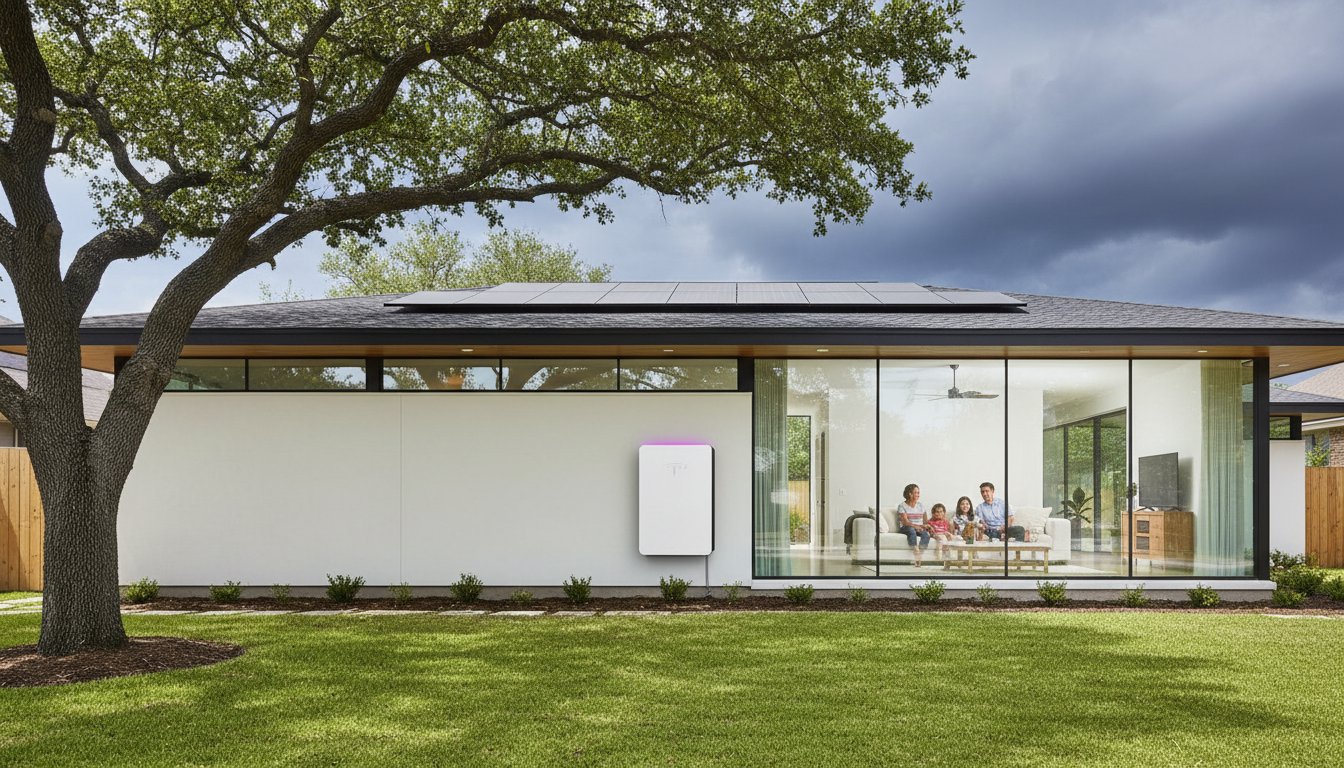
In July 2024, Hurricane Beryl left more than 2.2 million CenterPoint Energy customers in the dark, highlighting the critical vulnerabilities within the regional infrastructure. You likely recognize that relying solely on a centralized grid is a precarious strategy for any property owner who values long-term stability and safety. The demand for texas solar has shifted from a mere sustainability goal to a sophisticated requirement for residential resilience in an increasingly volatile climate.
The Santiban Services Group provides a comprehensive framework to help you achieve total energy independence through a professionally engineered installation. This guide details how an integrated system of solar arrays and high-capacity storage technology effectively mitigates the risks of ERCOT unreliability while lowering long-term operational costs. We provide a meticulous overview of Houston’s complex permitting requirements and the rigorous structural standards we employ to ensure every installation maintains the absolute integrity of your roof. You’ll discover a tailored path toward a resilient, self-sustaining energy future that prioritizes excellence in every detail.
Key Takeaways
- Understand why the 2026 ERCOT landscape necessitates a shift from traditional economic ROI to comprehensive energy resilience for Houston homeowners.
- Discover how integrating the Tesla Powerwall 3 provides a superior, high-capacity “brain” for your Texas solar system to manage high-demand loads during grid instability.
- Learn the technical advantages of solar reroofing and PE-stamped engineering to ensure the long-term structural integrity and protection of your home.
- Navigate the complexities of 2026 federal tax credits and Houston’s deregulated net metering market to maximize your strategic investment.
- Identify the operational benefits of a single-source provider to ensure a seamless, professional transition to total energy independence.
The Landscape of Solar Energy in Houston, Texas for 2026
Houston’s energy landscape has undergone a fundamental transformation. By 2026, homeowners no longer view power as a simple utility expense. They treat it as a critical infrastructure asset. The shift toward texas solar adoption is driven by a requirement for absolute reliability in an increasingly volatile environment. Modern property owners prioritize local, decentralized generation to protect their families and maintain operational continuity during grid disruptions.
The transition from seeking a basic return on investment to achieving total energy resilience defines the current market. Reliability is the new currency. A property’s value now correlates directly with its ability to function independently of external pressures. High-performance solar arrays, when paired with sophisticated storage solutions, provide the silent engine that keeps a household running during peak demand periods or weather-driven outages.
Grid Reliability and the Houston Energy Context
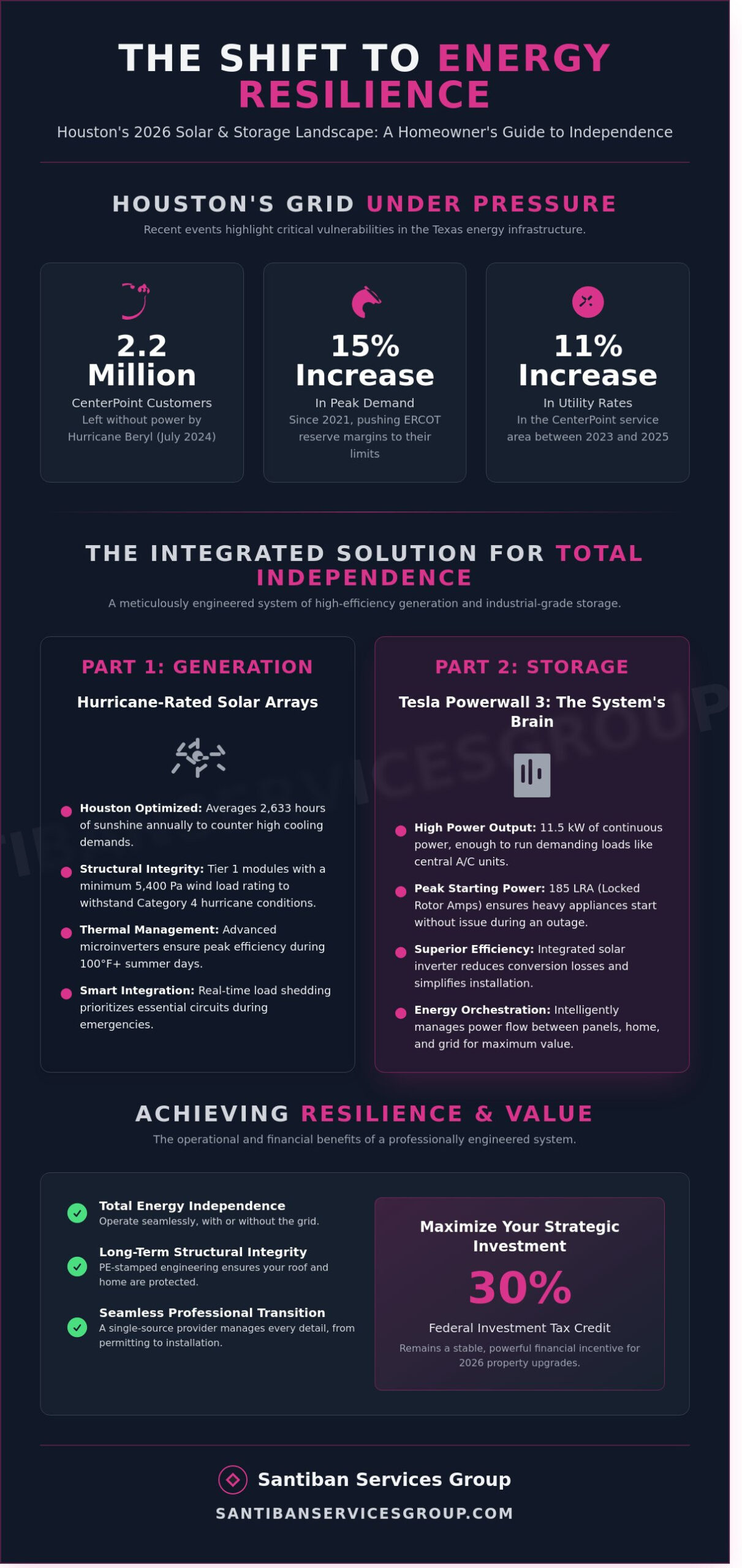
ERCOT’s performance trends over the last five years have fundamentally altered consumer behavior. Data from 2024 and 2025 reliability assessments indicated a 15% increase in peak demand compared to 2021 levels, frequently pushing the state’s reserve margins to their limits. These recurring narrow margins have made grid-tied systems without storage obsolete. A system that shuts down during a blackout offers no protection when it’s needed most.
Distributed energy resources (DERs) now play a vital role in stabilizing the broader Texas power market. By generating and storing power at the point of consumption, Houstonians reduce the collective strain on the transmission network. This decentralized approach creates a more robust ecosystem. It transforms individual homes into resilient nodes that contribute to the overall health of the regional energy supply.
Why Houston is the Epicenter of Texas Solar Growth
Houston’s geographic position provides a unique advantage for energy production. The region averages 2,633 hours of sunshine annually. This abundant resource directly counters the high cooling loads required by the Gulf Coast climate. Economic factors reinforce the shift toward texas solar, as utility rates in the CenterPoint service area rose by approximately 11% between 2023 and 2025. The federal Investment Tax Credit remains at 30% for 2026, offering a stable financial incentive for meticulous property upgrades.
- Structural Integrity: Installations now require Tier 1 modules with a minimum wind load rating of 5,400 Pa to withstand Category 4 hurricane conditions.
- Thermal Management: Advanced microinverters are standard to maintain efficiency during 100-degree summer afternoons.
- System Integration: Smart panels allow for real-time load shedding, prioritizing essential circuits during emergency events.
Texas solar represents a meticulously engineered, integrated system of high-efficiency generation, industrial-grade storage, and professional-tier management designed to provide absolute energy autonomy. This integrated approach ensures that every operational detail is under expert control. By treating solar as a core component of a property’s infrastructure, Houstonians secure a predictable and resilient future. Homeowners seeking a deeper technical foundation can explore our comprehensive resource on solar electric texas systems and Gulf Coast resilience engineering for a detailed breakdown of high-performance deployment strategies.
Beyond the Panels: Integrating Tesla Powerwall 3 and EcoFlow Storage
In the 2026 energy market, a solar array without storage is an incomplete solution. Storage serves as the strategic brain, managing the flow of electricity between the panels, the home, and the grid with precision. For homeowners investing in texas solar, the focus has shifted from mere generation to sophisticated energy orchestration. This transition ensures that critical systems remain operational during grid instabilities, which have increased in frequency across the Gulf Coast over the last five years. A well-integrated battery system doesn’t just store power; it dictates how and when that power is utilized to maximize efficiency and maintain comfort.
Tesla Powerwall 3: The 2026 Standard for Houston
The Powerwall 3 represents a significant technical evolution in residential storage. It features an integrated solar inverter that simplifies the installation process and improves overall system efficiency by reducing conversion losses. With a continuous power output of 11.5 kW and a peak starting power of 185 amps, it supports heavy loads like central air conditioning units and well pumps during peak summer months. Its thermal management system is specifically engineered to maintain peak performance in environments where temperatures exceed 100 degrees Fahrenheit and humidity levels remain high. Working with a Certified Tesla Powerwall Installer in Houston ensures that these units are configured to maximize longevity and grid resilience through professional commissioning and meticulous wiring.
EcoFlow and Scalable Backup Solutions
EcoFlow systems provide a tailored approach for properties with diverse power requirements. These modular units allow for incremental capacity increases, making them ideal for homeowners who prefer a phased investment strategy or have unique space constraints. Our teams provide the meticulous installation required to ensure these systems function as a single-source energy solution that adapts to your property’s evolving needs.
- Scalable architecture: Units like the Delta Pro Ultra can be expanded from 6kWh to 90kWh to meet specific load demands.
- Hybrid integration: Systems can combine fixed home storage with portable units for outdoor or emergency use.
- Rapid response: Professional integration with a Smart Home Panel allows for power restoration in under 10 milliseconds during a grid failure.
Modern storage technology has moved beyond simple backup. It now facilitates active, whole-home energy management. By utilizing smart software, these systems perform automated load shedding and peak shaving. They analyze weather patterns and utility rates to determine the most cost-effective times to draw from the grid or discharge the battery. This level of control transforms a residential property into a self-sustaining utility hub. It allows you to future-proof your texas solar investment against rising utility costs and unpredictable weather events. For those seeking a comprehensive energy audit, our specialists can provide tailored energy management solutions that align with your long-term operational goals.
The Critical Role of Solar Reroofing and PE-Stamped Engineering
Homeowners often hesitate to adopt texas solar solutions due to concerns regarding roof penetration and structural integrity. This skepticism is well-founded. A solar array is a permanent mechanical installation that adds approximately 2.5 to 4 pounds per square foot of dead load to a residential structure. In Houston, where wind speeds during tropical events can exceed 110 miles per hour, the roof must serve as a high-performance foundation rather than just a protective covering. Ensuring the roof is prepared for this decades-long commitment is the first step in a resilient energy strategy.
Solar Reroofing: A Strategic Foundation
Santiban recommends a synchronized approach known as solar reroofing to mitigate long-term risks. Installing advanced photovoltaic panels on a roof with less than 10 years of remaining life creates a significant logistical conflict. If the shingles fail within a few years of installation, the homeowner faces the expense of decommissioning, removing, and reinstalling the entire array. By coordinating a roof replacement with the solar installation, we ensure that the flashing systems and mounting brackets are integrated directly into the new roof deck. This meticulous process preserves manufacturer warranties and prevents the common leak issues associated with retrofitting aged materials. For homeowners seeking the highest level of integration between their roofing and energy systems, our comprehensive guide on tesla and solar roof solutions in Houston details the technical pathways to achieving industrial-grade durability and long-term property value. Our dedicated teams align these timelines to provide a seamless transition, ensuring the structural safety of the home remains uncompromised through 2026 and beyond.
The Necessity of PE-Stamped Design
Technical compliance in complex Texas jurisdictions requires more than a standard permit application. Professional Engineer (PE) stamps are a non-negotiable requirement for validating that a system meets rigorous local building codes. A PE stamp serves as a legal assurance of safety. It confirms that the existing rafters can support the specific weight of the panels and that the electrical blueprints adhere to the most recent National Electrical Code standards.
- Structural Engineering: Evaluates wind uplift and dead load distribution to prevent sagging or catastrophic failure during storms.
- Electrical Engineering: Verifies that integrated energy storage systems don’t overload the home’s internal circuitry or the local grid connection.
This level of professional oversight is essential for any texas solar project involving high-capacity battery backups or complex rooflines. For a comprehensive breakdown of these requirements, consult our detailed resource on PE Stamped Engineering for Solar Systems in Houston. Securing these credentials early in the project lifecycle prevents costly delays in the permitting phase and establishes a foundation of corporate-grade reliability for your residential power plant; for those interested in similar due diligence for commercial properties, you can learn more about TXCREI (Texas Commercial Real Estate Inspections) and their specialized inspection services.
Navigating Texas Solar Incentives, Net Metering, and ERCOT Dynamics
Financial viability for renewable energy projects in the Gulf Coast region depends on a meticulous understanding of state and federal frameworks. By 2026, the landscape of texas solar has shifted toward a model that rewards grid resilience and decentralized storage. Homeowners must look beyond installation costs to evaluate the long-term fiscal benefits provided by integrated energy systems.
Maximizing Your Investment with 2026 Incentives
The Federal Investment Tax Credit (ITC) remains the cornerstone of residential energy financing. Under the guidelines established by the Inflation Reduction Act of 2022, homeowners can claim a 30% credit on the total cost of solar equipment and labor. This incentive applies to both primary residences and secondary properties. In 2026, the ITC remains the most significant driver for Texas solar ROI.
Integrated storage systems now qualify for the full 30% credit even when installed independently of solar panels. To ensure compliance during tax filings, keep detailed records of all hardware specifications and installation contracts. If your project requires structural roofing reinforcements to support the weight of the array, a portion of those expenses may be eligible for the credit; however, it’s vital to consult a tax professional to document these specific structural improvements accurately.
Understanding Houston’s Net Metering Landscape
Houston operates within a deregulated market, meaning your Retail Electric Provider (REP) determines your buy-back rate. Unlike states with mandatory 1:1 net metering, Texas REPs offer a variety of tailored plans. Some providers offer “Real-Time” pricing, where the value of the energy you export fluctuates based on ERCOT grid demand. This volatility makes battery storage a critical asset for capturing high-value export windows during peak summer afternoons. Understanding how a fully integrated solar electric texas power system interacts with these deregulated market dynamics is essential for maximizing your long-term financial return.
- Fixed-Rate Buy-Back: Provides a predictable credit for every kilowatt-hour (kWh) exported.
- Real-Time Market Pricing: Rewards homeowners who export power during grid stress events.
- Capped Credits: Some plans limit the amount of credit you can earn to your monthly consumption.
Selecting the right provider requires a comprehensive analysis of your household consumption patterns. Before committing to a specific utility contract, review our Solar Energy Readiness Checklist to determine which billing structure aligns with your system’s capacity. The emergence of the “Smart Grid” and Aggregate Distributed Energy Resources (ADERs) now allows Houston residents to participate in virtual power plants, turning residential batteries into a collective tool for grid stabilization.
Santiban Services Group prioritizes precision in every energy consultation. We ensure our clients understand the interplay between local incentives and ERCOT market dynamics to secure a superior return on investment. Contact our professional team to optimize your facility’s energy strategy.
Implementing a Seamless Energy Transition with Santiban Services Group
Santiban Services Group operates as a premier single-source provider, bridging the gap between large-scale industrial electrical infrastructure and high-end residential energy systems. With a 24-year track record in Houston’s energy and infrastructure sectors, our firm brings a level of technical rigor often absent in standard residential installations. We treat your home as a critical facility. Our methodology begins with a comprehensive technical audit, followed by a precision installation phase that mirrors the standards we apply to commercial power grids. This approach ensures your system functions as a silent engine, providing consistent power without the need for constant maintenance or technical oversight.
The Santiban advantage lies in our integrated service model. We manage every phase of the project, from initial engineering to final interconnection with the Houston utility grid. By maintaining internal control over the supply chain and labor, we eliminate the delays and communication gaps common with subcontracted projects. Our clients receive a streamlined experience characterized by professional stability and a relentless focus on functional clarity. We don’t just install panels; we build resilient energy environments designed to withstand the specific climate challenges of the Gulf Coast.
Corporate Stability and Professional Excellence
Industrial-grade experience is a prerequisite for high-end texas solar projects. Our history managing complex electrical systems since 2002 means we prioritize safety and regulatory compliance above all else. Santiban maintains a reputation for excellence by deploying dedicated teams who specialize in specific technical disciplines. We don’t rely on temporary labor or unverified third parties. Every technician adheres to our excellence in every detail mantra, ensuring your installation meets the 2023 National Electrical Code standards and all local Houston municipal requirements. This commitment to professional excellence fosters long-term partnerships built on corporate stability and mutual trust.
Our corporate structure is designed to support the lifespan of your energy system. While many installers have exited the market over the last decade, Santiban remains a fixed point in Houston’s industrial landscape. This longevity ensures that your warranties and service agreements are backed by a company with proven staying power. We provide a meticulous level of documentation for every project, allowing property managers and homeowners to track system performance and compliance with ease.
Your Next Steps Toward Energy Independence
Transitioning to a resilient energy model requires more than a standard retail kit. It demands a tailored solution designed for the specific architectural and electrical profile of your property. Santiban provides customized site evaluations that analyze your peak load requirements, roof structural integrity, and shading profiles. We focus on creating an integrated system that connects seamlessly with your existing electrical panel and battery storage units. This methodology eliminates the guesswork often found in generic solar packages and ensures your texas solar investment delivers maximum ROI.
To secure your energy future, you can Partner with Santiban Services Group for your Texas solar transition. Our consultation process is transparent, factual, and focused on your specific logistical needs. We provide a clear roadmap from the initial site assessment to the moment your system begins generating clean, independent power. Our team is ready to deliver a robust, reliable solution that keeps your home running smoothly in the background, regardless of external grid conditions.
Securing Houston’s Energy Future Through Engineering Excellence
The 2026 energy landscape requires a shift from passive consumption to active, resilient generation. Effective texas solar adoption now centers on high-performance storage like the Tesla Powerwall 3 to mitigate risks associated with an ERCOT grid that managed record demand of 85,508 MW in August 2023. Homeowners must prioritize structural integrity through PE-stamped engineering to ensure systems withstand Gulf Coast weather patterns. This technical precision, combined with the 30% Federal Investment Tax Credit available through 2032, transforms renewable energy from a luxury into a strategic asset for property protection.
Santiban Services Group provides the specialized expertise required for these complex installations. As a Tesla-Certified Installer with 24 years of industry experience, we manage every detail from in-house PE-stamped engineering design to final integration. Our disciplined approach delivers a seamless transition to energy independence. It’s a commitment to excellence that ensures your facility operates without interruption.
Secure your Houston property with a professionally engineered solar solution from Santiban. Investing in a resilient future is the most reliable way to protect your long-term interests.
Frequently Asked Questions
Is solar worth it in Texas in 2026 with the current grid situation?
Investing in Texas solar remains a prudent financial decision as the ERCOT grid faces 5% annual demand growth. These systems provide a critical hedge against the 12% utility rate increases documented in the Houston area since 2023. By 2026, localized generation ensures your property remains operational during peak demand events and avoids the volatility of the wholesale energy market.
Do I need a new roof before installing solar panels in Houston?
You should replace your roof if its remaining service life is less than 10 years. Solar arrays typically function for 25 years or more; installing them on an aging structure leads to a costly removal and re-installation process when the shingles fail. Our team conducts a meticulous assessment of your roof’s structural integrity to ensure it supports the system for its full lifecycle.
What is the difference between Tesla Powerwall 3 and earlier models for Houston homes?
The Tesla Powerwall 3 features an integrated solar inverter and a higher continuous power output of 11.5 kW. This represents a 130% increase in capacity compared to the Powerwall 2, which offered 5 kW. This superior performance allows the unit to start heavy loads like a 4-ton air conditioning unit more effectively. It streamlines the installation process by combining components into a single, sophisticated unit.
How does net metering work in Houston’s deregulated energy market?
Net metering in Houston depends on your specific Retail Electric Provider because Texas doesn’t have a statewide mandate. In 2026, most local providers offer buy-back programs where they credit your account for excess energy sent to the grid. These rates often fluctuate based on real-time market prices. We help you evaluate tailored plans from providers like Reliant or Gexa to maximize your long-term return.
Why is a PE-stamped engineering design required for my solar project?
A Professional Engineer stamp verifies that your solar array meets the 150 mph wind load requirements established by the City of Houston building codes. This certification ensures the mounting hardware and roof rafters can withstand extreme weather events. It’s a mandatory requirement for securing permits and maintaining your homeowner’s insurance compliance. Our engineering team provides these meticulous designs to guarantee structural safety.
Can a solar and battery system run my entire Houston home during a hurricane?
A properly sized solar and battery system can power critical loads and high-draw appliances indefinitely if you manage consumption correctly. During the 2024 hurricane season, homes with 20 kWh of storage maintained refrigeration and HVAC systems throughout multi-day outages. Success depends on your daily kilowatt-hour usage and the system’s total capacity. We design integrated solutions that prioritize your most essential circuits during prolonged grid failures.
What tax credits are available for Texas solar and battery storage in 2026?
The federal Residential Clean Energy Credit allows you to deduct 30% of your total system cost from your federal income taxes. This credit, established under the Inflation Reduction Act of 2022, remains at the 30% level through 2032. It applies to both the Texas solar panels and the integrated battery storage components. Homeowners must have a federal tax liability to utilize this incentive, though you can carry it forward to future years.
How long does the professional installation process take with Santiban?
The physical installation of a residential solar system typically concludes within 2 to 3 business days. While the on-site work is swift, the comprehensive process including permitting and utility interconnection takes approximately 45 to 60 days. Our dedicated teams manage every logistical detail, from the initial site survey to the final city inspection. We ensure a seamless transition to renewable energy with minimal disruption to your daily operations.