
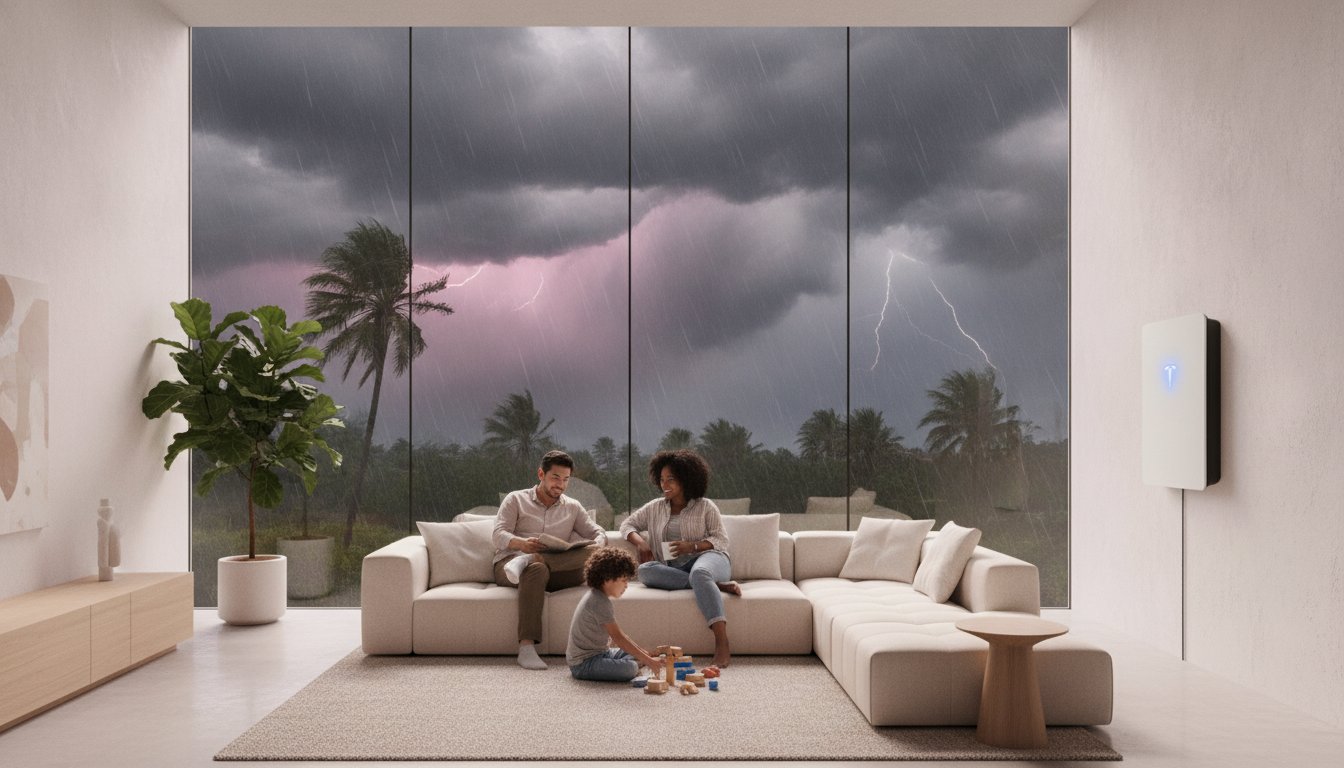
If the Texas energy market now rivals California with 17 gigawatts of storage capacity, why does the approach of a Gulf storm still trigger immediate anxiety for Houston families? This persistent distrust of the regional grid is a rational response to years of unpredictable infrastructure performance. You deserve a home environment where operational continuity is the standard; it should not be a luxury. We recognize that the fear of food spoilage and the disruption of remote professional obligations are significant burdens during peak storm seasons.
By integrating a PE-engineered energy ecosystem, you can finally achieve true peace of mind with battery backup through a system that responds with precision the moment a grid failure occurs. This guide explores the strategic advantages of professional installations, such as the Tesla Powerwall 3, and why they represent the gold standard for Texas home resilience in 2026. You will discover how these quiet, maintenance-free solutions offer a seamless transition to energy independence while maximizing your property value. We will also detail the current regulatory landscape, including the 100% property tax exemption that makes this the ideal time to secure your home’s future.
Key Takeaways
- Define the shift from reactive outage management to proactive, automated energy infrastructure that eliminates the traditional anxiety associated with grid failure.
- Examine the core components of a reliable Energy Storage System (ESS), utilizing the Tesla Powerwall 3 as the industry benchmark for seamless integration.
- Compare the low-maintenance, software-driven operation of battery systems against the logistical and mechanical burdens of traditional fuel-powered generators.
- Understand the necessity of PE-stamped engineering and structural analysis to ensure long-term system reliability and compliance within the Houston market.
- Secure true peace of mind with battery backup by partnering with certified professionals who provide disciplined execution and comprehensive warranty support.
What Does Peace of Mind with Battery Backup Actually Mean?
True peace of mind is the absolute certainty that your home operations will continue without interruption. For many Houston residents, the sound of a transformer blowing or the flicker of overhead lights triggers immediate stress. This “outage anxiety” is a byproduct of living in a region where the energy infrastructure is frequently tested by extreme weather. When you achieve peace of mind with battery backup, you replace this reactive stress with a proactive, engineered solution that values long-term reliability over temporary fixes.
Traditional responses to power failure are fundamentally manual and often insufficient. You search for flashlights, buy bags of ice for food preservation, and hope the disruption is brief. A modern battery system shifts your home into a higher tier of operational readiness. It functions as a “Silent Guard,” an invisible engine that monitors grid health and intervenes within milliseconds. This automated transition ensures that security systems remain active, medical equipment stays powered, and refrigeration cycles continue without a single manual adjustment. By utilizing a Battery energy storage system (BESS), you transition from a state of vulnerability to a position of controlled stability.
The Texas Context: Why Grid Resilience is No Longer Optional
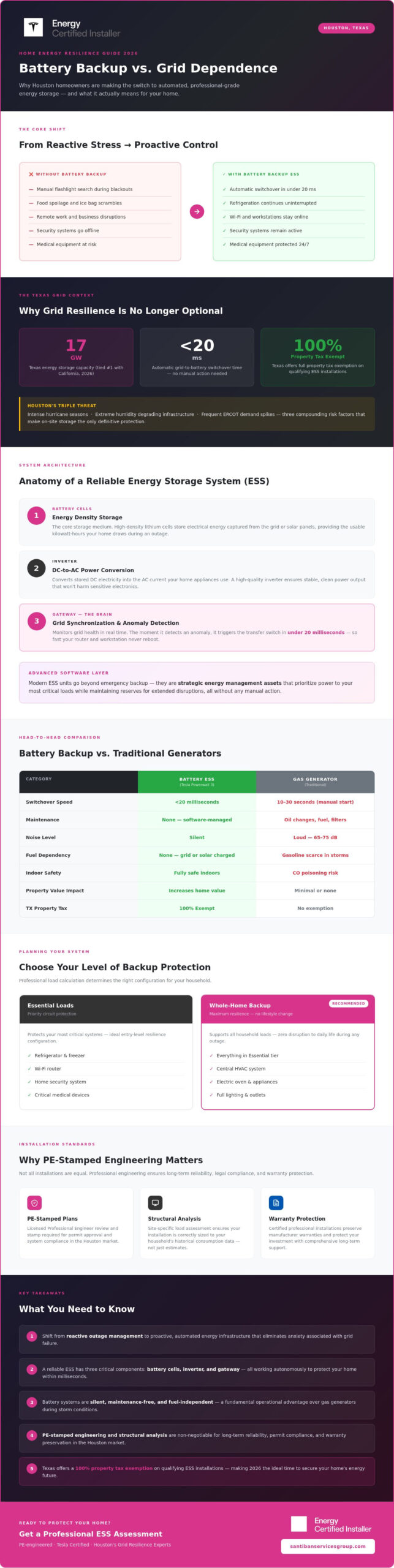
Houston homeowners face a unique trifecta of challenges: intense hurricane seasons, debilitating humidity, and frequent ERCOT demand spikes. As of early 2026, Texas and California are tied for the highest energy storage capacity in the nation, each boasting 17 gigawatts. This evolution is no longer about simple backup; it’s about total energy independence. The Texas grid remains susceptible to localized failures and state-wide load shedding, making on-site storage the only definitive way to bypass systemic instability and protect your family’s comfort.
Essential vs. Whole-Home Backup: Setting Expectations
Effective resilience begins with precise planning. Homeowners must decide between protecting specific critical circuits or backing up the entire property. Professional load calculation is the foundational step in this process, ensuring the system is sized for performance rather than just potential.
- Essential Loads: This configuration includes high-priority items like refrigeration, Wi-Fi, home security, and critical medical devices.
- Whole-Home Backup: This robust approach supports larger loads, such as central HVAC systems and electric ovens, ensuring no change in lifestyle during an outage.
Prioritizing these loads requires a disciplined approach to engineering. We analyze your historical consumption data to determine the exact number of units, such as the Tesla Powerwall 3, required to sustain your specific electrical demands. By establishing these parameters early, you ensure that your energy ecosystem delivers the precise performance your household requires during a crisis.
The Anatomy of a Reliable Energy Storage System (ESS)
An Energy Storage System (ESS) is a sophisticated assembly of electrical engineering designed to stabilize your home power profile. The system relies on three critical components: the battery cells for energy density, the inverter for power conversion, and the gateway for grid synchronization. This gateway acts as the brain of the operation. It detects grid anomalies and triggers a transfer switch in less than 20 milliseconds. This rapid response is essential. It prevents sensitive electronics, such as Wi-Fi routers and workstation computers, from rebooting during a transition. When these components work in unison, you gain genuine peace of mind with battery backup, knowing the system operates autonomously without manual intervention.
Investing in a high-performance ESS allows you to increase your resiliency to power outages by providing a reliable, local source of electricity. Modern systems have moved beyond simple emergency use; they are now strategic assets for managing energy costs and grid instability. By utilizing advanced software, these systems can prioritize power distribution to your home most critical assets while maintaining a reserve for extended disruptions. Selecting the right hardware is the first step in building this resilient infrastructure.
Tesla Powerwall 3: The New Standard for Houston Homes
The Tesla Powerwall 3 has emerged as the 2026 industry benchmark due to its unified architecture. Unlike previous generations that required separate external components, the Powerwall 3 features an integrated solar inverter. This design significantly reduces installation complexity and point-of-failure risks. It delivers a continuous power output of 11.5 kW, which is vital for Houston homeowners. This capacity provides enough sustained power to start and run high-draw appliances like central air conditioning units during a blackout. The unit utilizes Lithium Iron Phosphate (LFP) chemistry. This material choice enhances thermal stability and extends the operational lifespan of the cells, ensuring your investment remains durable in the Texas heat.
EcoFlow Battery Backup: Versatility in Energy Security
EcoFlow Battery Backup systems offer a modular alternative for specific residential or light commercial applications. These systems are highly scalable. You can begin with a foundational unit and expand the capacity as your energy requirements evolve over time. EcoFlow units integrate seamlessly with existing solar arrays or can be configured for grid-only charging. This flexibility makes them a strategic choice for businesses that require targeted protection for server rooms or homeowners who prefer a phased approach to their energy infrastructure. Ensuring your system is designed with these high-performance components is vital for long-term reliability. If you are evaluating which architecture best fits your property, you can consult with our engineering team to review a customized design.
Battery Backup vs. Traditional Generators: A Practical Comparison
Traditional standby generators have long been the default choice for home resilience, yet they rely on mechanical processes that are fundamentally different from modern energy storage. A generator is an internal combustion engine. It requires physical fuel, moving parts, and regular mechanical intervention to remain operational. In contrast, a battery system is a solid-state electronic device. Achieving true peace of mind with battery backup requires a transition from reactive mechanical hardware to proactive digital infrastructure. While generators serve a purpose, their inherent limitations in speed, maintenance, and logistics often conflict with the requirements of a modern Houston household.
Maintenance schedules highlight the primary operational divide. A generator requires annual oil changes, spark plug replacements, and filter service; it also needs to “exercise” weekly to ensure the engine hasn’t seized. Battery systems eliminate these mechanical chores. Maintenance is performed through automated software updates that optimize cell balancing and efficiency without homeowner involvement. Adhering to established ESS safety guidelines ensures that your solid-state system operates within peak performance parameters without the fire risks or exhaust hazards associated with combustion engines.
The transition speed during a grid failure is perhaps the most visible performance metric. An auto-start generator typically requires 10 to 30 seconds to sense a blackout, crank the engine, and stabilize voltage before transferring the load. This delay is long enough to crash computers and reset security systems. A battery system completes this same task in less than 20 milliseconds. This “instant-on” capability ensures that your home operations continue without a perceptible flicker. Furthermore, batteries operate in near-silence, removing the high-decibel noise pollution and toxic exhaust fumes that can disturb both your family and your neighbors during an extended outage.
Total Cost of Ownership (TCO) Analysis
A generator is a depreciating asset that only represents a cost. It sits idle until a failure occurs, consuming fuel and requiring service regardless of use. Batteries provide a strategic return on investment through “Time-of-Use” load shifting. By charging when rates are low and discharging during peak demand periods, the system actively reduces your monthly utility expenses. From the perspective of a Tesla Powerwall installer, the longevity and daily utility of these systems make them a more fiscally responsible choice for long-term property value.
Operational Reliability During Extended Outages
Logistics often become the breaking point for traditional systems during severe weather. If gas lines are compromised or roads are blocked for propane delivery, a generator’s runtime is strictly limited by its remaining fuel. A solar-coupled battery creates an infinite loop of energy. It harvests sunlight during the day to power the home and recharge the cells, providing a self-sustaining ecosystem that can operate indefinitely. The inherent reliability of solid-state storage systems eliminates the mechanical points of failure common in internal combustion engines.
Designing for Resilience: The Importance of PE-Stamped Engineering
Engineering precision is the differentiator between a functional electrical component and a resilient energy ecosystem. In the Houston market, Professional Engineer (PE) stamped design is a non-negotiable requirement for ensuring the structural and electrical integrity of your home. A PE stamp signifies that a licensed professional has reviewed every technical detail, from load calculations to circuit protection, ensuring the system meets rigorous state and local safety standards. This level of oversight is essential to achieving true peace of mind with battery backup, as it guarantees that your infrastructure is designed to withstand the specific environmental stressors of the Gulf Coast.
Structural analysis is a critical phase of the design process that many providers overlook. Integrating high-capacity battery arrays or performing solar reroofing requires a comprehensive evaluation of your property’s load-bearing capacity. Our engineering team conducts detailed assessments to determine optimal battery placement and ensures that roof structures can support modern solar equipment during high-wind events. This disciplined approach prevents long-term structural fatigue and ensures that your investment remains a stable asset for the life of the property. By prioritizing technical compliance, you eliminate the operational risks associated with unengineered installations.
Permitting and Compliance in the Houston Area
Navigating the requirements for CenterPoint energy connections and municipal building departments requires specialized expertise. PE stamped engineering for solar systems is a vital component of the permitting process, providing the documented proof of safety that regulators require. Relying on unpermitted or “fly-by-night” installers creates significant legal and safety liabilities, including potential insurance claim denials or grid interconnection refusals. Professional engineering streamlines these approvals, ensuring your system is commissioned correctly and remains in full compliance with the 2023 National Electrical Code.
Industrial-Grade Standards for Residential Projects
Our organization applies industrial electrical construction standards to every residential project we undertake. This methodology utilizes specialized personnel and rigorous training protocols that are typically reserved for large-scale commercial infrastructure. We operate under a “silent engine” philosophy; our goal is to provide a competent, invisible force that keeps your household running smoothly in the background. This commitment to precision ensures that your system delivers consistent performance when the grid fails. To ensure your home meets these high-end strategic standards, you should request a PE-stamped engineering consultation for your resilience project.
Securing Your Future: Why Professional Installation Matters
Hardware is only as effective as the engineering behind its installation. While many retailers offer energy storage products, the technical execution determines the long-term reliability of your investment. Genuine peace of mind with battery backup is derived from the confidence that your system was commissioned by certified professionals who understand the complexities of the Texas electrical grid. A professional installation ensures that your warranty remains intact and that the system is optimized for the specific load requirements of your property. Relying on uncertified labor or DIY methods often voids manufacturer protections and introduces significant safety risks to your household.
Choosing a Tesla-certified partner provides access to specialized diagnostic tools and direct manufacturer support that generic installers cannot offer. This relationship extends far beyond the initial commissioning of the system. It includes continuous remote monitoring and proactive support that ensures your energy hub is always prepared for a grid event. This transition from a vulnerable residential property to a resilient energy hub is the ultimate objective of professional energy management. By prioritizing expert control over simple hardware acquisition, you secure a property that remains functional regardless of regional infrastructure performance.
The Santiban Advantage: 24+ Years of Industrial Expertise
Our team brings over 24 years of experience in complex industrial electrical construction to every residential project. This background allows us to manage high-stakes installations with a level of precision and safety that standard contractors often overlook. We function as a unified provider for tesla and solar roof solutions, ensuring that every component of your energy ecosystem is perfectly synchronized. This comprehensive approach eliminates the friction of managing multiple vendors and guarantees a higher standard of operational performance. Our commitment to professional authority ensures that your system is a durable, long-term asset.
Taking the First Step Toward Energy Security
Initiating your transition to energy independence begins with a professional site assessment and a rigorous load analysis. During this consultation, our engineers focus on data-driven precision rather than generic sales projections. We evaluate your historical energy consumption and structural capacity to deliver a customized result that aligns with your specific resilience goals. This methodical approach ensures that your system is sized correctly for your lifestyle and professional needs. To begin this process, you may Contact Santiban Services Group for a professional energy consultation.
Securing Operational Continuity for the Modern Texas Home
Transitioning from a state of grid vulnerability to energy independence is a strategic move that protects both your lifestyle and your property value. You have seen how solid-state storage outperforms traditional mechanical generators in speed, maintenance, and long-term reliability. Achieving lasting peace of mind with battery backup requires more than just high-end hardware; it demands a disciplined engineering approach that accounts for the specific structural and electrical rigors of the Houston environment.
Santiban Services Group brings over 24 years of industrial expertise to your residential project. Our in-house PE-stamped engineering design ensures that every installation meets the highest standards of technical compliance and safety. As a Tesla-Certified Installer, we provide a unified solution that bridges the gap between complex industrial capability and customized home resilience. You deserve a partner that values precision and consistent performance above all else. Secure your home’s energy future with a certified Tesla Powerwall 3 installation from Santiban Services Group.
Take control of your home’s energy destiny and ensure your family remains powered through every season.
Frequently Asked Questions
Is a battery backup system worth the investment in Houston?
A battery backup system is a strategic asset for Houston homeowners due to the recurring instability of the regional grid. Beyond the immediate operational continuity, Texas law provides a 100% property tax exemption for the value added by these systems. This fiscal advantage, combined with the elimination of outage-related costs like food spoilage and lost work hours, ensures a high long-term return on investment for your property.
Can a Tesla Powerwall 3 run my central air conditioner during an outage?
Yes, the Tesla Powerwall 3 is specifically engineered to handle high-demand loads such as central air conditioning. With a continuous power output of 11.5 kW, a single unit can sustain the startup and operation of most modern HVAC systems. For larger properties with multiple units, our engineering team can design a parallel configuration to ensure your entire climate control system remains functional during a total grid failure.
How long will a home battery backup last during a total grid failure?
The duration of power depends on your household load and whether the system is coupled with solar panels. In a standalone configuration, a single battery typically supports essential loads for approximately 24 hours. When integrated with solar reroofing, the system recharges during daylight hours, creating a self-sustaining energy loop that can provide peace of mind with battery backup for the duration of an extended outage.
Do I need solar panels for a battery backup system to provide peace of mind?
Solar panels are not a technical requirement for achieving energy security, but they enhance long-term resilience. You can install an AC-coupled system that charges directly from the grid to provide protection during short-term interruptions. However, adding solar panels allows you to maintain power during multi-day events when the grid remains inactive and cannot recharge the battery cells, ensuring total energy independence.
What is the difference between a standby generator and a battery backup?
The primary difference lies in the transition speed and maintenance requirements. A battery backup provides an instant transition in under 20 milliseconds, whereas a generator requires 10 to 30 seconds to engage. Batteries are silent, solid-state devices with no fuel requirements. Generators are mechanical engines that produce noise and exhaust while requiring regular oil changes, spark plug replacements, and manual fuel management.
How does PE-stamped engineering affect my battery installation?
PE-stamped engineering ensures your installation meets all structural and electrical safety standards required by local Houston municipalities. This professional certification is necessary for securing building permits and maintaining compliance with the 2023 National Electrical Code. It provides documented proof that your system’s placement and integration are safe, technically sound, and capable of withstanding the specific environmental stressors of the Gulf Coast.
Can I monitor my battery backup system remotely during a storm?
Yes, modern energy storage systems include integrated gateways that allow for comprehensive remote monitoring via secure mobile applications. You can track real-time power consumption, battery levels, and grid status from any location. This visibility is vital during storm seasons, as it allows you to manage your energy reserves proactively and adjust your usage based on the projected duration of the outage.
Are there tax incentives for installing battery backup in Texas in 2026?
As of 2026, the 30% federal tax credit for residential clean energy is no longer available for systems placed in service after December 31, 2025. However, Texas law continues to provide a 100% property tax exemption on the value added by your system. Additionally, local utility programs like the Austin Energy Power Partner or Oncor rebates may provide upfront financial incentives or annual rewards for participating in grid-stabilization efforts.