
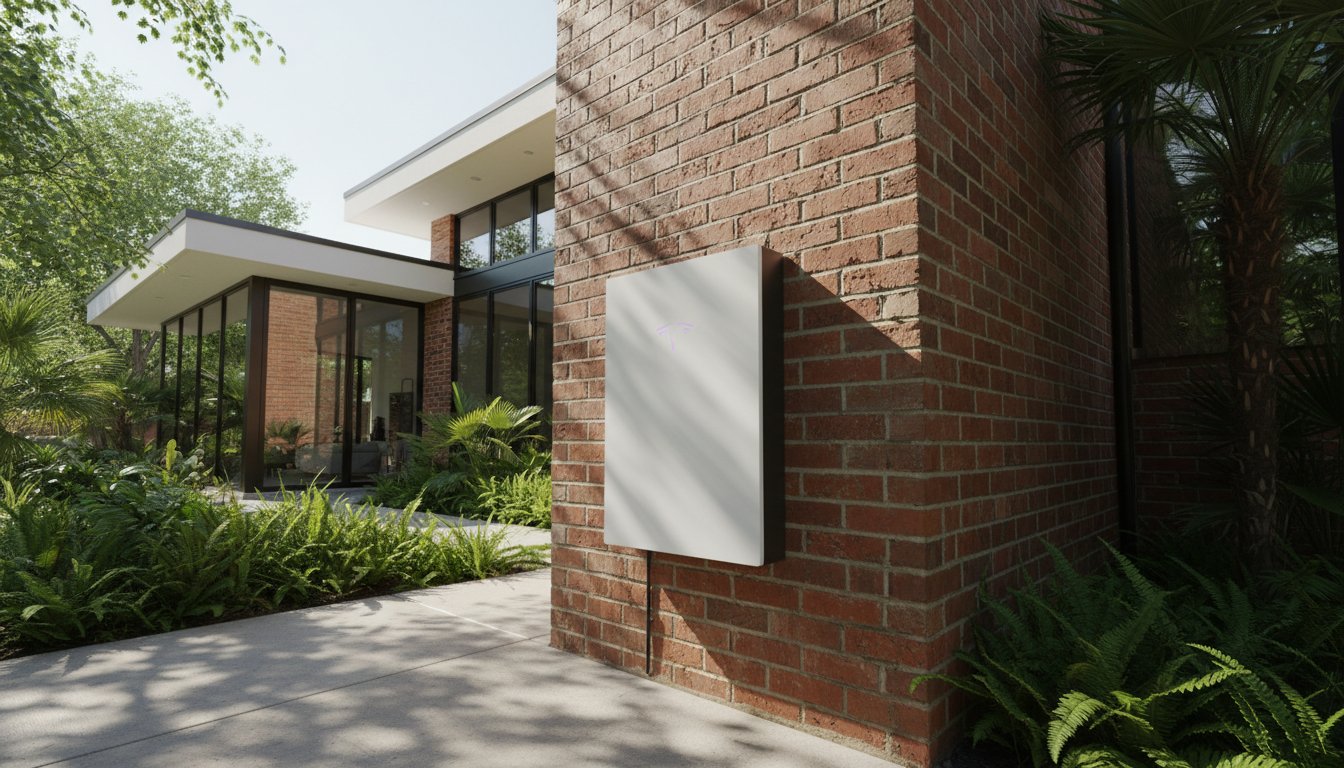
In the Houston climate, selecting a backup system based solely on storage capacity is a strategic error that often leads to premature hardware failure. With Texas electricity prices rising by 23% over the last three years, identifying the best home battery for Texas heat requires a focus on thermal resilience to protect your financial investment. You likely understand that grid instability is no longer a rare event but a seasonal expectation that demands a high-performance response.
Our 2026 guide provides the technical clarity needed to secure your home against extreme temperatures and localized outages. We’ll demonstrate why Lithium Iron Phosphate (LFP) chemistries, which offer a superior lifespan of up to 6,000 cycles, are the only disciplined choice for Houston’s 105°F ambient conditions. This analysis covers the seamless integration of the Tesla Powerwall 3, the specifics of CenterPoint’s $135 per kilowatt rebate program, and the meticulous engineering standards required for long-term reliability in the Gulf Coast region.
Key Takeaways
- Identify the specific cooling architectures and LFP chemistries that mitigate thermal runaway risks during Houston’s triple-digit heatwaves.
- Compare the operational efficiency of market-leading systems like the Tesla Powerwall 3 to determine which hardware sustains peak performance in high humidity.
- Navigate the complexities of Houston’s permitting process through professional, PE-stamped designs that ensure compliance with 2026 safety standards.
- Select the best home battery for Texas heat to maximize your return via federal tax credits and participation in emerging virtual power plant programs.
- Integrate your energy storage with the ERCOT grid to secure your property against instability while accessing exclusive utility-based financial incentives.
Why Houston’s Triple-Digit Heat is the Ultimate Test for Home Batteries
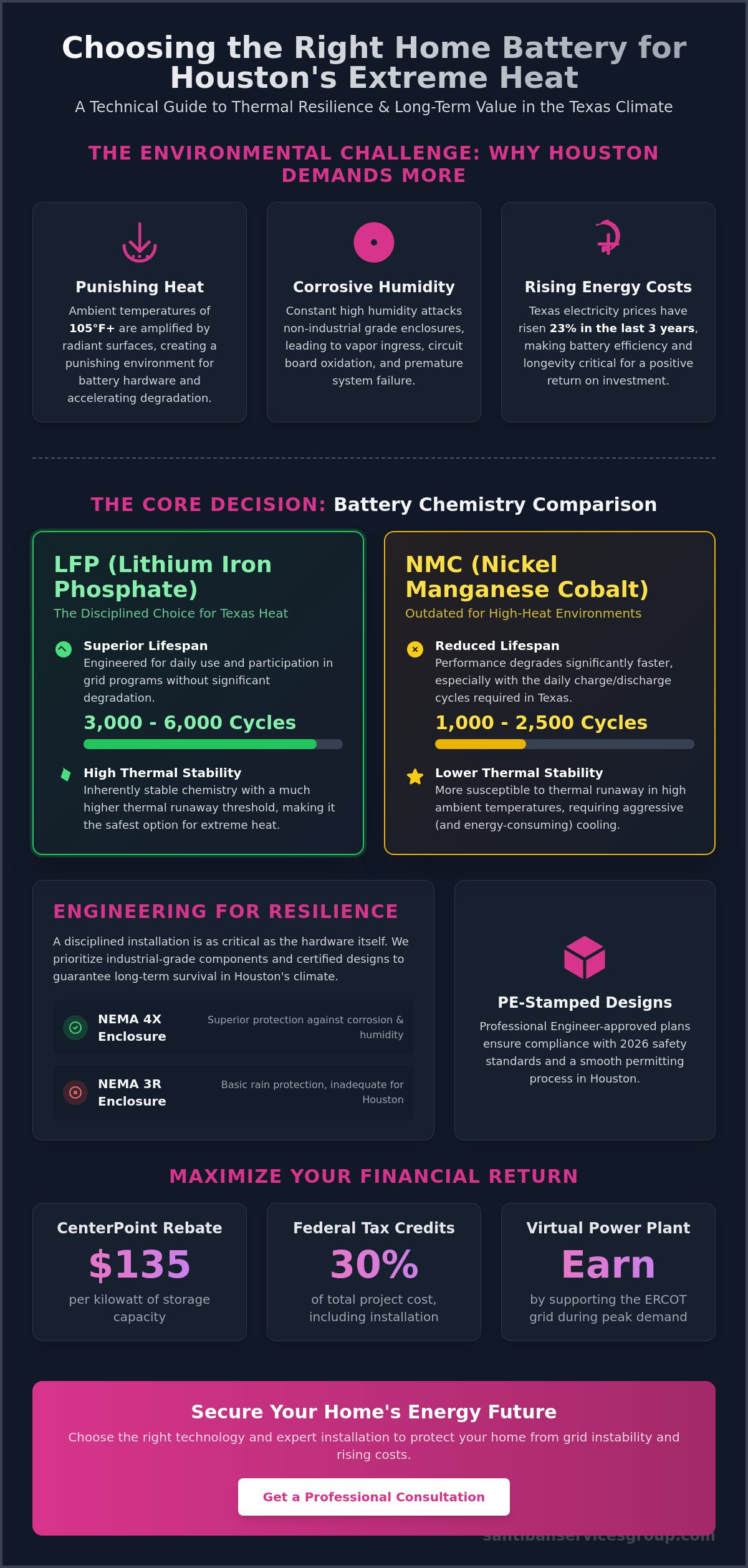
Houston’s urban environment creates a concentrated heat island effect that pushes outdoor temperatures well beyond regional averages. For homeowners seeking the best home battery for Texas heat, this thermal reality dictates every hardware choice. When ambient air hits 105°F, radiant heat from nearby brick or concrete surfaces can elevate the local temperature at the mounting site by another 10 to 15 degrees. This creates a punishing environment for energy storage systems that lack sophisticated thermal management.
High temperatures accelerate the chemical reactions inside the cells. This instability increases the risk of thermal runaway, a condition where internal heat generates more heat in a dangerous feedback loop. Understanding the fundamental differences in LFP vs. NMC chemistry is vital for safety and performance. Lithium Iron Phosphate (LFP) systems typically offer a higher thermal threshold. They remain stable in the Texas sun while other chemistries may require aggressive, energy-consuming cooling to stay operational.
Humidity acts as a silent catalyst for atmospheric corrosion. In Houston, the high moisture content in the air combined with intense heat can compromise non-industrial grade battery enclosures within a few years. Meticulous attention to enclosure seals is required to prevent vapor ingress. Without these protections, humidity leads to circuit board oxidation and eventual system failure. Santiban Services Group views the enclosure as a primary line of defense against these localized environmental stressors.
Thermal degradation carries a measurable financial cost. Heat reduces a battery’s round-trip efficiency, which means you lose more energy during the charging and discharging process. Over a five-year period, an uncooled battery in Houston may see its capacity drop significantly faster than a system maintained at optimal temperatures. This loss of efficiency directly impacts your ability to offset high electricity prices, which have risen by 23% in Texas over the last three years.
Ambient vs. Internal Operating Temperatures
The delta between Houston air temperature and a battery’s internal core is a critical engineering metric. Most residential systems undergo a “derating” process when they reach specific thermal limits. During derating, the battery limits its power output to protect itself from permanent damage. An uncooled unit facing a 105°F Houston afternoon often operates as if it were in 120°F conditions. This results in sluggish performance and reduced backup capability during the exact peak demand hours when you need the best home battery for Texas heat to perform at its peak.
NEMA Ratings and Enclosure Integrity
Santiban Services Group prioritizes industrial-grade housing to ensure long-term equipment survival. While NEMA 3R enclosures provide basic rain protection, NEMA 4X ratings offer superior protection against corrosion and windblown dust. We utilize UV-resistant coatings to prevent the Texas sun from degrading the enclosure’s structural integrity. Meticulous installation ensures that every seal remains airtight. This disciplined approach preserves delicate electronics from Houston’s relentless humidity and ensures the system operates as a reliable, silent engine for your home.
LFP vs. NMC: Choosing the Right Chemistry for Thermal Stability
In the pursuit of identifying the best home battery for Texas heat, the technical distinction between Lithium Iron Phosphate (LFP) and Nickel Manganese Cobalt (NMC) is the most significant factor in long-term reliability. While NMC was once favored for its high energy density, the 2026 market has shifted toward LFP as the definitive industrial standard for Gulf Coast installations. This transition is driven by the chemistry’s inherent ability to maintain structural integrity during the rapid temperature swings common in Houston.
Durability metrics highlight the stark contrast between these two chemistries. LFP batteries typically sustain between 3,000 and 6,000 cycles before significant degradation occurs. In comparison, NMC units often show reduced performance after only 1,000 to 2,500 cycles. For homeowners, this means an LFP system is better equipped for strengthening the Texas grid through daily cycling without sacrificing its 10 year lifespan. The safety profile is equally compelling; LFP cells possess a much higher thermal runaway threshold, which significantly reduces fire risks in high-ambient environments.
Thermal management is not just a performance feature; it’s a requirement for hardware survival. If you require a tailored energy solution designed for industrial grade resilience, our team provides the technical expertise to manage every detail of the transition. We prioritize LFP systems because they allow for a disciplined approach to home energy security that mirrors the high standards of corporate facility management.
The Science of Thermal Stability
LFP’s resilience stems from the strong covalent bonds between phosphorus and oxygen atoms within the cathode. These bonds remain stable even under extreme thermal stress, preventing the oxygen release that often triggers combustion in other battery types. NMC batteries require more aggressive and energy-consuming cooling systems because their chemical structure is more prone to heat-induced breakdown. Lithium Iron Phosphate (LFP) chemistry is the superior choice for high-ambient environments like Texas.
Active Liquid Cooling vs. Passive Air Cooling
The Tesla Powerwall 3 utilizes an integrated liquid thermal management system to maintain optimal cell health regardless of external conditions. This active cooling is essential in Houston, where 100% humidity renders passive air cooling nearly useless. Air doesn’t carry heat away efficiently when it’s saturated with moisture, which leads to internal heat buildup in fan-cooled units. Relying on active liquid cooling is a meticulous engineering choice that ensures your system meets strict warranty requirements while functioning as the best home battery for Texas heat during a mid-August grid failure.
Comparing the Market Leaders: Tesla Powerwall 3 vs. EcoFlow for Houston
Identifying the best home battery for Texas heat involves more than comparing raw storage capacity; it requires a structural analysis of how hardware handles peak electrical loads during 100% humidity. As of April 2026, the Tesla Powerwall 3 and the EcoFlow Delta Pro Ultra have emerged as the primary contenders for Houston homeowners. These systems utilize Lithium Iron Phosphate (LFP) chemistry to ensure long-term stability. Academic research into the Thermal Stability of Lithium-Ion Batteries confirms that LFP cathodes resist the oxygen release that typically leads to thermal failure in high-ambient environments.
Houston summers test the limits of residential inverters. During a typical July afternoon, a central HVAC system can pull significant current, creating internal heat within the battery system. The Tesla Powerwall 3 delivers a continuous power output of 11.5 kW, which is sufficient to start and run large air conditioning units without relying on the grid. In contrast, the EcoFlow Delta Pro Ultra offers a modular approach, allowing users to stack battery units to reach up to 90 kWh of capacity. This scalability is a strategic advantage for larger estates with high energy demands.
Warranty terms offer the most transparent look at a manufacturer’s confidence in their thermal management. Tesla provides a 10 year warranty that explicitly covers capacity retention, even in the punishing Texas climate. This protection is vital because heat is the primary driver of cell degradation. If a system cannot maintain 70% of its original capacity over a decade in Houston, it fails to meet the Santiban standard of excellence. Reliability is the foundation of our equipment selection process.
Tesla Powerwall 3: Built for the Texas Grid
The Powerwall 3 features an integrated solar inverter that reduces the number of heat-generating conversion steps between your panels and the battery cells. This streamlined architecture improves overall round-trip efficiency. To maximize your financial return, this hardware allows for seamless participation in Tesla Electric, a program that compensates Houstonians for supporting the ERCOT grid during peak demand. Securing these benefits requires a certified Tesla Powerwall installer to ensure the system meets all manufacturer and local engineering codes.
EcoFlow Solutions for Scalable Backup
EcoFlow serves as a flexible alternative for properties where space or specific mounting requirements limit the use of wall-mounted units. Their residential line utilizes the same resilient LFP chemistry that we prioritize for all Texas installations. The modular nature of the Delta Pro Ultra allows for rapid expansion. You can start with a single 6 kW unit and add modules as your home’s cooling demands grow. This “plug-and-play” capability ensures your energy infrastructure can evolve alongside your property’s needs without requiring a complete system overhaul.
Engineering for Resilience: PE-Stamped Design and Permitting in Houston
Professional engineering serves as the foundation for any resilient energy system in the Gulf Coast. While many providers focus solely on hardware specs, Santiban Services Group prioritizes the structural and electrical integrity required by Houston’s unique building codes. Identifying the best home battery for Texas heat is an empty exercise if the installation fails to meet the rigorous standards set by local jurisdictions. These regulations exist to protect your property from the dual threats of extreme thermal stress and high-velocity wind events common to our region.
Interconnection with CenterPoint Energy represents a significant hurdle for unorganized installers. The utility requires meticulous electrical diagrams and equipment specifications before granting permission to operate. Providing industrial-grade documentation from the outset prevents the common 4-week delays seen in the Houston permitting office. This disciplined approach ensures your system transitions from a capital investment to a functioning asset without unnecessary bureaucratic friction. Our process treats every residential installation with the same level of corporate stability found in large-scale facility management.
Fire code compliance is another critical area where professional oversight is non-negotiable. Current NFPA 855 standards dictate strict requirements for battery placement, particularly concerning clearances from windows, doors, and living spaces. Whether you choose a garage mount or a specialized outdoor installation, our engineering team ensures every detail meets these safety benchmarks. If you’re ready to secure your property with a system that exceeds local codes, consult with our technical specialists to begin your design phase.
The Value of Professional Engineering
Houston’s proximity to the coast means all exterior equipment must withstand significant wind loads. A standard installation that ignores these factors can jeopardize your home insurance coverage during a major storm event. Utilizing PE-stamped engineering provides a verified layer of safety that generic installers cannot match. Santiban maintains a proactive approach to technical compliance, ensuring that your energy storage system functions as a silent engine for your home’s reliability.
Navigating the Houston Permitting Process
The City of Houston permitting office often presents bottlenecks for energy storage projects that lack comprehensive site plans. Superior documentation leads to faster grid approval and a smoother final inspection process. There is a direct link between solar reroofing and structural battery integrity; both require a thorough analysis of the home’s load-bearing capacity. Our dedicated teams manage these complex logistical challenges in the background, making the path to energy independence predictable and stable.
Maximizing Your Investment with Tesla Electric and Texas Incentives
Securing the best home battery for Texas heat is a strategic decision that extends beyond immediate backup power. In 2026, the financial landscape for energy storage in Houston has become increasingly sophisticated, offering multiple pathways to offset the initial capital expenditure. Homeowners can leverage the Federal Residential Clean Energy Credit, which has historically provided a 30% tax credit for qualified systems. Given the evolving regulatory environment in April 2026, we advise clients to consult with a tax professional to confirm their specific eligibility for this significant incentive.
Local utility programs provide immediate liquidity through direct rebates. CenterPoint Energy currently offers a residential solar-plus-storage rebate of $135 per kilowatt installed, with a maximum payout of $2,025 for standard residential applications. For those choosing the Tesla Powerwall 3, the “Next Million Powerwall Rebate” provides an additional $500 per unit for systems ordered by June 30, 2026, and installed by the end of the year. These incentives, combined with the 23% increase in Texas electricity prices over the last three years, accelerate the timeline for a full return on investment.
Calculating the “Resilience ROI” requires looking past monthly bill savings to the protection of your property’s core systems. A single multi-day outage during a Houston heatwave can lead to thousands of dollars in secondary costs, from mold remediation to specialized HVAC repairs. A high-performance battery system functions as a silent insurance policy. It maintains your home’s environmental controls and prevents the structural degradation associated with prolonged high humidity and internal heat gain.
Virtual Power Plants (VPP) in Houston
The Tesla Electric program has transformed the best home battery for Texas heat from a static backup tool into an active revenue generator. By participating in a Virtual Power Plant, your system automatically discharges stored energy to the ERCOT grid during periods of peak demand. This typically occurs during the late afternoon when temperatures are highest and grid stability is most at risk. Houstonians enrolled in these programs receive compensation for their contribution, effectively allowing the battery to pay for itself while supporting regional infrastructure. This integrated approach ensures your home remains a stable node within a volatile energy market.
Taking the Next Step with Santiban
Santiban Services Group brings over 24 years of industrial facility management experience to the residential energy sector. We understand that excellence in every detail is the only way to ensure long-term equipment performance in the Gulf Coast climate. Our disciplined teams provide a comprehensive thermal resilience assessment to determine the optimal configuration for your specific property needs. We manage the entire lifecycle of the project, from PE-stamped engineering to final utility interconnection. Schedule your professional energy storage consultation with Santiban to secure a tailored solution that prioritizes reliability and corporate-grade stability.
Securing Your Energy Future in the Gulf Coast
The data confirms that Lithium Iron Phosphate (LFP) chemistry and active liquid cooling are the non-negotiable standards for surviving Houston’s 105°F summers. Identifying the best home battery for Texas heat is a long-term commitment to property resilience. Beyond hardware, the success of your energy strategy depends on meticulous engineering and a disciplined approach to grid integration. A system is only as reliable as the technical standards behind its installation.
Santiban Services Group leverages 24+ years of Texas industrial experience to deliver residential solutions that mirror corporate-grade stability. Our dedicated teams provide PE-stamped engineering as a standard practice. This ensures every project meets strict local wind-load and fire codes. As Tesla-certified installers, we ensure your hardware functions as a silent engine for your home’s reliability while maximizing your participation in utility programs.
Take control of your energy independence today. Secure Your Houston Home with a Heat-Resilient Battery Strategy and ensure your family remains protected regardless of grid volatility or extreme temperatures. We’re ready to provide the professional oversight your project deserves.
Frequently Asked Questions
Does the Texas heat shorten the lifespan of a home battery?
Yes, extreme ambient temperatures significantly accelerate the chemical degradation of battery cells. In Houston, where summer temperatures frequently reach 105°F, uncooled batteries face a shortened operational life due to internal heat buildup. Selecting the best home battery for Texas heat requires a focus on Lithium Iron Phosphate (LFP) chemistry. This chemistry maintains its integrity for up to 6,000 cycles, whereas older NMC units often degrade after only 2,500 cycles in similar conditions.
Which battery chemistry is safest for Houston’s high temperatures?
Lithium Iron Phosphate (LFP) is the safest and most stable chemistry for the Houston climate. These batteries possess a much higher thermal runaway threshold than Nickel Manganese Cobalt (NMC) alternatives. LFP cells don’t release oxygen during a thermal event, which significantly reduces the risk of fire during extreme heatwaves. This chemical stability makes LFP the industrial standard for all 2026 residential installations in the Gulf Coast region.
Can I install my solar battery outdoors in Houston?
Outdoor installation is possible if the system utilizes an industrial-grade enclosure rated for high humidity. Batteries must feature a NEMA 3R or 4X rating to protect delicate internal electronics from moisture ingress and salt air corrosion. Santiban recommends mounting units in shaded areas to minimize the radiant heat load from the Texas sun. Meticulous site selection is a critical component of our comprehensive engineering process to ensure long-term hardware survival.
Is active liquid cooling necessary for a home battery in Texas?
Active liquid cooling is essential for maintaining system performance when humidity levels reach 100%. Passive air cooling relies on heat exchange with the surrounding environment, which becomes ineffective in the thick, saturated air of a Houston summer. Systems like the Tesla Powerwall 3 use an integrated liquid thermal management system to keep cells at an optimal temperature. This proactive cooling ensures the system meets its 10 year warranty requirements while operating at peak efficiency.
Are there specific Houston rebates for installing a Tesla Powerwall 3?
Houston homeowners can access the CenterPoint Energy rebate of $135 per kilowatt installed, which is capped at $2,025 for 2026. Additionally, Tesla offers a “Next Million Powerwall Rebate” providing $500 per unit for qualifying orders placed by June 30, 2026. These local incentives combine with federal tax credits to improve the overall financial return on your investment. Our dedicated teams manage the documentation required to secure these benefits for our clients.
What happens to my battery during a hurricane-related power outage?
Your battery system automatically disconnects from the utility grid within milliseconds to form a localized microgrid. This rapid transition ensures your home remains powered while protecting utility workers from dangerous backfeeding. The system then prioritizes your essential loads, such as refrigeration and medical equipment, using stored solar energy. It functions as a silent engine of reliability, providing consistent performance when the external infrastructure fails during a major storm event.
Do I need a special permit to install a battery in Houston?
Yes, all energy storage systems require specific electrical and building permits from the City of Houston. CenterPoint Energy also mandates a formal interconnection agreement before the system is allowed to operate. Santiban provides PE-stamped engineering designs to ensure every installation meets these strict regulatory standards. This disciplined approach to documentation prevents common bottlenecks in the permitting office and ensures your system is fully compliant with 2026 safety codes.
How much backup power do I need to run my AC during a Houston summer?
Running a standard 3 ton central air conditioner typically requires a system with at least 11.5 kW of continuous power output to handle the initial startup surge. Most Houston properties require at least 13.5 kWh of storage capacity to maintain cooling for several hours during a grid failure. We provide a tailored thermal resilience assessment to calculate the exact tonnage requirements for your home. This ensures your backup strategy is sized correctly for the most demanding summer afternoons.