
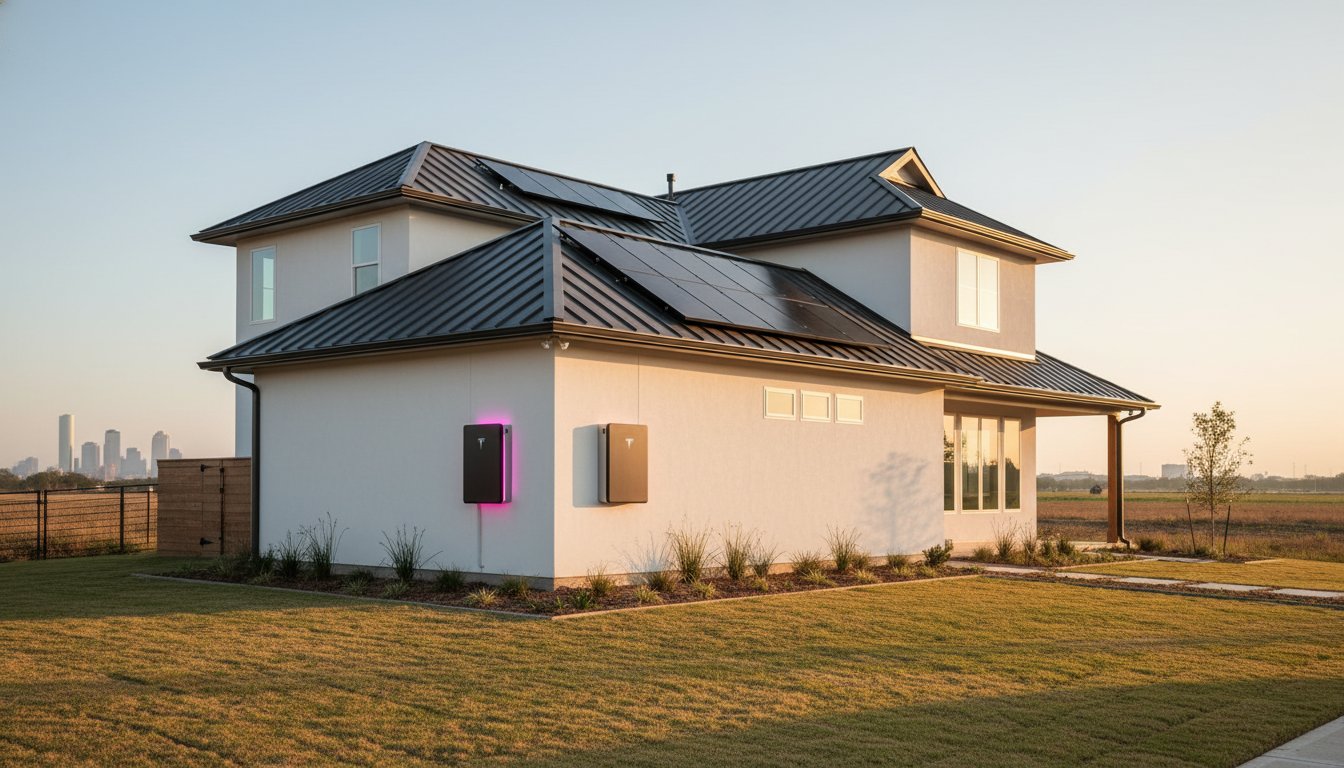
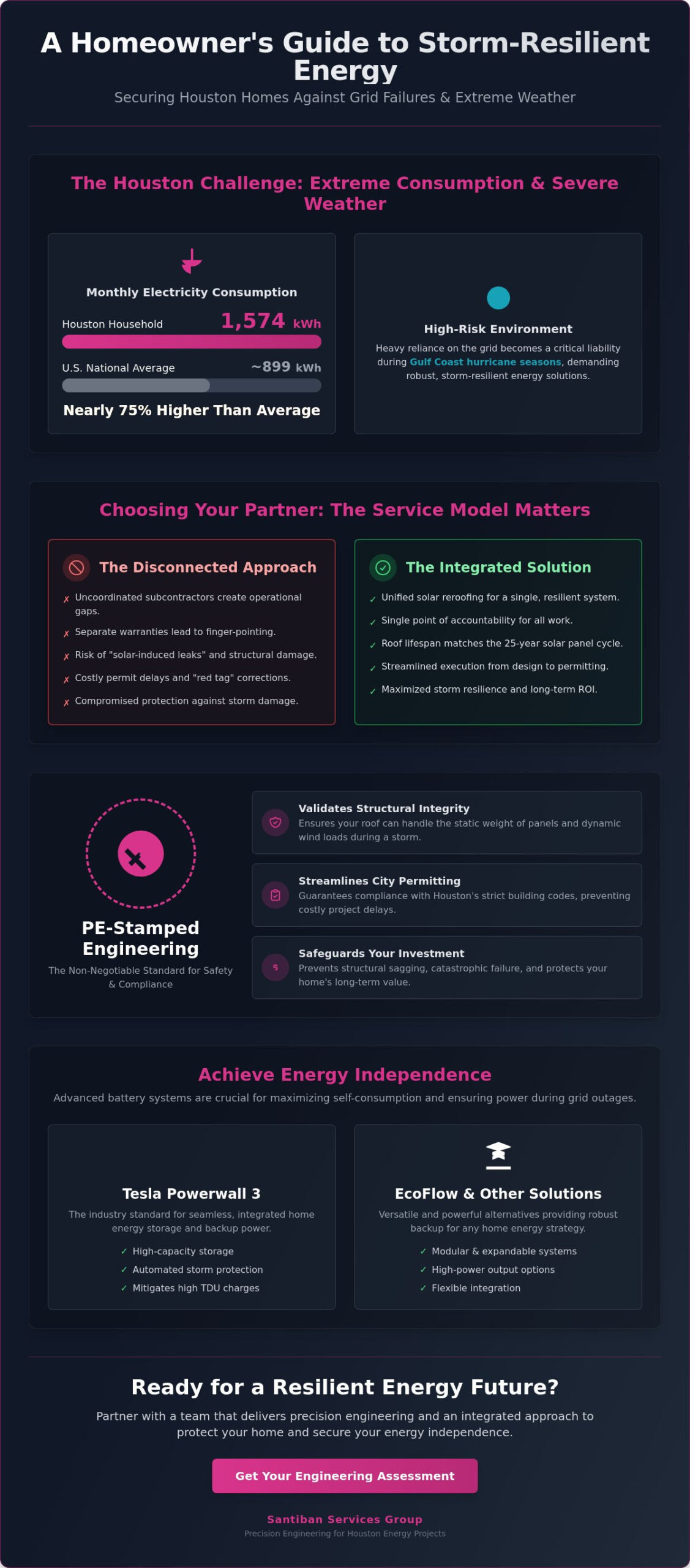
The average Houston household consumes 1,574 kWh of electricity every month, a figure that is nearly 75% higher than the national average. This heavy reliance on the grid becomes a significant liability during Gulf Coast hurricane seasons, especially when uncoordinated contractors fail to align structural integrity with energy production. Selecting from the available solar and roofing companies Houston requires a move beyond basic labor toward high-end strategic partnerships. You understand that a roof is your first line of defense, and adding solar technology shouldn’t compromise that protection with leaks or poor engineering.
This professional guide clarifies how to evaluate providers based on PE-stamped engineering designs, storm resilience, and integrated energy technology. You’ll discover how to manage the complexities of CenterPoint TDU charges and the transition to 2024 building codes through disciplined, unified execution. We provide a methodical overview of how solar reroofing and advanced battery systems, such as the Tesla Powerwall 3, deliver long-term ROI. By the end of this analysis, you’ll have the framework to secure a storm-resilient system that ensures energy independence through every season.
Key Takeaways
- Understand the critical role of PE-stamped engineering in validating roof load capacity and securing streamlined city permits for complex energy projects.
- Discover how to vet solar and roofing companies Houston by prioritizing integrated service models over uncoordinated subcontracted teams.
- Learn why a unified solar reroofing strategy is essential for maintaining structural integrity against Gulf Coast wind loads and high humidity.
- Evaluate advanced battery backup systems, including the Tesla Powerwall 3 and EcoFlow solutions, to maximize energy independence and mitigate high TDU delivery charges.
- Identify the technical standards necessary to ensure your system survives extreme weather events while delivering consistent, long-term ROI.
The Synergy of Solar and Roofing in Houston’s Climate
Solar reroofing represents a comprehensive structural and energy modernization of a property. In the Texas Gulf Coast, treating these as separate services often leads to technical friction and operational gaps. Leading solar and roofing companies Houston prioritize a unified approach to ensure that the roof deck and the solar array function as a single, resilient unit. This integrated strategy eliminates the coordination errors that frequently occur when independent roofing crews and solar installers work on the same surface without a shared engineering plan.
Houston’s environmental conditions are unforgiving. High humidity accelerates the degradation of inferior roofing materials, while hurricane-force winds test the uplift ratings of every mounting bracket. Simultaneous installation is a strategic financial decision. It eliminates the redundant costs of mobilization and scaffolding. It also ensures that the roof’s lifespan matches the 25-year performance cycle of the solar panels, avoiding the massive expense of removing and reinstalling an array to fix a roof leak just a few years after commissioning.
Why Roofing Integrity is the Foundation of Solar ROI
Structural integrity determines the long-term success of any rooftop solar power system. Modern arrays add significant static and dynamic loads to a building. Without PE stamped engineering for solar systems, homeowners risk structural deformation or “solar-induced leaks.” These leaks often occur when racking systems are mounted on aging shingles that have already reached their performance limits. By integrating these services, property owners secure a single point of accountability for both the roof and solar warranties. This prevents the common conflict between separate contractors when structural issues arise.
Storm Resilience: Preparing for Gulf Coast Weather
Preparing for Houston’s weather requires adherence to strict wind uplift ratings and the use of specialized mounting hardware. Integrated planning allows for the selection of impact-resistant roofing materials that are specifically compatible with solar racking. As Houston moves toward adopting the 2024 International Codes, the precision of these installations becomes even more critical for compliance. For property owners seeking the highest level of protection, Tesla and solar roof systems provide a streamlined aesthetic without sacrificing the durability required for high-velocity hurricane zones. These systems are engineered to withstand the extreme pressures of the Gulf Coast, ensuring the energy infrastructure remains intact when the grid fails.
Technical Standards: PE-Stamped Engineering and Certified Installations
Professional energy projects in the Gulf Coast demand more than basic electrical knowledge. They require a rigorous foundation in structural science. Leading solar and roofing companies Houston distinguish themselves by providing PE stamped engineering for solar systems as a standard phase of project development. This process involves a licensed structural engineer validating that the roof deck can sustain both the static dead load of the equipment and the dynamic wind loads common in Harris County. Without these validated calculations, property owners risk structural sagging or catastrophic failure during extreme weather events.
Engineering precision is not merely a safety requirement. It is a financial safeguard. Professional designs prevent the costly permitting delays that plague unorganized contractors. By submitting PE-stamped documents, providers ensure that every technical detail meets the 2021 International Codes currently enforced by the City of Houston. This methodical approach streamlines the approval process and guarantees that the installation passes final inspections without the need for expensive modifications or “red tag” corrections.
The Permitting Process in Harris County
The City of Houston maintains a strict permitting and inspection protocol for all residential and commercial solar installations. Documentation must include detailed site plans, electrical one-line diagrams, and structural load assessments. Professional engineering firms manage this administrative burden by preparing comprehensive submittal packages that address the specific requirements of local Authorities Having Jurisdiction (AHJ). This proactive management reduces the time from contract signing to commissioning, allowing owners to begin capturing ROI sooner. For complex projects, securing PE-stamped design services is the most effective way to navigate these regulatory hurdles.
Certification Matters: Tesla Powerwall and EcoFlow
Energy independence in 2026 relies on sophisticated hardware like the Tesla Powerwall 3 and EcoFlow battery backups. Integrating these systems into the Tesla electric grid ecosystem requires specialized expertise. Certified installers are essential for maintaining manufacturer warranty compliance and ensuring the industrial electrical construction meets high-end standards. These technicians understand the technical complexity of high-voltage DC-coupled systems and grid-tie-in synchronization. A certified installation ensures that your battery backup functions as a silent engine, providing a seamless transition to off-grid power when the local infrastructure fails. This level of technical discipline is what separates high-end strategic partners from basic labor services.
Evaluating Service Models: Integrated Contractors vs. Subcontracted Teams
The “Master Contractor” model serves as the gold standard for high-stakes Houston energy projects. Unlike firms that rely on a rotating list of subcontracted crews, an integrated provider maintains internal control over engineering, roofing mechanics, and electrical execution. This unified structure is vital because solar installers who lack roofing expertise often compromise the building envelope during mounting. When one entity manages the entire lifecycle, the transition from contract signing to Permission to Operate (PTO) becomes a predictable, streamlined sequence rather than a series of uncoordinated delays.
Selecting from the available solar and roofing companies Houston requires a deep look at their operational structure. A firm that specializes in industrial electrical construction brings a level of precision that residential-only installers cannot match. This technical depth ensures that complex grid-tie-ins and high-voltage components are handled with the same rigor as an industrial plant. This provides a level of reliability that protects the client’s long-term investment while ensuring the system operates at peak efficiency from day one.
Single Point of Contact and Unified Warranties
Accountability is often the first casualty of subcontracted projects. When a leak occurs beneath a solar array, roofing contractors and solar installers frequently engage in “finger-pointing” to avoid liability. An integrated approach eliminates this conflict by providing a single point of contact and a unified warranty that covers both the structural roof and the energy system. This model is particularly beneficial for commercial facility managers who require clear communication and rapid resolution. Choosing the Right Solar Installer involves verifying if the provider has the tenure to back their claims. A firm with over 20 years of experience in the Houston market offers a level of corporate stability that newer, sales-focused companies simply lack.
Commercial and Industrial Capabilities
Modern facility upgrades in Texas often extend beyond basic energy production. High-end strategic partners integrate commercial ev charger installation alongside solar arrays to create a comprehensive energy ecosystem. These large-scale projects require a sophisticated understanding of industrial electrical construction and the capacity to manage significant power upgrades. Whether it is retrofitting a warehouse or designing a solar-ready commercial roof, the ability to handle both the structural and electrical complexities under one roof ensures a seamless project delivery. This integrated capability allows a business to scale its energy infrastructure while maintaining a relentless focus on safety and precision.
Key Criteria for Selecting Houston Solar and Roofing Partners
Evaluating solar and roofing companies Houston requires a rigorous vetting framework that prioritizes engineering over marketing. Many property owners prioritize the lowest bid, yet this often leads to structural compromise or permitting failures. Professional engineering is a strategic investment. It ensures the system adheres to the 2021 International Codes and can withstand the extreme wind loads of the Gulf Coast. A local physical presence is equally critical. In the aftermath of a Houston hurricane, a provider with established local infrastructure offers the necessary post-storm support to verify system integrity and handle repairs.
Modern system selection now centers on energy resilience through high-capacity battery storage. Integrating a Tesla Powerwall 3 or EcoFlow battery backup allows a facility to function as an independent power plant. This capability is essential given the high TDU charges from CenterPoint that solar credits don’t offset. By maximizing self-consumption, owners protect themselves against rising grid costs and frequent outages.
The “Resilience Checklist” for Houston Owners
A disciplined evaluation focuses on technical capacity and proven performance. Property owners should utilize the following checklist when vetting potential partners:
- In-House PE-Stamped Design: Confirm the firm employs or directly manages structural engineers to validate load-bearing requirements.
- Manufacturer Certifications: Verify active certifications for Tesla Powerwall and EcoFlow installations to maintain warranty validity.
- Storm-Performance History: Request data regarding how their installed systems performed during recent high-wind events.
Understanding ROI Beyond the Federal Tax Credit
The financial profile of a solar project has shifted in 2026. While the federal tax credit status requires consultation with a tax professional, long-term ROI is increasingly driven by the total energy ecosystem. For instance, understanding the ev charger installation cost is vital for owners planning to integrate commercial EV charging infrastructure. This comprehensive approach increases property value and reduces total operational expenses. Energy independence provides a hedge against the volatility of the deregulated Texas market, where retail electricity providers offer varying buyback rates. Additionally, a professionally installed solar reroofing project can influence insurance premium considerations. Carriers often value the enhanced structural integrity of a new, wind-rated roof that meets the latest building standards. To secure these technical and financial benefits, you must partner with a firm that prioritizes precision and safety. Contact Santiban Services Group to review your project’s technical requirements.
Santiban Services Group: Precision Engineering for Houston Energy Projects
Santiban Services Group operates with a level of technical discipline honed over 24 years of industrial and energy expertise. As one of the premier solar and roofing companies Houston trusts for complex infrastructure, we function as a silent engine for our clients’ operations. Our brand identity is rooted in reliability and corporate stability, ensuring that every project detail remains under expert control. We prioritize long-term relationships over short-term gains, positioning our firm as a high-end strategic partner for those who value consistent performance. By maintaining a robust industrial division that handles large-scale commercial infrastructure, we bring a level of rigor to residential and commercial energy projects that far exceeds standard labor services.
Our “Engineering-First” methodology dictates that every project begins with PE-stamped precision. We don’t view solar and roofing as separate tasks; we execute a unified strategy that treats the building envelope as a high-performance energy asset. Our teams utilize premium materials specifically selected for their longevity in the Gulf Coast’s humid and high-wind environments. This includes wind-rated roofing systems and heavy-duty racking hardware that meet the strictest safety protocols. Dedicated project management ensures that residential and commercial facility managers have a single, authoritative point of contact throughout the lifecycle of the project. This methodical approach guarantees that every structural and electrical detail meets the highest industry standards, providing a seamless transition from construction to energy production.
Our Integrated Solar Reroofing Process
The transition from a compromised roof to a storm-resilient energy system requires a predictable, multi-phase process. We begin with a structural load-bearing assessment conducted by our engineering team to ensure the roof deck supports modern solar arrays. We then select impact-resistant materials that align with the specific wind-uplift requirements of Harris County. During the installation phase, our specialized personnel manage the industrial electrical construction, ensuring every connection is secure and code-compliant. This disciplined focus on the precision of our execution minimizes the risk of system failure during Houston’s frequent weather events. By the time of the final structural inspection, your property is equipped with a unified system designed for decades of reliable service.
Building Houston’s Future Energy Infrastructure
Santiban Services Group extends its capabilities far beyond standard solar panel installation. Our team specializes in industrial electrical construction and the deployment of commercial EV charging infrastructure. As a certified tesla powerwall installer, we possess the specialized training required to integrate the Tesla Powerwall 3 and EcoFlow battery systems into complex grid-tie-in environments. This technical depth ensures that your facility remains resilient against grid instability and high TDU charges. We balance industrial scale with a focus on specialized personnel, humanizing our corporate structure through the professionalism of our staff. We invite property owners and procurement managers to request a technical consultation for their 2026 energy projects. Our disciplined focus on safety and precision makes us the established partner for organizations that value consistent performance and customized, high-end results.
Securing Your Energy Future with Engineering Precision
Securing energy resilience in the Houston market requires a transition from basic installations to engineered infrastructure. This professional guide has detailed why a unified approach to solar reroofing is the only reliable method to withstand Gulf Coast weather. High-end strategic partners prioritize PE-stamped engineering to ensure structural integrity and streamlined permitting. Your choice among solar and roofing companies Houston should be defined by structural validation and long-term reliability.
Santiban Services Group leverages over 24 years of industrial expertise to deliver these high-performance results. We provide the technical rigor necessary for residential and commercial facility managers to achieve true energy independence. As certified Tesla Powerwall 3 installers with in-house engineering capabilities, we ensure your investment is protected by disciplined execution and professional standards. Take the next step toward a modernized, storm-resilient power strategy. Request a PE-Stamped Engineering Consultation for Your Houston Energy Project. Your property deserves the protection of a unified, professionally engineered energy system.
Frequently Asked Questions
Do I need a new roof before installing solar panels in Houston?
If your current roof has less than 10 to 15 years of serviceable life, you should perform a full replacement before installation. Mounting a 25-year energy system on an aging structure leads to redundant labor costs when the roof eventually fails. Leading solar and roofing companies Houston recommend a unified solar reroofing strategy to ensure the structural envelope and energy array share the same performance lifecycle. This proactive modernization prevents the technical friction associated with separate contractors.
What is a PE-stamped engineering design and why is it required in Texas?
A PE-stamped engineering design is a technical blueprint validated by a licensed Professional Engineer. It confirms that the solar array meets local wind load requirements and structural capacities. The City of Houston requires these stamped documents to ensure compliance with the 2021 International Codes. This level of engineering precision is necessary to secure permits and guarantee that the installation remains stable during the extreme weather events common in Harris County.
Can solar panels withstand Houston hurricanes and high winds?
Properly engineered solar systems can withstand hurricane-force winds when utilizing wind-rated racking and specialized mounting hardware. Resilience depends on the precision of the initial structural assessment and the quality of the industrial electrical construction. Installations that follow PE-stamped designs are specifically calculated to resist the uplift pressures experienced during Gulf Coast storms. This methodical approach ensures that your energy infrastructure remains a reliable asset when the local grid fails.
How long does the solar and roofing installation process take in Harris County?
The timeline for a comprehensive project in Harris County typically spans several weeks to months. This duration includes the engineering phase, permit acquisition from the City of Houston, and the physical installation of the roof and solar components. Final grid-tie-in synchronization and Permission to Operate (PTO) depend on the responsiveness of the local utility. A disciplined contractor manages these administrative milestones to minimize delays and ensure a predictable path to commissioning.
What are the benefits of integrating a Tesla Powerwall 3 with a new roof?
Integrating a Tesla Powerwall 3 provides a unified solution for energy storage and grid resilience. This high-capacity battery system allows property owners to maximize self-consumption and mitigate the impact of CenterPoint TDU charges. Because these delivery fees are not offset by solar credits in the Houston market, battery storage is a critical component for achieving energy independence. The Powerwall 3 offers a seamless transition to off-grid power during infrastructure failures.
Are there specific Houston rebates for solar and roofing in 2026?
Texas provides a 100% property tax exemption for the value added by a solar energy system. While some Texas utilities offer specific rebates, Houston homeowners in the deregulated market must evaluate the buyback plans offered by various Retail Electric Providers (REPs). Rates vary significantly, and it is essential to compare the export credits against the consumption rates of each provider. These financial incentives contribute to the overall ROI of the installation.
Does solar reroofing qualify for the Federal Solar Tax Credit (ITC)?
The availability of the federal solar tax credit for residential properties is currently a point of significant uncertainty in May 2026. Conflicting reports suggest it may have expired at the end of 2025, while others indicate it remains available at 30% through 2032. Property owners should consult with a qualified tax professional to verify current eligibility. For commercial projects, the Investment Tax Credit (Section 48) remains a primary driver for industrial energy modernization.
How do I choose between a local Houston installer and a national solar company?
Local solar and roofing companies Houston often provide superior value due to their deep understanding of Gulf Coast environmental challenges and municipal building codes. While national firms offer scale, local strategic partners bring specialized personnel who are familiar with Houston’s specific wind-rated requirements and permitting nuances. Choosing a partner with a local physical presence ensures reliable post-storm support and a long-term commitment to the performance of your energy infrastructure.