
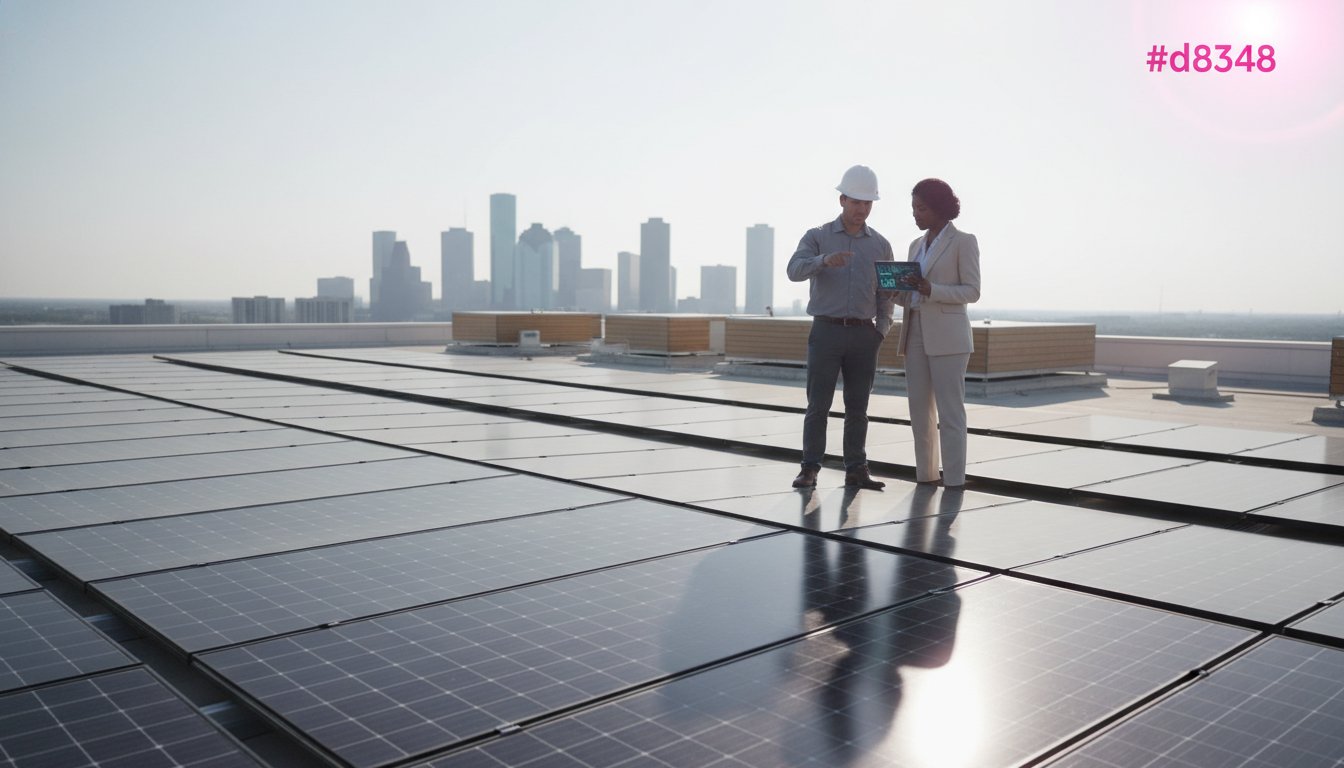
For Houston business owners, the true value of energy independence isn’t found on a simple price tag, but within the precision of the engineering that supports it. Understanding the total commercial solar panel installation cost Houston organizations face requires looking past hardware to the complexities of the Texas grid and local permitting. You’ve likely watched regional energy reliability fluctuate while facing a regulatory process that feels designed to delay your progress. It’s common to worry about hidden expenses in structural reinforcement or roof preparation that often surface too late in the project lifecycle.
This strategic guide provides a definitive breakdown of the investment factors you should expect in 2026. We help you move beyond basic estimates to understand the capital allocation required for a truly resilient system. You’ll gain clarity on the 30% federal investment tax credit, the necessity of PE-stamped engineering designs, and how industrial electrical construction standards dictate your long-term return on investment. We also examine the role of advanced battery integration and the specific technical requirements for modernizing your facility’s energy infrastructure.
Key Takeaways
- Analyze the 2026 supply chain dynamics and industrial utility rates that define the current commercial solar panel installation cost Houston businesses encounter.
- Identify the specific regulatory requirements for Harris County, including why PE-stamped engineering is mandatory for structural compliance and permitting.
- Maximize capital recovery through a detailed understanding of the 30% Federal Investment Tax Credit and the strategic use of MACRS depreciation schedules.
- Mitigate financial risk by evaluating hidden variables such as industrial electrical infrastructure upgrades and the critical timing of solar reroofing.
- Establish rigorous criteria for selecting technical partners with specialized expertise in industrial electrical construction and Tesla Powerwall 3 commercial integration.
The 2026 Landscape of Commercial Solar Costs in Houston
Houston’s industrial sector operates within a high-demand energy environment where utility rate stability is increasingly rare. For many facility managers, the capital expenditure required for solar is no longer viewed as an optional sustainability goal but as a core requirement for operational cost control. The average market benchmark for a commercial solar panel installation cost Houston businesses encounter typically ranges from $1.40 to $1.80 per watt. While hardware costs for solar modules have stabilized, 2026 has seen a 9% year-over-year increase in total project costs. This shift is primarily driven by rising labor rates and the technical complexities of integrating large-scale arrays into the aging Texas grid infrastructure.
Strategic energy procurement now requires a hedge against the volatility of the ERCOT market. When evaluating the Levelized Cost of Energy (LCOE), commercial solar assets provide a predictable, fixed-rate alternative to fluctuating retail power agreements. This financial predictability is essential for long-term budget forecasting, especially as industrial utility rates continue to face upward pressure from regional population growth and increased cooling demands during peak summer months.
Market Drivers Affecting Houston Business Energy Prices
Current utility trends for commercial meters in Harris County reflect a growing premium on reliability. Grid resilience has become a central pillar of the modern Houston business continuity plan. Organizations that rely on continuous power for cold storage, data centers, or manufacturing can’t afford the downtime associated with grid instability. Local demand response programs offer an additional layer of value; they allow businesses to monetize their excess capacity or reduce consumption during peak events. This participation turns a passive energy asset into a proactive revenue stream, effectively lowering the net operational cost of the facility over time.
Economies of Scale in Commercial Solar Arrays
System size remains the most influential factor in determining the final cost-per-watt. Larger installations benefit from significant efficiencies in procurement and deployment. Consider the following comparisons:
- Small Commercial (50kW to 100kW): These systems often face higher soft costs per unit of power produced due to fixed expenses in permitting and engineering.
- Mid-to-Large Scale (500kW to 1MW+): These arrays leverage bulk hardware purchasing and streamlined labor schedules, often reducing the per-watt cost by 15% or more compared to smaller projects.
- Hardware Specifications: High-efficiency modules and industrial-grade inverters represent the primary “hard costs,” but the mounting infrastructure is equally vital.
In the Houston area, structural integrity is a non-negotiable requirement. Industrial-grade mounting hardware must be engineered to withstand Gulf Coast wind loads and potential hurricane events. While this specialized racking adds to the initial investment, it ensures the system remains operational after severe weather. Balancing these hard costs with soft costs like interconnection fees and specialized labor is the key to a successful deployment. Precision in the design phase prevents expensive mid-construction adjustments that can derail a project’s financial feasibility.
Soft Costs and the Value of PE-Stamped Engineering
Soft costs represent the non-hardware expenses that often dictate the efficiency of a project’s timeline and final budget. Within the total commercial solar panel installation cost Houston enterprises manage, these factors include specialized engineering, municipal permitting, and the complex interconnection process. While solar modules are the most visible component, the technical documentation behind them ensures the system operates safely within the local electrical infrastructure. Precise engineering design acts as a safeguard; it prevents the costly mid-installation change orders that frequently arise from overlooked site constraints or regulatory gaps.
Harris County maintains rigorous standards for industrial energy projects. Every commercial rooftop array must have a Professional Engineer (PE) stamp to certify that the building’s structure can support the additional dead load and withstand regional environmental pressures. This level of technical scrutiny is essential for securing utility approval. Without a comprehensive design, projects often stall during the review phase, leading to mounting carrying costs and delayed energy savings. Investing in high-quality PE-stamped engineering design provides the corporate stability needed to move from the proposal phase to active construction without technical friction.
Permitting and Interconnection with CenterPoint Energy
The Houston permitting office requires specific documentation for industrial sites, focusing heavily on electrical safety and grid synchronization. Navigating these requirements involves detailed interconnection studies to ensure the local grid can accept the solar discharge without compromising stability. These studies vary in duration and cost based on the system’s capacity and the existing infrastructure’s health. Leveraging PE-stamped engineering for solar systems allows businesses to submit “permit-ready” plans that anticipate and address CenterPoint Energy’s technical queries upfront. This proactive approach reduces the likelihood of iterative revisions that can extend project timelines by months.
Structural Integrity and Wind Load Engineering
Houston’s proximity to the Gulf Coast introduces unique engineering challenges, specifically regarding wind speed requirements. Commercial arrays must be designed to withstand high-velocity wind events, a standard that is significantly more stringent than in inland regions. This focus on durability reflects the rapid growth documented in recent Texas solar market data, which highlights the need for resilient infrastructure in hurricane-prone zones. Engineering for safety also encompasses:
- Structural Reinforcement: Identifying and addressing roof deck or joist weaknesses before installation begins.
- Fire Code Compliance: Ensuring proper setbacks and access paths for emergency personnel are integrated into the layout.
- Rapid Shutdown Systems: Installing industrial-grade components that allow for immediate de-energization during maintenance or emergencies.
These technical requirements are not mere administrative hurdles. They are the engineering foundations that protect your capital investment and ensure the long-term reliability of your facility’s energy production.

Financial Incentives: ITC, MACRS, and Texas Rebates
Strategic financial planning is the cornerstone of any industrial energy transition. While the initial commercial solar panel installation cost Houston organizations evaluate may seem substantial, the net capital outlay is significantly reduced through a combination of federal, state, and local incentives. These mechanisms are designed to accelerate the deployment of renewable infrastructure by transforming a large capital expenditure into a high-yield operational asset. In 2026, the intersection of tax credits and accelerated depreciation provides a unique window for businesses to secure long-term energy price stability while capturing immediate tax relief.
The total cost of ownership (TCO) calculation must account for more than just hardware and labor. Texas law provides a 100% property tax exemption for the value added by a solar installation. This ensures that while your facility’s operational capability increases, your property tax liability remains unchanged. When combined with the lack of a statewide commercial solar rebate, these federal and property-level benefits become the primary drivers for a project’s financial feasibility.
Maximizing the Federal Investment Tax Credit
The 2026 fiscal year remains a critical period for federal incentives. Businesses that begin construction on a solar project by July 4, 2026, can claim a 30% federal Investment Tax Credit (ITC) on the total system cost. This is a dollar-for-dollar reduction in federal tax liability, not a mere deduction. Eligibility for additional 10% bonus credits exists for projects that meet specific requirements:
- Domestic Content: Utilizing a required percentage of U.S. manufactured components can trigger a 10% bonus.
- Energy Communities: Projects located on brownfield sites or in areas affected by fossil fuel plant closures may qualify for an additional 10% credit.
- Direct Pay and Transferability: Certain entities can now monetize these credits more efficiently, improving liquidity for large-scale industrial deployments.
Accelerated Depreciation and Cash Flow Impact
The Modified Accelerated Cost Recovery System (MACRS) offers a powerful tool for improving first-year return on investment (ROI). Under this framework, commercial solar projects are eligible for a 5-year depreciation schedule. After accounting for the ITC, businesses can depreciate a significant portion of the remaining system cost, often realizing a major tax shield in the first year of operation. This front-loaded benefit contrasts sharply with traditional facility upgrades that may require decades to fully depreciate.
By leveraging MACRS, Houston business owners can align their energy investments with corporate cash flow requirements. It’s a method that treats energy production as a predictable, depreciable piece of industrial equipment rather than a volatile utility expense. This financial structure, paired with the 30% ITC, effectively lowers the net commercial solar panel installation cost Houston companies face, often resulting in a payback period between 9 and 11 years even before considering local utility demand response payments.
Hidden Cost Factors: Roof Health and Electrical Infrastructure
Initial capital assessments often overlook the physical foundations required for a 25-year energy asset. The total commercial solar panel installation cost Houston organizations budget for must account for the structural and electrical readiness of the facility. A solar array is only as reliable as the surface it sits upon and the circuitry that distributes its power. Neglecting these core components during the planning phase leads to operational disruptions and unforeseen expenses that can erode the projected return on investment. Precision in assessing these “hidden” variables ensures that the deployment remains a stable financial performer throughout its lifecycle.
Integrating auxiliary systems like commercial EV charger installation into the primary solar project often provides significant labor and permitting efficiencies. By addressing the facility’s total energy future at once, business owners avoid the redundant costs of multiple mobilizations and separate electrical upgrades. This unified approach to infrastructure development is a hallmark of disciplined corporate management.
Solar Reroofing: Protecting the 25-Year Investment
Commercial roof life expectancy is a critical determinant of project feasibility. Installing a high-performance solar array on a membrane that is 15 years or older is a strategic error. The financial risk of removing and re-installing thousands of pounds of hardware to perform mid-cycle roof repairs can exceed the cost of the initial installation labor. We prioritize a thorough evaluation of the existing substrate to determine if a patch is sufficient or if a full replacement is required. Coordinating Tesla and solar roof solutions allows for a seamless integration where the energy generation and the structural weather barrier function as a single, durable system. This proactive reroofing strategy eliminates the most common point of failure in commercial solar deployments.
Industrial Electrical Construction Requirements
Modern solar integration requires more than simple wiring; it demands robust industrial electrical construction. Existing switchgear capacity must be rigorously tested to ensure it can handle the bidirectional flow of energy and the increased load of industrial-scale inverters. In many Houston facilities, aging transformers or over-capacity panels necessitate upgrades before the utility will grant permission to operate. Future-proofing the site with Tesla electric infrastructure provides the high-end strategic advantage of integrated battery storage and sophisticated power management. These upgrades don’t just facilitate solar; they modernize the entire facility’s electrical backbone, increasing safety and readiness for future technological expansions.
Ensuring your facility meets these rigorous standards is the first step toward energy independence. For a detailed evaluation of your site’s structural and electrical readiness, contact our team for a professional industrial infrastructure assessment.
Choosing a Commercial Solar Partner in Houston
Selecting a technical partner for an industrial energy project is a high-stakes decision that dictates a facility’s operational reliability for decades. While many organizations focus solely on the initial commercial solar panel installation cost Houston contractors provide, the lowest bid often signals a lack of engineering depth. A low-cost proposal frequently excludes critical components such as structural reinforcements or high-grade switchgear upgrades. Professional procurement departments prioritize contractors with a proven track record in industrial electrical construction and a clear commitment to technical precision.
Accountability is a core requirement in large-scale deployments. Choosing a provider that offers in-house PE-stamped engineering design ensures that the team responsible for the blueprints is the same team executing the installation. This unified approach eliminates the communication gaps that occur when design is outsourced to third parties. It provides a single point of responsibility for technical compliance and utility interconnection, which are the most common sources of project delays and budget overruns.
The Santiban Advantage: Engineering-First Solar
Our organization brings over 24 years of industrial experience to every project, providing a level of technical rigor that marketplace models cannot match. We operate as a comprehensive provider, managing every detail from initial structural analysis to final commissioning. As a certified Tesla Powerwall installer, we possess the specialized training required to integrate advanced storage solutions like the Powerwall 3 into your facility’s existing infrastructure. This certification ensures that your backup systems and solar arrays function as a synchronized, resilient energy asset. Our focus remains on delivering a silent engine of energy production that supports your operations without requiring constant oversight.
Next Steps for Your Houston Facility
Advancing a solar investment requires a methodical approach to site assessment. A technical evaluation is the essential first step, providing a preliminary ROI model based on your facility’s specific load profile and substrate condition. This data allows for an informed comparison of engineering design options tailored to your organizational needs. Once the design is finalized, we assist in navigating the complex landscape of financing and tax credit consulting to ensure your 2026 project captures all available incentives. Securing these benefits early in the fiscal year is essential for maximizing the financial performance of your energy transition.
Securing Industrial Energy Resilience in 2026
Strategic energy management requires a shift from viewing power as a variable expense to treating it as a controlled industrial asset. The total commercial solar panel installation cost Houston businesses manage is ultimately defined by engineering precision and structural readiness. Success in this transition depends on maximizing the 30% federal tax credit and leveraging accelerated depreciation to secure a predictable return on investment. By prioritizing PE-stamped engineering and addressing infrastructure needs like electrical switchgear and roof health upfront, you ensure your facility remains operational and efficient for the long term.
Our organization provides over 24 years of industrial electrical experience to every deployment. We operate as a Tesla-Certified Installation partner, providing integrated solutions that include PE-stamped engineering design to streamline the Harris County permitting process. Moving toward energy independence requires a disciplined, data-driven approach to your facility’s specific requirements. Request a Professional Commercial Solar Assessment for Your Houston Facility to receive a comprehensive evaluation of your site’s potential. We’re ready to help you establish a stable and resilient energy foundation for your corporate operations.
Frequently Asked Questions
How much does a commercial solar panel system cost per watt in Houston in 2026?
Commercial solar assets in the Houston market typically range from $1.40 to $1.80 per watt in 2026. This rate includes hardware, standard labor, and basic permitting for industrial-scale projects. Larger systems often achieve lower per-watt rates due to bulk procurement efficiencies and streamlined mobilization schedules. Understanding the total commercial solar panel installation cost Houston businesses face requires a detailed site assessment to identify specific structural or electrical variables.
Does Houston offer property tax exemptions for commercial solar installations?
Texas law provides a 100% property tax exemption for the value added to a facility by a solar installation. This incentive ensures that your property taxes won’t increase despite the capital improvement and the increased operational value of the site. It’s a critical mechanism for maintaining a predictable long-term financial model while modernizing your facility’s energy infrastructure without added tax liability.
What is the average payback period for commercial solar in Texas?
The average payback period for a commercial solar investment in Houston falls between 9 and 11 years when considering standard utility rates. This timeline can be accelerated by utilizing the 30% federal tax credit and MACRS depreciation. High-efficiency systems that integrate with demand response programs often realize a faster return on investment by monetizing excess energy production during peak grid events.
Why is PE-stamped engineering required for my Houston solar project?
Harris County and the City of Houston require PE-stamped engineering to verify that the existing roof structure can safely support the dead load and wind pressure of a solar array. A Professional Engineer’s certification is also mandatory for electrical plan reviews and utility interconnection approval. This technical documentation ensures the project adheres to rigorous safety standards and prevents structural failures during severe weather events.
Can I install solar panels on a commercial roof that is more than 10 years old?
Installation is technically possible, but we don’t recommend deploying a 25-year solar asset on a roof nearing the end of its functional life. If a roof is more than 15 years old, a full replacement or solar reroofing is typically required to avoid the extreme costs of removing and reinstalling the panels for future repairs. A thorough substrate evaluation determines if the existing membrane can support the long-term installation.
How does the 30% Federal Investment Tax Credit work for businesses?
The federal Investment Tax Credit (ITC) provides a dollar-for-dollar reduction in federal tax liability equal to 30% of the total system cost. To qualify for the full 30% in 2026, businesses must begin construction by July 4. Additional bonus credits are available for projects that utilize domestic content or are located in designated energy communities, potentially increasing the total credit value for industrial entities.
What are the additional costs for commercial battery storage integration?
Integrating commercial battery storage involves expenses for hardware and the necessary industrial electrical construction for grid synchronization. Upgrading existing switchgear to accommodate systems like the Tesla Powerwall 3 can add between $5,000 and $35,000 to the project budget. These costs vary based on the current state of your facility’s electrical backbone and the required backup capacity for your critical operations.
How do Houston wind load requirements affect commercial solar mounting costs?
Houston’s proximity to the Gulf Coast mandates mounting systems designed to withstand high-velocity wind loads, which are more stringent than inland requirements. This necessity for industrial-grade racking and specialized anchoring increases the per-watt commercial solar panel installation cost Houston organizations encounter. These engineering standards are vital for protecting the system from hurricane-force winds and ensuring the long-term integrity of the rooftop array.