
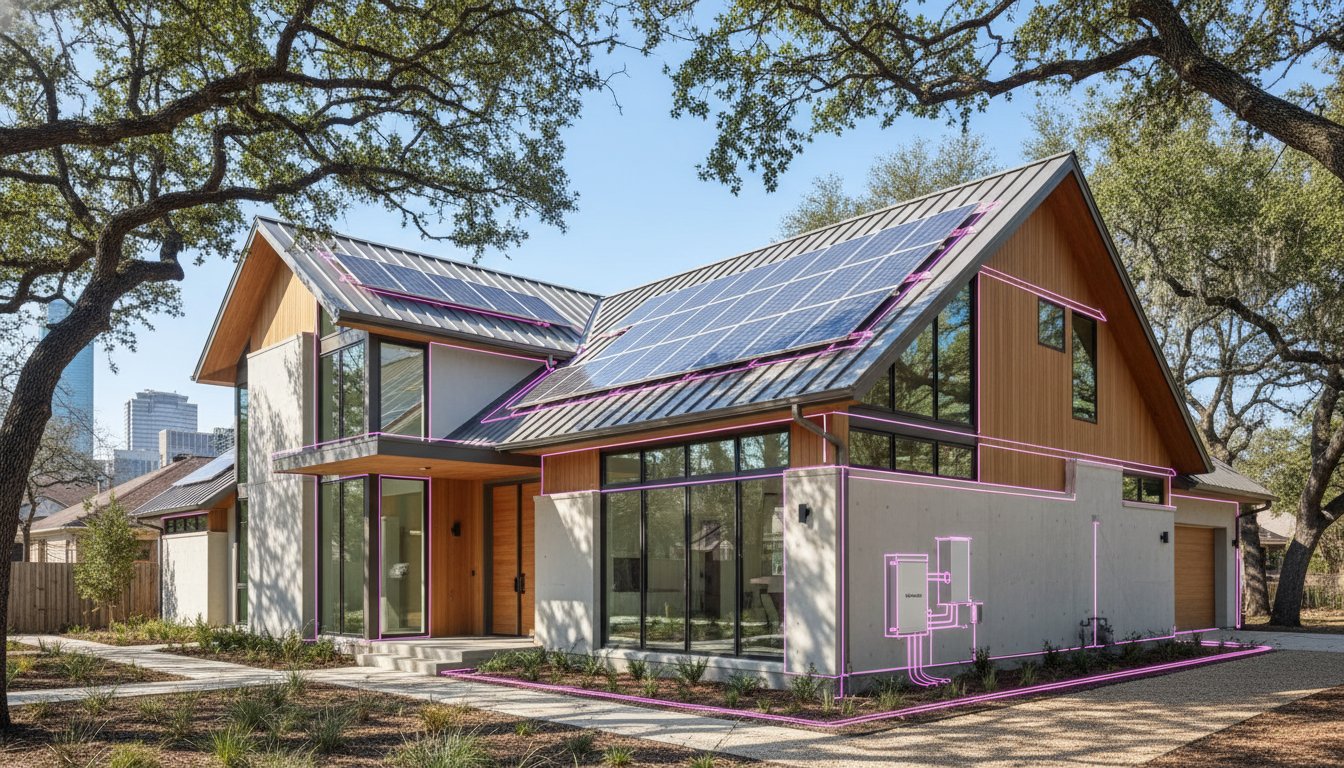
In the Gulf Coast, a solar installation is less of a home improvement project and more of a precision engineering challenge against extreme wind loads. Most project managers understand the frustration of a system that is physically complete but legally stalled due to a failed structural inspection or a rejected utility application. It’s common to feel overwhelmed by the overlapping demands of municipal codes and CenterPoint Energy’s technical standards.
This professional guide clarifies the 2026 Houston solar panel permit requirements to ensure your project moves from design to Permission to Operate without friction. You’ll gain a comprehensive understanding of when a PE-stamped engineering design is mandatory and how to comply with the $140 permit fee structure established in January 2026. We provide a clear roadmap for navigating the 2021 International Energy Conservation Code (IECC) mandates, the 10-foot AC disconnect rule, and the specific documentation required for a seamless utility interconnection.
Key Takeaways
- Utilize the SolarAPP+ platform to access automated permitting pathways for eligible residential systems, significantly reducing traditional administrative timelines.
- Master the dual-track approval process by synchronizing Houston solar panel permit requirements with CenterPoint Energy’s mandatory interconnection agreement.
- Identify the critical structural engineering thresholds that require a PE-stamped design to ensure compliance with 150mph wind load standards.
- Leverage Texas Property Code protections to navigate HOA aesthetic reviews and maintain optimal panel placement for maximum energy yields.
- Ensure technical alignment with 2026 standards for integrated energy storage, specifically for high-capacity systems like the Tesla Powerwall 3.
The Houston Solar Permitting Landscape in 2026
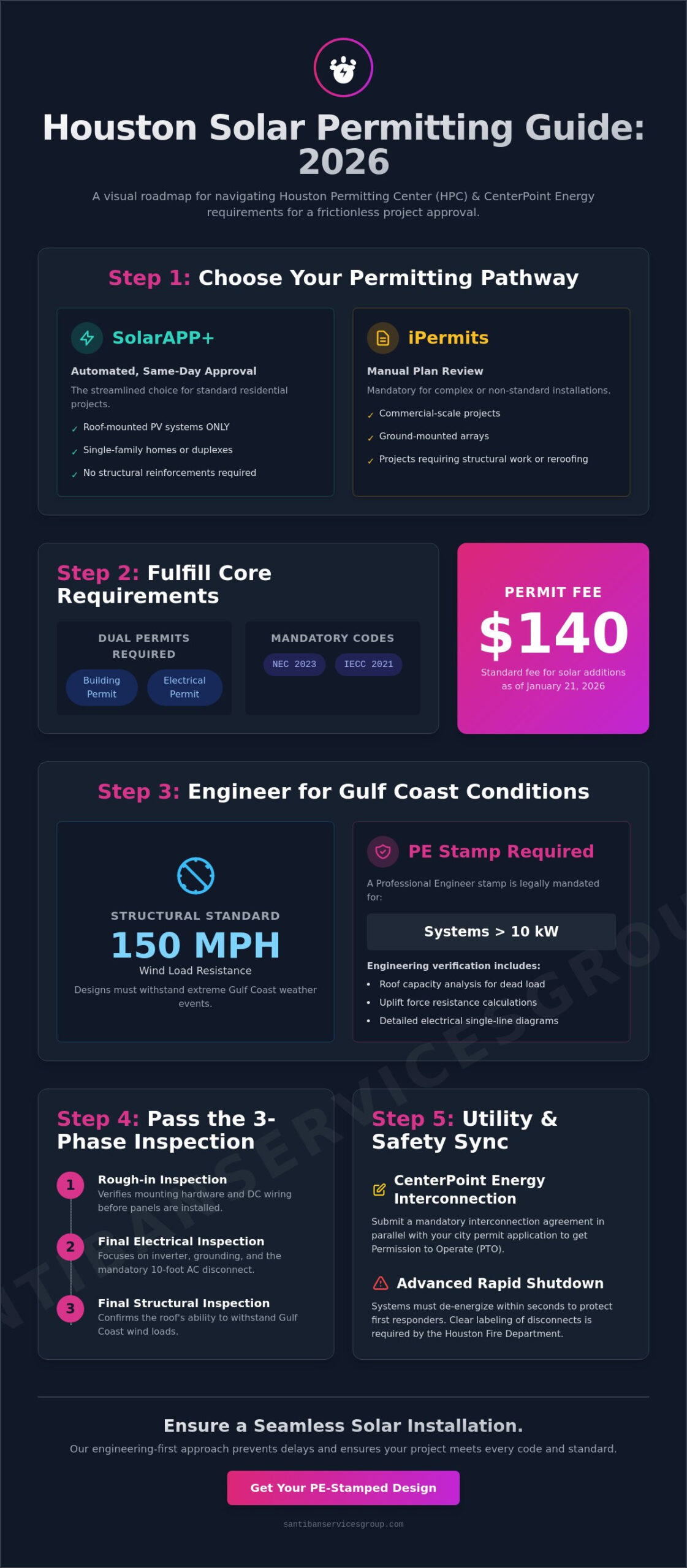
The Houston Permitting Center (HPC) serves as the primary regulatory authority for all renewable energy deployments within the city limits. To successfully satisfy Houston solar panel permit requirements, project managers must navigate either the traditional electronic iPermits system or the streamlined SolarAPP+ pathway. As Solar Power in Texas continues to expand, the city has refined these digital interfaces to handle increased volume while maintaining strict safety standards. Every installation requires two distinct approvals: a building permit to verify structural stability and an electrical permit to ensure code-compliant wiring. In 2026, these processes demand rigorous adherence to the NEC 2023 standards, which prioritize advanced rapid shutdown capabilities and enhanced arc-fault protection.
iPermits vs. SolarAPP+: Which Path for You?
The choice between permitting pathways depends entirely on the technical scope of your project. SolarAPP+ provides an automated, same-day approval process for eligible residential systems. To qualify, the project must be a roof-mounted PV system on a single-family home or duplex that doesn’t require structural reinforcements. If your design includes ground-mounted arrays, commercial-scale infrastructure, or complex solar reroofing, you must utilize the traditional iPermits portal for a manual plan review. According to the Building Permit Fee Schedule effective January 21, 2026, the standard fee for solar panel additions is $140. While the automated path is faster, complex systems often require a more detailed review to ensure long-term operational stability.
The Three-Phase Inspection Cycle
Achieving a final sign-off involves a methodical three-phase inspection cycle conducted by City of Houston officials. The process begins with the rough-in inspection, where the inspector verifies the mounting hardware and DC wiring before they’re obscured by panels. The final electrical inspection focuses on the inverter’s performance, grounding, and the mandatory 10-foot AC disconnect switch required by CenterPoint Energy. Finally, a structural inspection confirms the roof’s ability to withstand Gulf Coast wind loads. Common failures in the Houston metro area often stem from improper labeling or minor deviations from the approved PE-stamped engineering design. Coordinating these visits requires precise timing to avoid project delays, as inspectors prioritize systems that demonstrate professional-grade readiness and clear documentation.
Structural and Electrical Code Requirements for the Gulf Coast
Houston’s geographical position necessitates a rigorous approach to structural engineering. Solar installations must withstand wind speeds exceeding 150mph, a standard that aligns with the latest Houston Permitting Center guidelines. These regulations ensure that roof-mounted arrays remain secure during extreme weather events. Compliance with Houston solar panel permit requirements involves strict adherence to NEC Article 690, which governs the installation and safety of photovoltaic systems. For ground-mounted systems or battery storage units, planners must account for flood zone elevations to prevent equipment failure during seasonal inundation.
Why Your Project Needs a PE Stamp
Texas law mandates that any solar energy system exceeding 10kW must feature a professional engineering stamp on the design plans. This requirement ensures that the proposed system has undergone rigorous structural analysis. A licensed engineer must verify the roof’s capacity to support the dead load of the panels while resisting the substantial uplift forces generated by Gulf Coast storms. Beyond structural integrity, PE stamped engineering for solar systems includes detailed electrical single-line diagrams. These diagrams provide the technical clarity necessary for city officials to approve the project’s electrical architecture. If you’re managing a large-scale project, securing professional PE-stamped engineering design services early prevents costly redesigns.
Advanced Rapid Shutdown and Safety Compliance
Safety protocols for 2026 emphasize the protection of first responders through advanced rapid shutdown systems. These mechanisms must de-energize the PV array within seconds of a manual trigger. The Houston Fire Department requires specific labeling to identify:
- The main photovoltaic system disconnect.
- Rapid shutdown initiation switches.
- Circuit pathways and inverter locations.
Proper circuit sizing and the selection of overcurrent protection devices (OCPD) are critical to preventing thermal events. For battery integration, installers must ensure the mounting location meets all clearance and ventilation codes. Precision in these electrical details ensures full alignment with Houston solar panel permit requirements and is essential for passing the city’s final inspection.
CenterPoint Energy Interconnection and PTO
Securing a building permit from the City of Houston is only half of the regulatory requirement. To legally energize a system, you must navigate a separate, parallel track with CenterPoint Energy, the Transmission and Distribution Service Provider (TDSP) for the region. While the city focuses on structural and electrical safety within your property lines, CenterPoint evaluates how your system interacts with the broader electrical grid. This dual-track synchronization is a cornerstone of professional project management. Failure to align these processes often leads to significant delays, as the utility will not finalize interconnection until all city inspections are documented and closed.
The Interconnection Application Process
The journey toward grid integration begins with a formal application submitted through CenterPoint’s online portal. Although the application itself does not carry a fee as of May 2026, it requires a high level of technical precision. You must provide detailed electrical single-line diagrams (SLDs), specific equipment manufacturer data sheets, and proof of your approved city permits. CenterPoint engineers review these documents to ensure your system’s inverter settings and rapid shutdown capabilities won’t compromise local grid stability. In the current Houston market, the administrative timeline for this review typically spans four to eight weeks. Maintaining proactive communication during this window is essential for keeping your project on schedule.
Permission to Operate (PTO) and Metering
The most critical milestone in any solar project is the receipt of the Permission to Operate (PTO) letter. You shouldn’t activate your system before this official authorization arrives. Turning on an unapproved system can lead to billing errors or hazardous backfeeding into the grid during maintenance. Once CenterPoint issues the PTO, they’ll schedule the installation of a bi-directional meter. Unlike standard meters, this hardware separately tracks the electricity you pull from the grid and the excess energy your panels export.
This bi-directional tracking is the foundation for modern grid ROI strategies. In 2026, Houston residents are increasingly leveraging their hardware to participate in utility buyback programs and Virtual Power Plants (VPPs). For those utilizing advanced storage solutions, such as a Tesla Powerwall 3 installation, PTO opens the door to automated grid services. These programs allow your system to support the Houston grid during peak demand while generating credits on your utility bill. Ensuring your system meets all Houston solar panel permit requirements and utility standards is the only way to access these high-end strategic benefits.
HOA Regulations and Solar Reroofing Permits
Texas Property Code Section 202.010 establishes a clear legal framework that prevents homeowners’ associations from prohibiting solar energy devices. This protection is vital for residents navigating Houston solar panel permit requirements, as it ensures that aesthetic preferences do not override energy efficiency. However, HOAs retain the right to impose reasonable conditions on the placement of panels. The industry standard for challenging these restrictions is the 10% Rule. If an HOA-mandated location reduces the system’s projected annual energy production by more than 10%, the homeowner’s original design typically takes legal precedence. This determination requires a professional production analysis, often generated through sophisticated modeling software, to serve as objective evidence during the approval process.
Navigating HOA Placement Restrictions
When submitting your application to an HOA, include a complete documentation package to preempt potential disputes. This package should feature your site plan, equipment specifications, and the production analysis if placement is a point of contention. Documented HOA approval is frequently a prerequisite for finalizing your municipal permit application. If an association unreasonably denies an application that meets all state criteria, legal remedies are available under the Texas Property Code. Professional installers often handle these negotiations on behalf of the client to ensure the project remains on schedule.
Permitting the Solar Reroof
Coordinating solar and solar roof permits is a strategic necessity for long-term property resilience. Many Houston homeowners find that reroofing before a PV installation prevents the costly double-permit trap, where separate building permits for the roof and the solar array lead to redundant inspections and administrative fees. Consolidating these workflows into a single project timeline ensures that the roofing contractor and the solar installer are synchronized for city inspections. This unified approach minimizes roof penetrations and guarantees that the structural integrity of the new roof is preserved during the mounting process.
For homeowners seeking a seamless transition to renewable energy, our team provides comprehensive Solar Reroofing services that align with all local regulatory standards.
The Santiban Approach: Engineering-First Solar Solutions
Santiban Services Group operates with a 24-year legacy of excellence in industrial electrical construction and grid resilience across the Houston metro area. This deep-rooted expertise allows us to approach residential and commercial solar with a level of precision typically reserved for high-stakes infrastructure projects. Our methodology prioritizes structural integrity and electrical safety, ensuring that every design inherently meets or exceeds Houston solar panel permit requirements. By maintaining in-house, PE-stamped engineering design capabilities, we eliminate the administrative delays common with third-party design firms. This allows us to provide the Houston Permitting Center with the rigorous, code-compliant documentation they demand for immediate review.
Tesla-Certified Permitting Excellence
The introduction of advanced storage technology requires a specialized understanding of evolving safety codes. Our team specializes in Tesla Powerwall 3 installation and permitting, navigating the unique technical specifications of its integrated inverter system. Whether you’re deploying a Powerwall + or integrating EcoFlow battery backup solutions, we ensure the installation complies with NEC 706 fire codes and municipal clearance requirements. These high-capacity systems require precise circuit sizing and strategic placement to pass the city’s rigorous three-phase inspection cycle. Our certified status ensures that the permitting package for your home battery backup is technically accurate from the first submission.
Streamlining Your Houston Project
Navigating the intersection of the iPermits portal and CenterPoint Energy’s interconnection queue requires a disciplined and methodical administrative approach. Our team manages this entire project lifecycle, from the initial structural load calculations to the final receipt of the Permission to Operate (PTO) letter. Our background in industrial electrical construction means we apply rigorous standards to every residential solar panel installation, ensuring long-term reliability in the face of volatile Gulf Coast weather. This comprehensive oversight removes the burden of regulatory compliance from the property owner and guarantees a system that is both legally sound and technically superior. We prioritize clear communication and predictable timelines, mirroring the stability our clients expect from an established energy partner.
For organizations and homeowners seeking a partner that values precision and corporate stability, Santiban offers a unified solution for energy independence. Contact us to initiate a permit-ready solar design that integrates industrial-grade engineering with the latest in sustainable technology. Our specialized personnel are ready to manage your Houston solar panel permit requirements with the thoroughness your investment deserves.
Securing Your Energy Infrastructure in the Gulf Coast
Success in the Houston market requires more than just high-quality hardware. It demands a disciplined approach to regulatory compliance and structural engineering. Navigating Houston solar panel permit requirements involves synchronizing municipal codes with CenterPoint Energy’s technical standards. By prioritizing PE-stamped designs and professional interconnection management, you ensure your system is prepared for both extreme weather and long-term grid participation. This strategic foresight prevents project delays and ensures your equipment remains code-compliant for its entire operational lifespan.
Santiban Services Group brings over 24 years of industry experience to every project. As a Tesla-Certified Installer with in-house PE-stamped engineering capabilities, we provide the technical precision required for complex urban installations. We manage every detail of the permitting and interconnection process to keep your operations running smoothly. Request a Professional Solar Engineering Consultation to secure a resilient energy future for your property. Your transition to renewable energy is a significant investment that deserves the highest standard of expert control.
Frequently Asked Questions
Do I need a permit for solar panels in Houston in 2026?
Yes, a permit is mandatory for all solar panel installations within the City of Houston. The Houston Permitting Center requires both building and electrical permits to verify that the system meets structural and fire safety codes. Failure to secure these approvals before construction begins will result in project delays and potential municipal penalties. Professional installers manage these applications through the iPermits portal to ensure all documentation is filed correctly.
How much does a solar permit cost in the City of Houston?
The city’s current fee schedule, effective January 21, 2026, lists the permit fee for solar panel additions at $140. This cost covers the administrative review and the subsequent inspection cycle required for municipal sign-off. It’s important to distinguish this city-level fee from any private engineering costs or utility-related hardware requirements that may arise during the project’s development phase.
What is SolarAPP+ and can I use it for my Houston home?
SolarAPP+ is a standardized, web-based platform that automates the permitting process for residential rooftop solar. In Houston, homeowners with eligible single-family or duplex projects can use this system to receive instant permit approvals. This pathway is restricted to systems that don’t require structural modifications, providing a high-speed alternative to the traditional manual plan review process typically handled by the city.
Does CenterPoint Energy charge a fee for solar interconnection?
CenterPoint Energy doesn’t currently assess an application fee for the interconnection agreement process in the Houston area. Although the application itself is free, the utility requires a comprehensive technical package to ensure grid stability. This documentation must include equipment specifications and electrical single-line diagrams that align with the city’s approved building permits and the latest technical standards for 2026.
Can my HOA in Houston legally stop me from installing solar panels?
Under Texas Property Code Section 202.010, homeowners’ associations can’t legally prohibit the installation of solar energy devices. Associations may only impose reasonable aesthetic conditions that don’t significantly impair the system’s performance. If an HOA-mandated placement reduces the system’s projected annual energy production by more than 10%, the restriction is generally considered invalid under state law and can be challenged.
Why do I need a PE-stamped drawing for my solar project?
A Professional Engineer (PE) stamp is required for all residential systems exceeding 10kW to certify structural and electrical integrity. This validation ensures that your roof is engineered to withstand 150mph wind loads common in the Gulf Coast region. The stamp also confirms that the electrical design adheres to the 2021 International Energy Conservation Code standards currently adopted by the City of Houston.
How long does the permitting process take from start to finish in Houston?
Navigating Houston solar panel permit requirements and the CenterPoint interconnection process generally takes four to eight weeks. This timeline accounts for the initial municipal plan review, the utility’s technical evaluation, and the physical installation of a bi-directional meter. Professional project management is essential to synchronize these approvals and avoid administrative bottlenecks that could delay your official Permission to Operate.
What happens if I install solar panels without a permit in Texas?
Installing solar panels without a permit can result in significant legal and financial consequences. The city may issue stop-work orders or mandate the complete removal of the unpermitted system at your expense. Additionally, CenterPoint Energy won’t grant Permission to Operate without proof of city inspections. This leaves the system unable to legally export power or participate in lucrative utility buyback programs.