
ERCOT forecasts that peak electricity demand in the summer of 2026 could reach 98,000 MW, a figure that would shatter previous records and place the Texas grid under historic stress. You likely recognize that the combination of hurricane season and a vulnerable, isolated grid makes consistent power a luxury rather than a guarantee. The fear of multi-day outages is a practical concern for any Houston resident or business owner who values operational continuity and safety.
Mastering how to prepare for Houston power outages requires moving beyond temporary measures toward a professionally engineered, permanent energy infrastructure. This guide provides the technical roadmap to ensure your home or business remains powered through every grid failure and storm. We’ll examine the specific advantages of advanced systems like the Tesla Powerwall 3, the necessity of PE-stamped engineering designs, and the critical role of industrial-grade electrical construction in achieving true resilience.
Key Takeaways
- Identify the specific infrastructure vulnerabilities within the ERCOT grid to better prioritize your property’s energy defense strategies.
- Develop a tiered readiness plan to master how to prepare for Houston power outages, covering everything from immediate safety to multi-day hurricane recovery.
- Compare the operational reliability of battery storage solutions against traditional generators to ensure a seamless power transition during critical failures.
- Navigate the complexities of municipal permitting and PE-stamped engineering requirements for a fully compliant and safe electrical installation.
- Leverage industrial-scale electrical standards and specialized personnel to implement a unified, high-performance energy backup system.
Understanding Houston Power Grid Vulnerabilities in 2026
The Texas power grid operates as a largely independent entity, separate from the major eastern and western grids of the United States. This structure, known as the Texas Interconnection, prevents the state from importing significant volumes of electricity from neighboring states during emergencies. For Houstonians, this means the local grid must generate and distribute every kilowatt needed in real-time. The system doesn’t have the external safety net that most other American cities rely on during periods of extreme stress.
When researching how to prepare for Houston power outages, you must account for the city’s specific infrastructure challenges. Houston’s reliance on overhead lines makes it uniquely susceptible to Gulf Coast wind events and tropical systems. Even when the main grid remains stable, localized damage frequently creates “nested outages.” These occur when repairs to neighborhood-level transformers or lines lag behind the restoration of the primary transmission system. A home might remain dark for days after the city-wide emergency has passed simply because the local circuit requires manual, point-to-point intervention.
The ERCOT Factor: Why Texas is Different
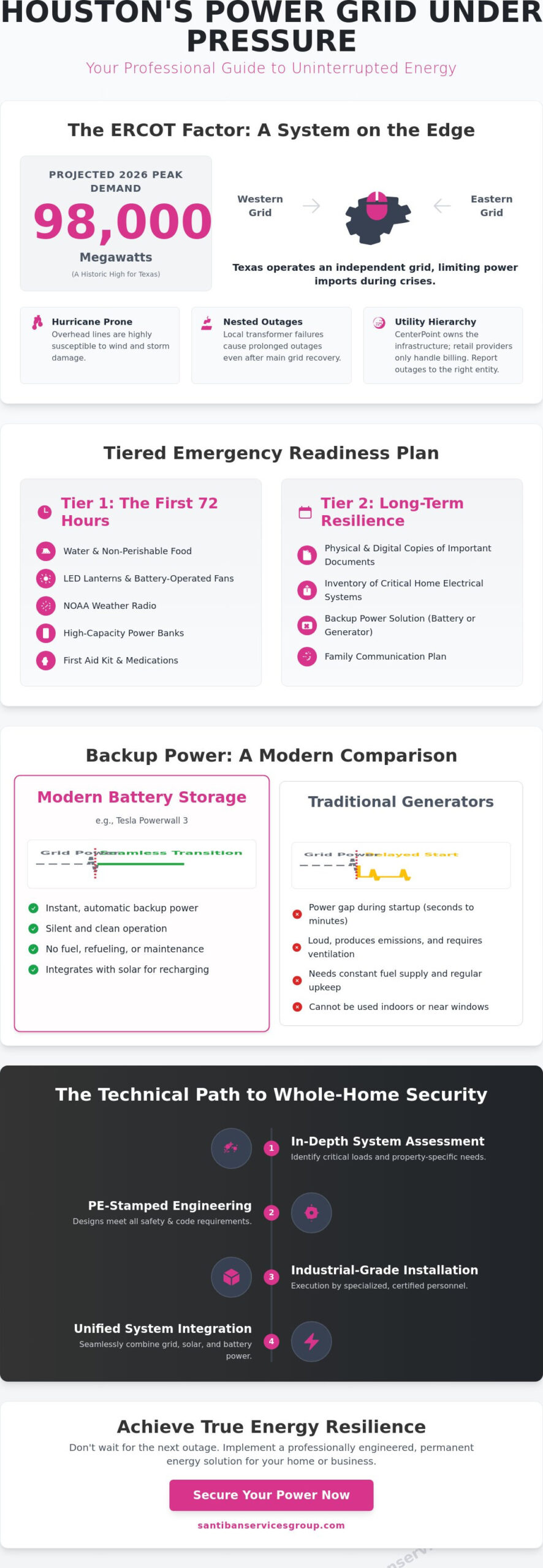
The absence of interstate connections remains the primary hurdle for long-term reliability in Harris County. As of May 2026, ERCOT forecasts peak demand could reach 98,000 MW, a figure that would shatter previous records. While solar power generation is projected to reach 78 billion kilowatt-hours this year, the margin between available supply and peak demand remains narrow. Seasonal peaks, particularly the sustained triple-digit temperatures of August and the unpredictable deep freezes of February, place the system under immense mechanical and electrical strain.
CenterPoint vs. Retail Providers: Who Does What?
Reliability requires a clear understanding of the local utility hierarchy. CenterPoint Energy serves as the Transmission and Distribution Service Provider (TDSP) for the Houston area. They own the physical infrastructure, including the poles, wires, and meters. Retail Electric Providers (REPs) like Reliant or TXU manage only the billing and energy procurement. Reporting a service failure to your billing company is often ineffective because they don’t control the repair crews. Homeowners must coordinate directly with the TDSP to ensure their location is logged in the restoration queue, though permanent onsite backup remains the only certain solution for continuous power.
Creating a Tiered Emergency Readiness Plan
Effective preparation requires more than a standard emergency kit. It demands a tiered strategy that addresses both short-term grid fluctuations and long-term hurricane recovery. Establishing clear protocols for various durations ensures that resources are allocated efficiently when the grid fails. When determining how to prepare for Houston power outages, homeowners should categorize their needs into immediate survival and extended resilience phases.
The initial tier focuses on the first 72 hours of an outage. Houston’s humidity and heat make hydration and core temperature regulation the highest priorities. A basic kit should follow the Ready.gov power outage preparedness guide, but with specific additions for the Gulf Coast climate. This includes cooling towels, battery-operated fans, and shelf-stable food that requires no water for preparation. Communication is equally vital. When cell towers become congested or fail, a NOAA weather radio remains the most reliable source for localized updates and emergency broadcasts.
For outages extending toward a seven-day horizon, the strategy shifts to long-term sustainability. This phase requires a robust documentation kit. Maintain physical and digital copies of insurance policies, property deeds, and contact information for your Transmission and Distribution Service Provider. It’s also prudent to keep a detailed inventory of your property’s electrical assets. This documentation simplifies the claims process if localized surges or storm damage occur during the restoration phase.
The 72-Hour Survival Kit
Beyond food and water, your short-term kit must include high-capacity portable chargers for essential communication devices. Establish a family communication plan that designates an out-of-state contact. Local networks often fail during major events, but long-distance text messaging sometimes remains functional. High-performance LED lanterns and a comprehensive first-aid kit specifically stocked with extra prescription medications are also essential for this initial window.
Inventory of Critical Home Systems
Understanding your property’s electrical profile is the foundation of true resilience. You must distinguish between safety-critical loads and non-essential comfort loads. Medical equipment, such as CPAP machines or oxygen concentrators, and refrigeration for temperature-sensitive medication are non-negotiable. A detailed home battery backup assessment helps identify these specific power draws. This process allows for a customized backup solution that prioritizes your family’s safety without wasting energy on unnecessary circuits. Calculating the precise wattage for well pumps or HVAC systems ensures your infrastructure remains stable when the primary grid goes dark.
Comparing Backup Power Solutions: Batteries vs. Generators
Selecting the appropriate hardware is the most consequential step in how to prepare for Houston power outages. While temporary portable devices may provide minor relief, achieving true property resilience requires a permanent, engineered solution. The choice generally falls between traditional standby generators and advanced battery storage systems. Each technology offers distinct operational profiles, but the modern Houston market increasingly favors solutions that eliminate external dependencies and mechanical vulnerabilities.
Standby generators have long served as the industry standard, yet they rely on complex mechanical engines and external fuel supplies. During extreme weather events, natural gas infrastructure can experience pressure drops or physical failures. In contrast, battery storage provides a silent, solid-state alternative that removes the risk of mechanical degradation. According to FEMA’s power outage preparedness guide, maintaining a reliable energy source is critical for safety and communication. Battery systems paired with solar panels create a self-sustaining microgrid, allowing a property to generate and store its own power indefinitely without relying on external supply lines.
Whole-Home Battery Storage (Tesla Powerwall 3)
The Tesla Powerwall 3 installation in Houston represents a significant shift toward integrated energy security. This system features an “Instant Backup” capability that detects grid failures in a fraction of a second. This transition is so rapid that sensitive electronics and home servers don’t reboot during the switch. Furthermore, the Powerwall 3 utilizes Lithium Iron Phosphate (LFP) chemistry. This specific chemical composition is engineered for high thermal stability, making it exceptionally safe and durable in the intense Texas heat. From a financial perspective, the ROI is realized through zero fuel costs and minimal maintenance requirements over the system’s lifespan.
Traditional Standby Generators
Traditional generators require a rigorous maintenance schedule to remain operational. Owners must perform regular oil changes, filter replacements, and “exercise” cycles to ensure the engine doesn’t seize. Beyond maintenance, Houston residential areas often have strict noise ordinances and property line setbacks that complicate installation. The loud decibel levels of a running generator can create friction with neighbors during extended outages. While the initial capital expenditure for a generator might be lower than a premium battery system, the ongoing costs of fuel and professional servicing often narrow that gap over time. For those prioritizing a seamless and quiet environment, the mechanical nature of a generator remains a significant drawback.
The Technical Path to Whole-Home Energy Security
Securing a property against grid instability involves more than purchasing hardware. It requires a rigorous technical approach to ensure every component functions under extreme conditions. When homeowners evaluate how to prepare for Houston power outages, they must look beyond the battery unit to the underlying electrical infrastructure. Proper execution involves precise load calculations, municipal permitting, and often, significant upgrades to the home’s primary electrical service to handle the increased demand of a comprehensive backup system.
City of Houston and Harris County regulations demand strict adherence to safety codes for all permanent energy storage installations. These requirements aren’t merely bureaucratic hurdles; they’re essential safety protocols designed to prevent electrical fires and structural failures. Professional load calculations determine exactly how much current your home draws during peak usage. Without this data, a backup system doesn’t just lose efficiency. It risks total failure when you need it most, such as during the peak of a summer heatwave or the onset of a tropical storm.
Why PE-Stamped Engineering Matters
A Professional Engineer (PE) stamp serves as a formal verification that a system’s design is structurally and electrically sound. For complex installations involving solar arrays or high-capacity batteries, this certification is often a non-negotiable requirement for permit approval. Utilizing PE stamped engineering for solar systems ensures your installation can withstand the high-wind events common to the Gulf Coast. This level of professional oversight prevents common permitting delays and guarantees the system integrates seamlessly with the existing grid infrastructure.
Electrical Panel and Infrastructure Readiness
Many residential properties in the Houston area operate on aging electrical panels that can’t support the demands of modern backup technology. Signs of an insufficient panel include frequent breaker trips, flickering lights, or the presence of outdated “stab-lok” style breakers. A Main Panel Upgrade (MPU) is frequently necessary to accommodate the 200-amp service required for whole-home resilience. Modern systems, such as the Tesla Powerwall 3, utilize Smart Gateway technology to manage the flow of electricity. This gateway acts as the brain of your home’s energy system, coordinating the Automatic Transfer Switch (ATS) to disconnect from the grid and activate your backup power within milliseconds of a failure.
Achieving this level of technical precision requires a partner with deep industrial expertise. If you’re ready to transition to a more reliable energy future, you should consult with our engineering team regarding your energy infrastructure today.
Professional Energy Infrastructure with Santiban Services Group
Santiban Services Group operates as a high-end strategic partner for those requiring absolute reliability in their energy infrastructure. With over 24 years of experience in industrial electrical construction, the firm applies corporate-grade standards to residential energy security. Choosing a partner with this level of specialized personnel is the most critical decision when determining how to prepare for Houston power outages. The group functions as a silent engine, ensuring your property’s operations run smoothly even when the primary grid fails during extreme Gulf Coast weather.
The firm provides a unified approach to resilience that encompasses PE-stamped engineering design, solar reroofing, and advanced battery integration. This comprehensive capability allows for customized results that address the unique electrical profile of your home or business. By managing every detail from structural compliance to final industrial-grade wiring, Santiban eliminates the fragmented service often found with standard contractors. This disciplined methodology ensures that your backup system isn’t just an appliance, but a permanent piece of critical infrastructure.
Certified Tesla Powerwall 3 Specialists
Santiban maintains a rigorous certification status to install and maintain the latest energy storage technology. The team specializes in both Tesla Powerwall 3 and Powerwall + installations, ensuring that every unit is optimized for the specific demands of the Houston climate. Implementing Tesla electric in Houston maximizes your property’s ROI by leveraging advanced software for grid-tie efficiency and storm-watch readiness. After the precision of the initial execution, the firm provides ongoing system monitoring to guarantee the hardware remains in peak operational condition.
The Santiban Advantage: Engineering-First Approach
The primary distinction of the firm lies in its in-house engineering capabilities. While many solar-only shops focus on volume, Santiban prioritizes the technical integrity of the design. This engineering-first approach is essential for complex projects that require structural modifications or main panel upgrades. The synergy between Tesla and solar roof solutions creates a hardened energy shell for your property, providing maximum durability against high-wind events. These systems are built to endure the 2026 peak demand forecasts and beyond, offering a level of security that portable alternatives simply can’t match.
Don’t wait for the next major grid instability to test your property’s defenses. Achieving true resilience requires a proactive strategy and professional-grade hardware. Contact Santiban Services Group today to schedule a professional site assessment and secure your energy future through expert engineering and execution.
Securing Your Energy Future in Houston
True energy resilience in the Houston area requires a transition from reactive emergency kits to proactive, engineered infrastructure. You’ve learned that the isolated nature of the ERCOT grid and the increasing frequency of Gulf Coast storms demand a permanent solution. By prioritizing professional load calculations and PE-stamped designs, you ensure that your property remains operational even when localized circuits fail. Understanding how to prepare for Houston power outages is fundamentally about building a self-sustaining microgrid that eliminates reliance on external fuel logistics and aging transmission lines.
Santiban Services Group provides the industrial-grade expertise necessary to implement these complex systems. As a Tesla-Certified Installer with over 24 years of electrical expertise, the firm delivers unified energy solutions backed by in-house PE-stamped engineering. This disciplined approach guarantees that every installation meets the highest standards of safety and performance. Secure your Houston home with a professional energy assessment from Santiban Services Group today. You can face the next hurricane season with the quiet confidence that your property is powered by a reliable, silent engine of resilience.
Frequently Asked Questions
How long can a Tesla Powerwall 3 power a typical Houston home during an outage?
A single Tesla Powerwall 3 provides 13.5 kWh of energy capacity, which typically sustains critical loads for 12 to 24 hours. When paired with a solar array, the system recharges during daylight hours, potentially providing indefinite power. Your specific duration depends on the total wattage of active appliances and the efficiency of your property’s insulation and climate control settings.
Is it better to have a solar battery or a standby generator in Houston?
Solar batteries offer a silent, solid-state solution with zero fuel requirements, making them superior for long-term resilience. Standby generators rely on mechanical parts that require regular maintenance and a steady natural gas supply. During extreme freezes or seismic events, gas pressure can drop, rendering a generator inoperable while battery systems continue to function using stored energy.
Do I need a city permit to install a backup power system in Harris County?
Yes, all permanent backup installations require electrical permits from the City of Houston or Harris County. Securing these permits is a vital step in how to prepare for Houston power outages. Compliance ensures your system meets local noise ordinances, setback requirements, and flood elevation standards to prevent equipment damage during heavy rain or tropical storm events.
Can I charge my electric vehicle (EV) during a power outage?
Modern battery systems can be configured to support EV charging during a grid failure. This requires an integrated energy management system that prioritizes home safety loads before directing excess energy to the vehicle. Professional engineering design is necessary to ensure the battery’s discharge rate can handle the significant current draw of a level 2 charger without compromising home operations.
What is the “Zonal” backup strategy for larger Houston properties?
A zonal backup strategy involves segmenting your electrical panel into high-priority and non-essential circuits. This allows you to maintain power in critical areas, such as a home office or kitchen, while automatically shedding loads in guest rooms or laundry suites. This methodical approach extends your battery life and ensures resources are reserved for your property’s most important functions.
How does solar reroofing differ from traditional solar panel installation?
Solar reroofing integrates energy generation directly into the roof structure, often using specialized shingles or unified materials. Traditional installations involve mounting frames and panels on top of an existing roof. Reroofing provides a more durable, weather-resistant barrier and eliminates the structural stresses associated with drilling into an aging roof deck, resulting in a cleaner architectural profile.
What happens to my solar panels if the grid goes down but I don’t have a battery?
Your solar panels will automatically shut down if the grid fails and you lack a battery backup system. This safety feature, known as anti-islanding, prevents your panels from sending electricity back into the power lines where utility crews might be working. Without a battery to create a local microgrid, your solar array cannot provide any power to your home during a blackout.
Are there any Texas tax incentives or rebates for home battery storage in 2026?
The federal Section 25D tax credit for homeowner-purchased systems expired at the end of 2025. However, CenterPoint Energy continues to offer several rebates in 2026, including incentives for solar installations and energy-efficient upgrades like smart thermostats. These programs help offset the initial investment in high-performance energy infrastructure and are typically applied through approved contractors during the installation process.