
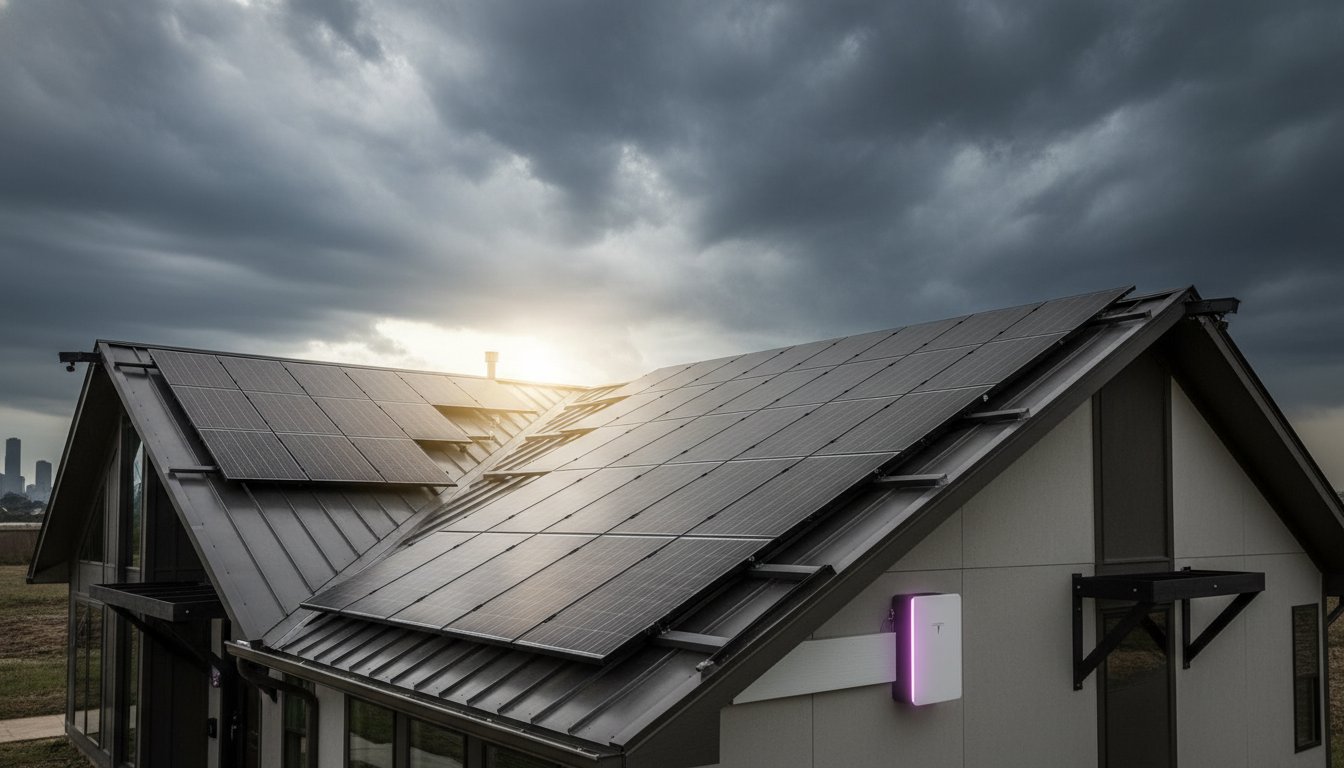
If the next Category 4 hurricane makes landfall in the Gulf, will your energy system remain anchored to your roof, or will it become a structural liability? It’s natural to feel anxious about high-velocity winds and the prospect of enduring another multi-day grid outage in the Texas heat. You deserve a power solution that acts as a silent engine for your home, providing stability when the environment is anything but stable.
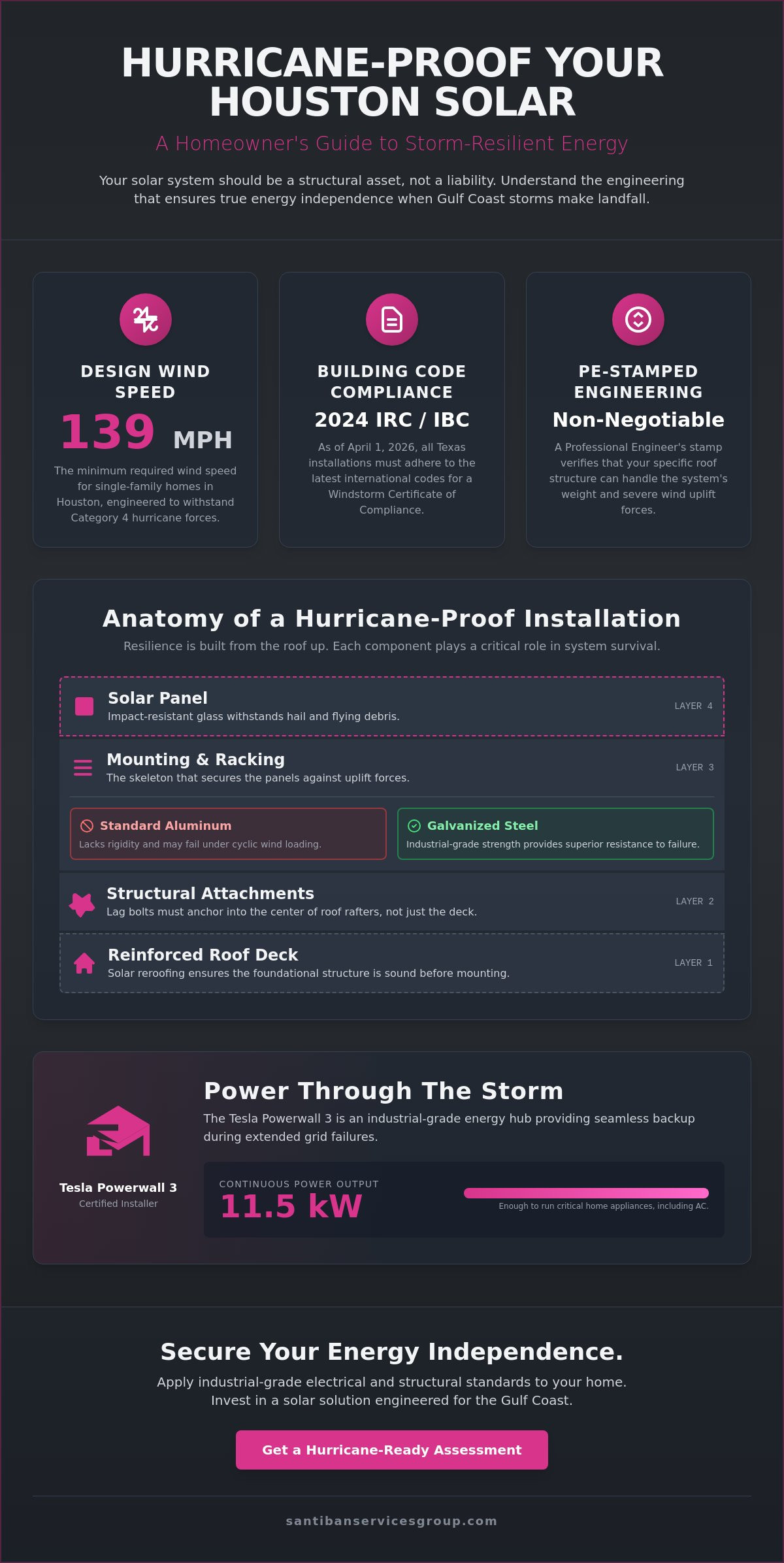
By understanding the technical standards behind hurricane proof solar panels Houston homeowners can invest with confidence, knowing their systems are engineered to exceed the 139 mph design wind speed required by the City of Houston. This article details the structural engineering and professional reroofing practices necessary to protect your property and ensure true energy independence. We’ll explore the 2024 International Building Code requirements, the value of PE-stamped designs, and how the Tesla Powerwall 3 provides a reliable continuous power output of 11.5 kW during the most critical moments.
Key Takeaways
- Identify the specific technical criteria that distinguish high-velocity hurricane zone (HVHZ) ratings from standard solar hardware.
- Learn why PE-stamped engineering is a non-negotiable requirement for hurricane proof solar panels Houston to meet municipal wind load standards.
- Understand the critical role of solar reroofing in reinforcing your home’s structural deck before any equipment is mounted.
- Discover how the Tesla Powerwall 3 functions as an industrial-grade energy hub to maintain power during extended grid failures.
- See the impact of applying industrial electrical construction standards to residential solar projects for enhanced long-term reliability.
The Reality of Houston Hurricanes and Solar Integrity
Houston’s geographic position along the Gulf Coast necessitates a rigorous approach to structural engineering. Standard solar installations often fail because they are designed for static environments rather than the dynamic, high-velocity wind zones characteristic of Southeast Texas. While many homeowners seek hurricane proof solar panels Houston solutions, it’s vital to recognize that resilience is not a single product feature. It is a comprehensive engineering standard. True survival in a storm depends on the synergy between the panel, the mounting hardware, and the underlying roof structure.
The 2024 and 2025 storm seasons highlighted critical vulnerabilities in traditional residential solar mounting. These events prompted a shift in how the industry views durability. We differentiate between Tier 1 panels, which signify financial manufacturer stability, and high-velocity hurricane zone (HVHZ) ratings, which indicate physical performance under extreme stress. A resilient system must be treated as a unified structural asset. If one component fails, the entire array becomes a liability to the property.
Wind Speed Ratings: What Houston Homeowners Must Know
Engineering for Houston requires adhering to specific wind load requirements based on a building’s Risk Category. For a typical single-family residence, the design wind speed is 139 mph. The Saffir-Simpson Hurricane Wind Scale provides a framework for understanding storm intensity, but solar arrays face unique challenges from wind uplift. Uplift forces are strongest at the edges and corners of a roof. Without precise calculations and heavy-duty racking, these forces can peel panels away from the deck. Professional installations utilize impact-resistant glass to withstand Gulf Coast hail and flying debris, ensuring the system remains functional after the initial weather front passes.
Local Building Codes and Harris County Compliance
Regulatory standards have evolved to match the increasing frequency of severe weather events. As of April 1, 2026, all new solar installations in Texas must comply with the 2024 International Residential Code (IRC) or the 2024 International Building Code (IBC). These mandates are essential for obtaining a Windstorm Certificate of Compliance. Meeting the code minimum is a baseline, but coastal resilience often requires exceeding these standards. We apply industrial electrical construction principles to every residential project. This approach ensures that structural attachments and electrical conduits are secured with a level of precision typically reserved for commercial infrastructure, providing a stable foundation for long-term energy security.
Engineering Resilience: Beyond the Panel Surface
Engineering is the invisible force determining whether an array remains a functional asset or becomes airborne debris. While many focus on panel glass durability, the true strength of hurricane proof solar panels Houston lies in structural calculations performed long before installation. We analyze the point of failure for every attachment point. This ensures the system withstands the cyclic loading and sustained pressure of a major storm without detaching. Professional engineering transforms standard hardware into hurricane proof solar panels Houston residents can rely on during the most severe weather events.
The Value of PE-Stamped Engineering Design
A Professional Engineer (PE) stamp signifies that a qualified expert has verified the structural integrity of your specific project. This certification is a formal requirement for navigating the Houston Permitting Center’s standards. You can learn more about PE stamped engineering for solar systems in our 2026 compliance guide. This process confirms that your roof rafters can support the added dead weight and wind uplift without compromising the building’s structural envelope. It’s the difference between a generic installation and a customized, storm-ready solution. Our disciplined approach to design ensures every operational detail is under expert control.
Racking and Attachment Hardware
Standard aluminum rails often lack the rigidity required for Gulf Coast weather. We prioritize galvanized steel and heavy-duty storm racking systems that provide superior tensile strength. Structural lag bolts must penetrate the center of the rafters to prevent the roof deck from pulling away during high winds. This meticulous attention to detail is validated by a real-world case study demonstrating how engineered resilience keeps systems operational when others fail.
Proper attachment requires specific bolt patterns that distribute wind loads evenly across the roof. If the spacing is too wide, the pressure can cause the panels to flex or the mounts to tear through the shingles. Waterproof flashing and high-grade sealants are equally vital to prevent wood rot in the rafters. If you’re planning a new installation, our team provides the PE-Stamped Engineering Design necessary for long-term reliability and peace of mind. We maintain a relentless focus on the precision of our execution to protect your property investment.
The Crucial Role of Solar Reroofing in Storm Prep
Mounting a sophisticated energy array on a compromised roof deck introduces unnecessary risk to your property. In the Houston area, where wind speeds can reach 139 mph, an aging roof becomes a primary structural liability when loaded with solar hardware. Solar reroofing is the strategic process of evaluating and reinforcing the underlying structure before any equipment is installed. This methodology ensures that the roof and the array function as a single, unified structural unit capable of resisting the intense uplift forces of a hurricane.
A common concern involves the potential for leaks following a major storm. When hurricane proof solar panels Houston are installed on a fresh, reinforced deck, the risk of water intrusion is significantly mitigated. We utilize high-grade underlayments and industrial-strength flashing that exceed standard residential requirements. An NREL report on solar resilience emphasizes that the integrity of the roof-to-mount connection is paramount for surviving extreme weather. By addressing the roof health first, we eliminate the structural weaknesses that typically lead to system failure or property damage.
Assessing Your Roof’s Structural Integrity
Identifying signs of a compromised roof is the first step in ensuring long-term resilience. Brittle shingles, decking soft spots, or evidence of previous moisture penetration indicate that a roof cannot safely support a solar array during a wind event. We provide a thorough analysis of the rafter spacing and deck thickness to confirm they meet modern safety standards. For those seeking the highest level of protection, you can discover our Tesla and solar roof solutions designed for maximum durability in coastal environments. A comprehensive structural upgrade provides the necessary foundation for any hurricane proof solar panels Houston project.
Unified Warranties and Peace of Mind
Executing both the roofing and the solar installation through a single provider prevents the common issue of warranty finger-pointing. We manage the complex intersection of roofing and electrical engineering with a disciplined focus on precision. This unified approach means that the structural envelope of your home and the electrical performance of your system are covered under a consistent standard of care. Our specialized personnel are trained to handle the unique challenges of humid, storm-prone climates. This ensures that your investment remains secure and functional for decades, regardless of the weather patterns that pass through Harris County.
Sustaining Power: Tesla Powerwall 3 and Grid Independence
Solar panels alone are insufficient for maintaining electrical service during a utility failure. Standard grid-tied inverters are engineered with an anti-islanding safety mechanism that automatically deactivates the system when the grid goes down. This prevents electricity from back-feeding into utility lines while technicians perform repairs. To achieve true resilience with hurricane proof solar panels Houston homeowners must incorporate an advanced energy storage hub. The Tesla Powerwall 3 serves as this central brain, providing a robust continuous power output of 11.5 kW and a usable capacity of 13.5 kWh. This system ensures that the energy harvested by your panels remains available for your home’s exclusive use during a blackout.
Preparation for a major weather event is managed through the Storm Watch feature. This proactive software monitors National Weather Service alerts and automatically prioritizes charging the battery to its maximum capacity before a hurricane makes landfall. This automated readiness eliminates the need for manual intervention during a crisis. For clients requiring extended resilience, we integrate EcoFlow battery backup systems to create a tiered storage architecture. This customized configuration allows for the prioritization of critical loads, such as medical equipment or refrigeration, while the primary Powerwall 3 manages larger household demands.
Surviving the Blackout: Real-World Scenarios
Multi-day outages in the Gulf Coast present significant logistical challenges, particularly regarding climate control. A single Powerwall 3 provides enough continuous power to handle the high-load demands of central air conditioning units, which is essential for safety in the humid aftermath of a storm. Our Tesla Powerwall 3 installation in Houston guide explains how these units are scalable. You can stack up to four units to achieve 54 kWh of usable energy, providing a comprehensive solution for large properties with heavy electrical footprints. This level of precision in energy management allows your home to function as a self-sustaining ecosystem when municipal infrastructure fails.
Tesla Powerwall 3 vs. Traditional Generators
Battery storage offers a disciplined, maintenance-free alternative to internal combustion generators. There is no requirement for fuel procurement, hazardous exhaust management, or recurring mechanical service. The transition from grid power to battery backup is instantaneous and seamless; sensitive electronics and home offices continue to operate without a flicker in voltage. The quiet operation of a battery system is a professional standard that respects the stability of your neighborhood during the recovery phase of a storm. Unlike the vibration and noise of a gas-powered unit, the Powerwall 3 acts as a silent engine, keeping your operations running smoothly in the background. If you are ready to secure your property’s energy future, we invite you to explore our comprehensive battery storage solutions designed for long-term reliability.
Implementing Industrial-Grade Solar Solutions in Houston
Hardware specifications only represent half of the resilience equation. The remaining half depends on the precision of the implementation. We apply industrial electrical construction standards to every residential project, ensuring that your energy infrastructure remains stable under extreme atmospheric pressure. Achieving hurricane proof solar panels Houston homeowners can trust requires more than high-quality hardware; it demands a sophisticated installation methodology rooted in corporate stability and technical expertise. Our approach prioritizes long-term performance over rapid deployment, treating your home as a critical facility that must remain operational during and after a storm.
Specialized personnel are the backbone of our execution strategy. We don’t utilize general labor for complex energy systems. Instead, we deploy highly trained technicians who understand the nuances of structural wind loads and high-voltage integration. This expertise allows us to deliver customized results tailored to your property’s specific wind exposure. A home located near the coast requires different structural considerations than one situated further inland; we adjust our engineering and mounting patterns accordingly to ensure the system exceeds the 139 mph design wind speed required by the Houston Permitting Center.
Why Choose a Tesla-Certified Installer?
Tesla certification is a rigorous process that validates an installer’s ability to manage complex energy storage and solar integration. It signifies that our team has met the highest standards for safety, technical proficiency, and professional conduct. When you work with a certified Tesla Powerwall installer, you’re securing a partner that understands the intricate communication between the Powerwall 3 and your solar array. This professional execution ensures that your system’s warranty remains intact and that the hardware performs exactly as engineered during a grid failure. We maintain expert control over every operational detail to provide you with absolute reliability.
Your Path to a Storm-Ready Home
Securing your home’s energy future begins with a professional site assessment and a comprehensive engineering review. We analyze your existing electrical service, roof condition, and structural framing to identify any potential vulnerabilities. This allows us to help you prioritize your investments effectively. While hurricane proof solar panels Houston are a vital component, they must be supported by adequate battery storage and, if necessary, structural reroofing. Our goal is to provide a unified solution that transforms your property into a resilient asset. Contact Santiban Services Group today for a comprehensive energy resilience consultation and take the first step toward true grid independence.
Securing Your Energy Infrastructure for the Next Storm
Achieving true energy resilience in Harris County requires a transition from standard consumer-grade installations to professional-grade engineering. We’ve established that the integrity of hurricane proof solar panels Houston depends on the synergy between PE-stamped design, reinforced roof decks, and the industrial-scale intelligence of the Tesla Powerwall 3. By addressing these structural and electrical requirements simultaneously, you transform your property into a self-sustaining asset capable of withstanding the most severe Gulf Coast weather events. This unified approach ensures that your investment remains anchored and functional when local infrastructure is most vulnerable.
Santiban Services Group brings over 24 years of industrial electrical expertise to every residential project. As Tesla-Certified Energy Specialists, we provide the technical rigor and PE-stamped engineering necessary to ensure your system exceeds municipal safety standards. Our disciplined approach to installation guarantees that every operational detail is under expert control, providing you with a silent engine of power when the grid fails. Secure your Houston property with an engineered solar solution from Santiban Services Group. Your path to long-term stability and professional energy independence begins with a partner committed to precision and reliability.
Frequently Asked Questions
Can solar panels really withstand a Category 4 hurricane in Houston?
Yes, solar systems withstand Category 4 conditions when they meet the City of Houston’s 139 mph design wind speed requirement. All installations must comply with the 2024 International Building Code to obtain a Windstorm Certificate of Compliance. While no system is entirely indestructible, hurricane proof solar panels Houston installations utilize high-impact glass and reinforced mounting to remain secure during extreme pressure events.
Do I need to remove my solar panels when a hurricane is approaching?
You should not remove your solar panels before a storm. Professional systems are engineered as permanent structural fixtures designed to withstand the exact wind loads predicted for the Gulf Coast. Attempting to remove panels without specialized personnel can compromise your roof’s waterproof envelope and void your manufacturer warranties. The system is safest when it remains mechanically fastened to the reinforced roof deck.
Will my solar panels work during a power outage if I don’t have a battery?
Solar panels won’t provide power during a grid failure without a dedicated battery backup system. Grid-tied inverters feature an automatic shut-off mechanism to protect utility workers from electrical back-feed. To maintain energy independence during a Houston blackout, you must integrate a solution like the Tesla Powerwall 3, which manages the transition to off-grid mode instantaneously and keeps your home powered.
How does hurricane-rated mounting differ from standard solar racking?
Hurricane-rated mounting utilizes heavy-duty materials and specific bolt patterns to resist intense uplift forces. Unlike standard racking, these systems often feature galvanized steel components and structural lag bolts that penetrate deep into the roof rafters. Engineering calculations determine the precise spacing required to secure the array’s edges and corners, where wind pressure is most volatile during a hurricane.
What is a PE-stamped engineering design, and why is it required in Texas?
A PE-stamped design is a structural plan verified and signed by a licensed Professional Engineer. This certification is a mandatory requirement for the Houston Permitting Center and ensures the project meets the 2024 International Residential Code. It provides documented proof that your roof can support the combined dead weight and wind load of the solar array without structural failure during a storm.
Does home insurance cover solar panel damage from a hurricane?
Most standard homeowners insurance policies cover solar panels as permanent dwelling extensions. Because they are attached to the roof, they are typically protected against wind and hail damage. We recommend reviewing your specific policy to confirm your windstorm deductible and ensuring your coverage limits reflect the total value of your solar and battery investment to avoid financial gaps after a disaster.
How long does a Tesla Powerwall 3 last during a total grid failure?
The duration depends on your household’s electrical consumption and the available solar recharge. A single Tesla Powerwall 3 provides 13.5 kWh of usable energy capacity. For critical loads like refrigeration and LED lighting, one unit can sustain a home for over 24 hours. When paired with hurricane proof solar panels Houston, the system recharges daily, providing a path to indefinite power during extended outages.
What happens if my roof is damaged but my solar panels are fine?
If the underlying roof deck is compromised, the system requires a professional solar reroofing procedure. This involves the systematic removal of the panels, the replacement of the roofing material, and the precision reinstallation of the solar hardware. This process ensures that the new roof maintains its structural integrity and that the solar array remains compliant with current building codes and manufacturer warranty requirements.