
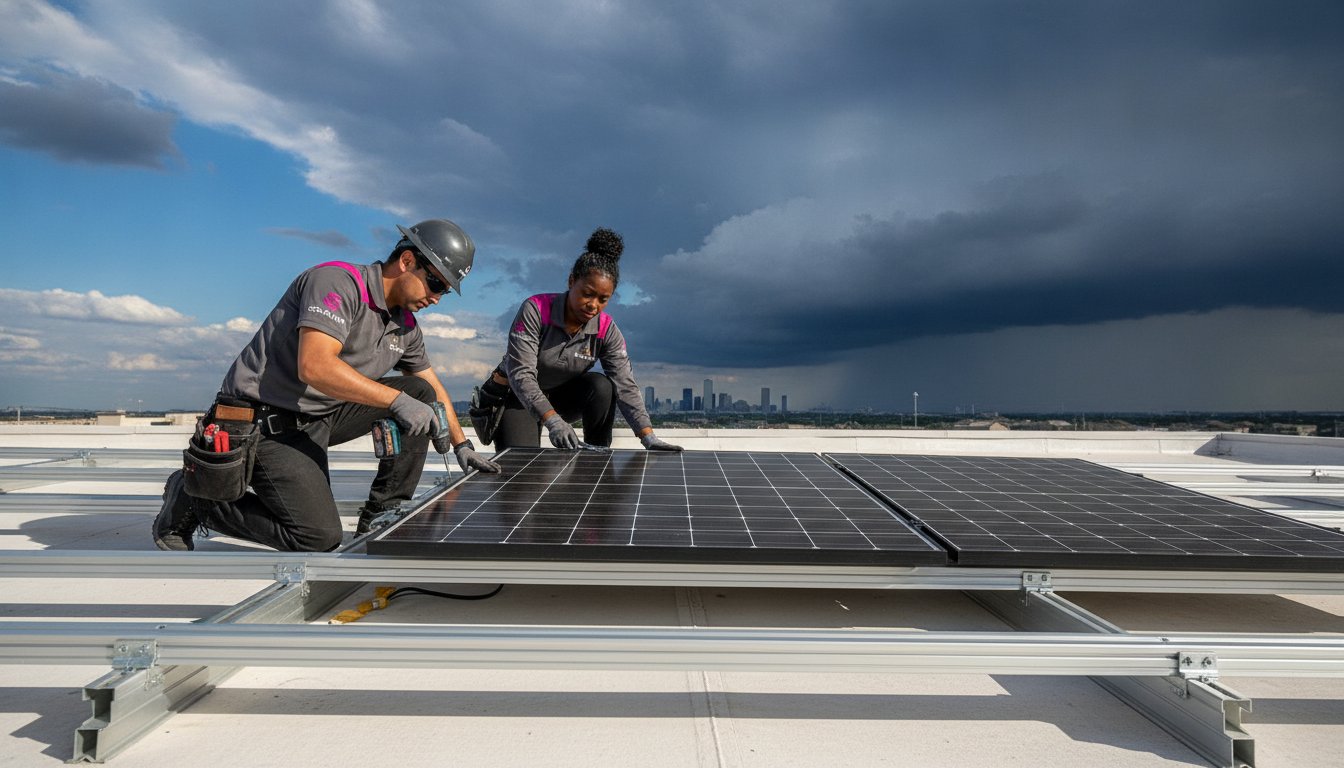
A solar array is either a structural asset or a catastrophic projectile; there is no middle ground when a Gulf Coast hurricane makes landfall. For Houston property owners, the technical discipline of securing solar panels for high winds is the only barrier between sustainable energy and significant structural liability. You likely recognize that standard installations often fall short of the rigorous demands posed by 120 mph wind zones. It’s a valid concern that keeps many stakeholders focused on the precision of their mounting hardware rather than just the efficiency of their cells.
We understand that the integrity of your roof is paramount, and you require the peace of mind that comes from exceeding, not just meeting, local building codes. This guide details the professional engineering standards and specialized hardware required to protect your investment from extreme weather events. You’ll discover how PE-stamped designs and high-load racking systems like the IronRidge XR or Unirac SolarMount provide the resilience needed for 2026 compliance. We also examine how these certified standards can lead to lower insurance premiums and long-term operational stability.
Key Takeaways
- Understand the technical dynamics of wind uplift and how the “wing effect” can compromise solar array stability during extreme weather.
- Identify the specialized racking hardware and railed mounting systems necessary for securing solar panels for high winds in hurricane-prone regions.
- Examine the necessity of PE-stamped engineering designs to ensure every roof attachment meets the precise pull-out strength required by Houston building codes.
- Establish a rigorous bi-annual inspection routine to verify the structural integrity of clamps and integrated flashing before hurricane season.
- Leverage local installation expertise to ensure your system benefits from a higher tier of structural accountability and coastal weather resilience.
Understanding Wind Load and Solar Panel Uplift
Wind load represents the total force applied by moving air against a structure. It is not a static weight; rather, it is a dynamic pressure that fluctuates based on velocity and surface area. For property owners, Understanding Wind Load is the first step in engineering a resilient energy system. When wind encounters a solar array, it doesn’t simply push against the glass. It flows around the edges, creating complex pressure differentials that can compromise the structural integrity of the entire roof.
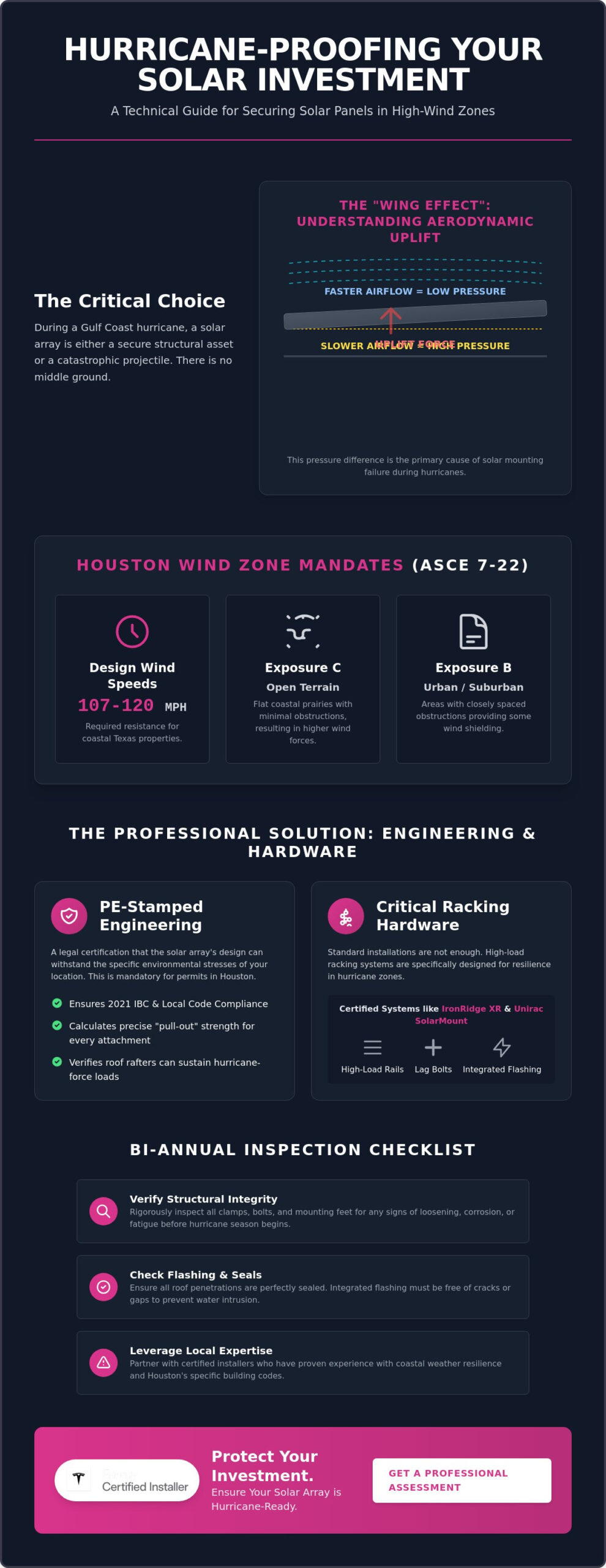
The “wing effect” is the most significant threat to a solar installation during a storm. As wind passes over the tilted surface of a panel, the air moving across the top travels faster than the air trapped beneath it. This creates a zone of low pressure above the array and high pressure below it. The resulting upward force, known as uplift, attempts to pull the panels away from the racking. Securing solar panels for high winds requires a design that accounts for these aerodynamic forces, particularly when wind directions shift from perpendicular to parallel, which places extreme stress on individual mounting points and corner attachments.
The Mechanics of Uplift and Drag
The gap between the roof surface and the solar panel is a critical vulnerability point. While this space is necessary for ventilation and cooling, it allows high-velocity air to enter and create significant internal pressure. During a hurricane, the rapid cycling between positive and negative pressure creates a “pumping” action. This repetitive motion fatigues the metal components and can eventually loosen the fasteners that anchor the system to the rafters. Uplift force is the primary cause of solar mounting failure during hurricanes.
Houston Wind Zone Requirements
Engineering standards in the Texas Gulf Coast are governed by the ASCE 7-22 guidelines. These standards dictate how we calculate wind loads based on specific geographical data. In the Houston area, design wind speeds typically range from 107 mph to 120 mph, though coastal requirements are often higher. Engineers also evaluate the local terrain to determine the correct exposure category:
- Exposure B: Urban and suburban areas with numerous closely spaced obstructions, providing some wind shielding.
- Exposure C: Open terrain with scattered obstructions, common in the flat coastal prairies surrounding Houston where wind speeds remain high.
Residential systems are generally classified under Risk Category II, while essential commercial infrastructure must meet more stringent criteria to ensure operational continuity after a major weather event. Precise calculations ensure that the method for securing solar panels for high winds is tailored to the specific wind-load demands of your property’s location.
The Role of PE-Stamped Engineering in Wind Mitigation
Engineering validation is the definitive standard for structural safety in hurricane-prone regions. In Texas, a Professional Engineer (PE) stamp represents a legal certification that a solar array’s design can withstand the specific environmental stresses of its location. This certification is a mandatory requirement for obtaining electrical and building permits in the City of Houston. It serves as an authoritative guarantee that the system’s geometry, weight distribution, and mounting hardware have been mathematically verified to resist failure during extreme weather. Relying on PE-stamped engineering for solar systems ensures that every project aligns with the rigorous 2021 International Building Code (IBC) and local amendments.
Professional engineers calculate the precise “pull-out” strength required for every roof attachment point. This process involves analyzing the specific wood species of the roof rafters, such as Southern Yellow Pine, to determine the maximum load a lag bolt can sustain before the connection fails. When securing solar panels for high winds, these calculations account for the uplift forces described in previous sections. By determining the exact spacing and depth of each fastener, engineers prevent the system from detaching under the intense suction created by hurricane-force gusts. This level of technical precision transforms a standard installation into a resilient structural reinforcement.
Structural Integrity Assessments
A comprehensive engineering review includes an on-site assessment of the existing roof structure. Engineers verify rafter spacing, typically 16 or 24 inches on center, and inspect the wood for signs of rot or structural fatigue that could compromise anchoring. A “one size fits all” approach to mounting is insufficient for the Texas Gulf Coast because it ignores variations in wood density and roof pitch. For commercial applications, engineers perform detailed point-load calculations on flat roofs to ensure the building’s skeleton can support the combined weight of the ballast and the wind-induced downward pressure. Professionals at Santiban Services Group prioritize these assessments to maintain the highest standards of operational safety.
Permitting and Insurance Benefits
Utilizing an engineered plan significantly accelerates the approval process with the Authority Having Jurisdiction (AHJ). Building officials prioritize permit applications that include a PE stamp because the technical due diligence is already documented and certified. Beyond compliance, professional engineering provides a critical layer of protection for your insurance profile. Many providers require proof of certified resilience before honoring wind-damage claims or offering premium reductions. Furthermore, following a PE-stamped design preserves manufacturer warranties on both the solar panels and the roofing materials. It ensures that the installation does not void the structural guarantees of the underlying building.
Critical Racking and Mounting Hardware for Hurricane Zones
Hardware selection represents the physical execution of the engineering plan. Railed mounting systems provide a continuous structural path for load distribution, making them the preferred choice for securing solar panels for high winds. While rail-less systems offer aesthetic advantages, railed configurations allow for more flexible attachment points, which is vital when navigating the varied rafter spacing of Houston homes. Integrated flashing is another non-negotiable component. It ensures a water-tight seal that resists wind-driven rain, preventing the structural decay that often follows coastal storms.
Aerodynamic performance can be further enhanced through the installation of wind skirts or deflectors. These components attach to the leading edge of the array to divert airflow over the top of the panels rather than underneath them. This reduces the internal air pressure that contributes to the uplift forces mentioned previously. To achieve maximum system longevity, property owners should consider solar reroofing before installation. A storm-ready roof deck provides the stable foundation necessary for high-wind hardware to perform as designed.
Attachment Methods: Lag Bolts vs. Specialized Anchors
Lag bolts remain the industry standard for residential wood-framed roofs, typically requiring a 5/16-inch diameter and a minimum 2.5-inch penetration into the structural rafter. In commercial environments with steel or concrete substrates, installers utilize chemical anchors or toggle bolts to achieve the necessary pull-out resistance. These specialized fasteners distribute tension more broadly across the mounting surface. Precision is mandatory here, as the fastener is only as strong as the wood it is anchored into.
Material Science: Aluminum Alloys and Stainless Steel
The proximity of the Houston and Galveston regions to the Gulf of Mexico necessitates hardware with exceptional corrosion resistance. High-tensile aluminum alloys, such as 6061-T6, are selected for their strength-to-weight ratio and ability to span wide rafter gaps without bowing. All secondary components, including mid-clamps and end-clamps, must be composed of 304 or 316-grade stainless steel to prevent galvanic corrosion. Installers must adhere to strict torque specifications, often between 10 and 15 foot-pounds, to ensure that panels don’t slip or vibrate during high-velocity wind events. This meticulous attention to material science is a cornerstone of securing solar panels for high winds.
Pre-Storm Checklist: Preparing Your Solar Array for 100+ MPH Winds
Proactive maintenance is the cornerstone of operational continuity in the Texas Gulf Coast. Establishing a bi-annual inspection routine, ideally before the Atlantic hurricane season begins in June, ensures that the technical measures for securing solar panels for high winds remain effective. Property owners should conduct visual surveys to identify loose clamps or panels that exhibit excessive vibration. Addressing these minor mechanical issues early prevents them from escalating into catastrophic failures when wind speeds exceed 100 mph. Routine audits confirm that the system continues to meet the engineering standards established during the initial installation.
Debris management is equally critical for maintaining aerodynamic stability. Leaves, branches, or nesting materials trapped beneath the array can obstruct airflow and create localized wind turbulence. This turbulence increases the pressure differentials that contribute to uplift, potentially straining the mounting hardware beyond its design limits. Beyond structural safety, total resilience requires a strategy for post-storm energy availability. Engaging a Tesla Powerwall installer allows you to maintain critical electrical loads when the municipal grid fails due to wind-induced transmission damage.
The 5-Point Structural Health Check
A systematic audit of the array’s physical condition is the most effective way to prevent storm damage. Follow these steps to verify the integrity of your hardware:
- Inspect for “racking creep”: Verify that panels haven’t shifted out of their original alignment due to thermal expansion or previous minor wind events.
- Audit wire management: Ensure no loose cables are hanging below the array. Loose wiring can catch wind, leading to fatigue in the electrical connections or short circuits.
- Verify roof penetrations: Check that all sealants and flashing remain pliable and crack-free. This prevents water ingress during high-pressure rain events common in Houston.
- Examine fastener torque: Confirm that mid-clamps and end-clamps are secure and haven’t loosened over time.
- Survey the surrounding environment: Trim any overhanging tree limbs that could strike the array during a hurricane.
Post-Storm Inspection Protocols
After a major hurricane makes landfall, the system requires a professional evaluation to ensure continued safety. High-vibration events can cause “micro-cracking” within the silicon cells. While these cracks aren’t always visible, they can significantly degrade energy production and create hotspots. A qualified technician should re-torque all hardware to the original engineering specifications, as the intense cycling of wind pressure can stretch even the highest-grade fasteners. Documenting these inspections is vital for insurance purposes, providing a clear record of your commitment to maintaining structural standards. To ensure your system remains at peak resilience, contact the specialists at Santiban Services Group to schedule a professional structural audit.
Professional Installation: Why Local Expertise Prevents Solar Failure
Local expertise is a technical prerequisite for system survival in the Texas Gulf Coast. Houston’s specific weather patterns, characterized by rapid barometric pressure shifts and high-velocity wind gusts, demand an installation strategy that general contractors often overlook. Professional installers who specialize in this region understand that securing solar panels for high winds involves more than following a manual; it requires a deep familiarity with local building codes and the structural nuances of Texas residential architecture. Utilizing Tesla Electric certified installers provides a higher tier of structural accountability, as these professionals are trained to meet rigorous performance standards that prioritize long-term stability over rapid deployment.
A comprehensive approach to resilience treats the solar array as one component of a unified energy ecosystem. This “whole-system” philosophy integrates the health of the roof deck, the precision of the engineering, and the reliability of battery backup systems like the Tesla Powerwall 3. When these elements are synchronized, the resulting infrastructure is far more capable of withstanding the stresses of a major storm. Santiban Services Group brings over 24 years of experience to this discipline, positioning our tenure as the ultimate wind-protection feature for your property. Our history in the region ensures that we don’t just install equipment; we engineer solutions designed to endure the specific environmental rigors of Houston.
The Santiban Engineering Advantage
Our foundation in industrial electrical construction informs every residential solar project we undertake. This high-stakes background dictates a level of precision and safety that is often absent in the standard consumer solar market. By maintaining in-house PE-stamped engineering design capabilities, we eliminate the communication gaps that occur when structural planning is outsourced. Our Tesla-certified technicians undergo rigorous training to ensure that every attachment point and electrical termination meets the exact specifications required for coastal resilience. This disciplined approach transforms a complex organizational challenge into a seamless, reliable execution.
Securing Your Future Energy Resilience
Property owners must view a solar installation as a permanent structural addition rather than a temporary appliance. When you prioritize engineering integrity, you are protecting your home’s envelope and your financial investment. We invite you to move beyond uncertainty and toward a state of quiet confidence regarding your energy infrastructure. A professional wind-load assessment is the first step in verifying that your property is prepared for the next significant weather event. To ensure your system meets the highest standards of professional execution, contact Santiban Services Group for a comprehensive structural evaluation. Our commitment to reliability and consistent performance ensures your energy future remains secure, regardless of the forecast.
Engineering Your Houston Energy Future
Maintaining a resilient energy infrastructure in the Texas Gulf Coast requires more than standard hardware; it demands a rigorous adherence to structural physics and local engineering codes. You’ve seen how the combination of PE-stamped designs and specialized racking systems transforms a vulnerable roof into a reinforced asset. By addressing the technical dynamics of uplift and utilizing integrated flashing, property owners can achieve a level of stability that withstands the most severe weather events. The process of securing solar panels for high winds is fundamentally an exercise in precision and structural accountability.
Santiban Services Group provides this stability through 24+ years of industrial electrical experience and a team of Tesla-certified installers. We include PE-stamped engineering designs in our scope of work to ensure every project meets the highest professional standards of safety and compliance. It’s this disciplined approach that provides the quiet confidence you need to manage long-term operations. Request a PE-Stamped Wind Resilience Assessment for Your Solar Project to begin fortifying your property. We look forward to establishing a reliable partnership that protects your energy investment for years to come.
Frequently Asked Questions
Can solar panels withstand Category 4 or 5 hurricanes?
Solar panels can withstand Category 4 and 5 winds if they’re part of a system specifically engineered for those velocities. Most high-quality panels are rated for wind loads up to 5,400 Pascals, which equates to approximately 150 mph. Survival depends entirely on the racking system’s ability to transfer those loads into the building’s structural frame without failure.
Will my solar panels fly off if the roof stays on?
Properly installed panels will remain attached as long as the roof structure itself holds. The risk of panels becoming airborne projectiles is mitigated by securing solar panels for high winds using lag bolts that penetrate deep into the center of the rafters. Engineered pull-out calculations ensure the fasteners resist the extreme uplift forces generated during a storm.
Do I need special insurance for solar panels in high-wind areas?
You generally don’t need a separate policy, but it’s vital to confirm that your current coverage includes the full replacement value of the array. In hurricane-prone regions like Houston, insurance providers may require a professional inspection report or a PE-stamped design to maintain coverage. Certified resilience can sometimes assist in negotiating lower premiums for windstorm insurance.
How often should I have my solar mounting hardware inspected in Houston?
We recommend a professional structural inspection at least twice a year. Ideally, these audits should occur in the spring before the Atlantic hurricane season begins and again in the fall. Regular checks allow technicians to verify that hardware hasn’t loosened due to thermal expansion or previous minor wind events, which maintains the integrity of the mounting points.
What is the maximum wind speed most solar panels are rated for?
Most high-quality solar modules are rated for wind speeds between 140 mph and 160 mph. This rating refers to the panel’s physical ability to resist pressure without the glass shattering or the frame bending. The operational wind limit of the entire system is usually determined by the racking and roof attachments rather than the panel itself.
Does a solar reroof improve wind resistance compared to standard installation?
Solar reroofing significantly improves wind resistance by providing a pristine, structurally sound foundation for the array. This process allows installers to inspect the roof deck for rot and reinforce the rafters before the panels are mounted. It also ensures that integrated flashing is installed on a new surface, providing superior protection against wind-driven rain.
What happens if a solar panel is damaged by wind-borne debris?
If debris strikes a panel, it can cause immediate glass failure or internal micro-cracks that degrade performance over time. While the mounting hardware for securing solar panels for high winds may keep the frame attached, the internal silicon cells remain vulnerable to impact. You should document the damage immediately and contact your insurance provider to initiate a claim for replacement.
Is it safer to install solar panels on a flat roof or a sloped roof in high winds?
Sloped roofs are generally safer for high-wind resistance because flush-mounted panels benefit from the roof’s natural aerodynamics. Flat roofs often require tilted racking that creates a larger surface area for wind to catch, which increases uplift forces. For flat roof applications, engineers must use specialized ballasted systems or mechanical attachments to counteract these higher pressures.