
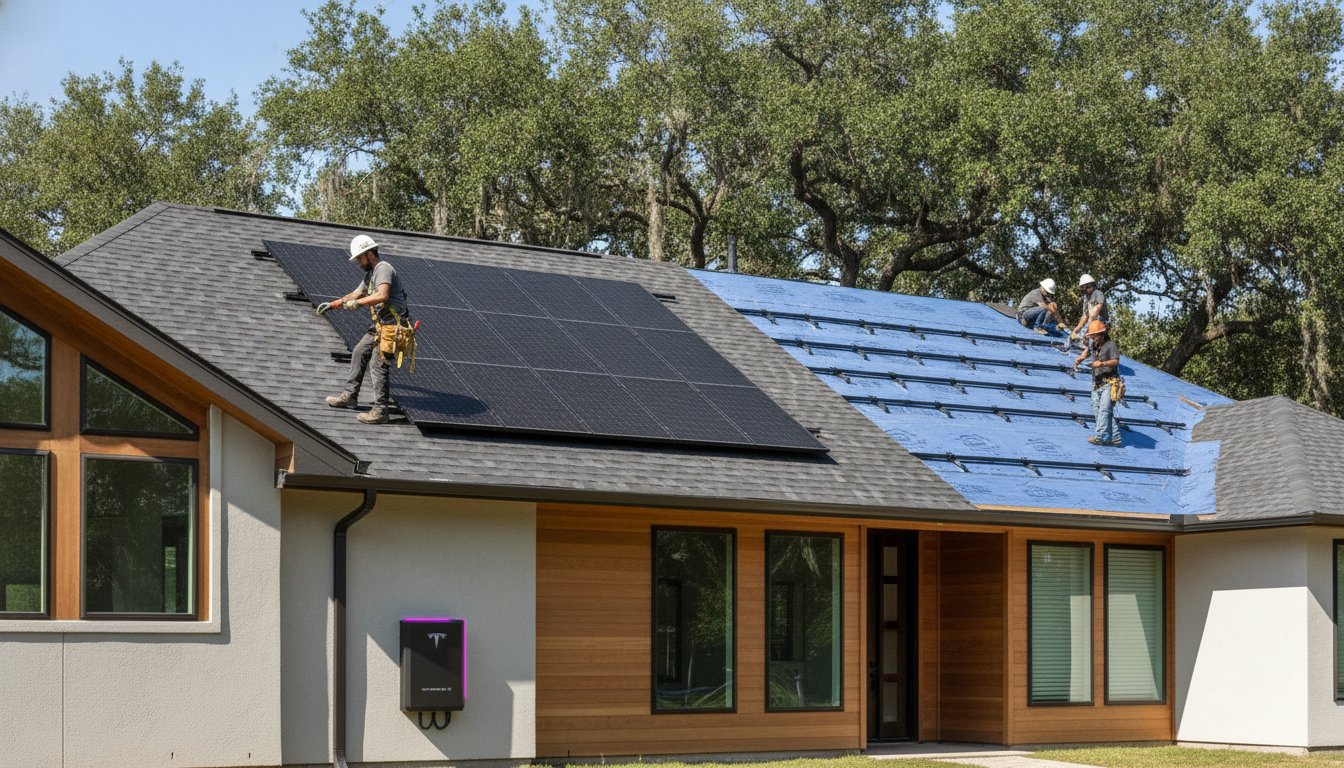
If you believe that installing a new roof and solar panels are two distinct home improvement tasks, you are risking the long-term structural integrity of your property. Most Houston homeowners rightfully fear that a lack of coordination between independent roofing crews and solar technicians will result in catastrophic leaks or failed city inspections. It’s a valid concern. The expiration of federal residential tax credits in late 2025 has made maximizing your system’s efficiency more critical than ever. Mastering the solar reroofing process step-by-step requires a disciplined, engineering-first approach that treats your roof and energy system as a single, unified asset.
We understand that you value precision and a single point of accountability for your home’s most complex systems. By following this guide, you’ll learn how to synchronize these specialized trades to ensure full compliance with current Texas engineering codes and the 2021 International Residential Code through PE-stamped engineering design. We’ll outline the essential stages of a professional detach-and-reset workflow. We will also explain how to utilize SolarAPP+ for expedited Houston permitting and show you how to secure a leak-free, high-efficiency energy system that operates as a silent engine for your household.
Key Takeaways
- Aligning the lifespans of your roof and solar array ensures long-term structural integrity and maximizes your energy return on investment.
- PE-stamped engineering design is a critical requirement for structural validation and compliance with Houston’s rigorous 2026 building codes.
- This guide details the solar reroofing process step-by-step, including the essential integration of specialized mounts during the roofing tear-off phase.
- Incorporating a Tesla Powerwall 3 into your reroofing project provides superior energy resilience and higher efficiency through modern DC-coupled technology.
- Unified project execution establishes a single point of accountability, protecting your home against the risks associated with fragmented contractor coordination.
What is Solar Reroofing and Why is Timing Critical?
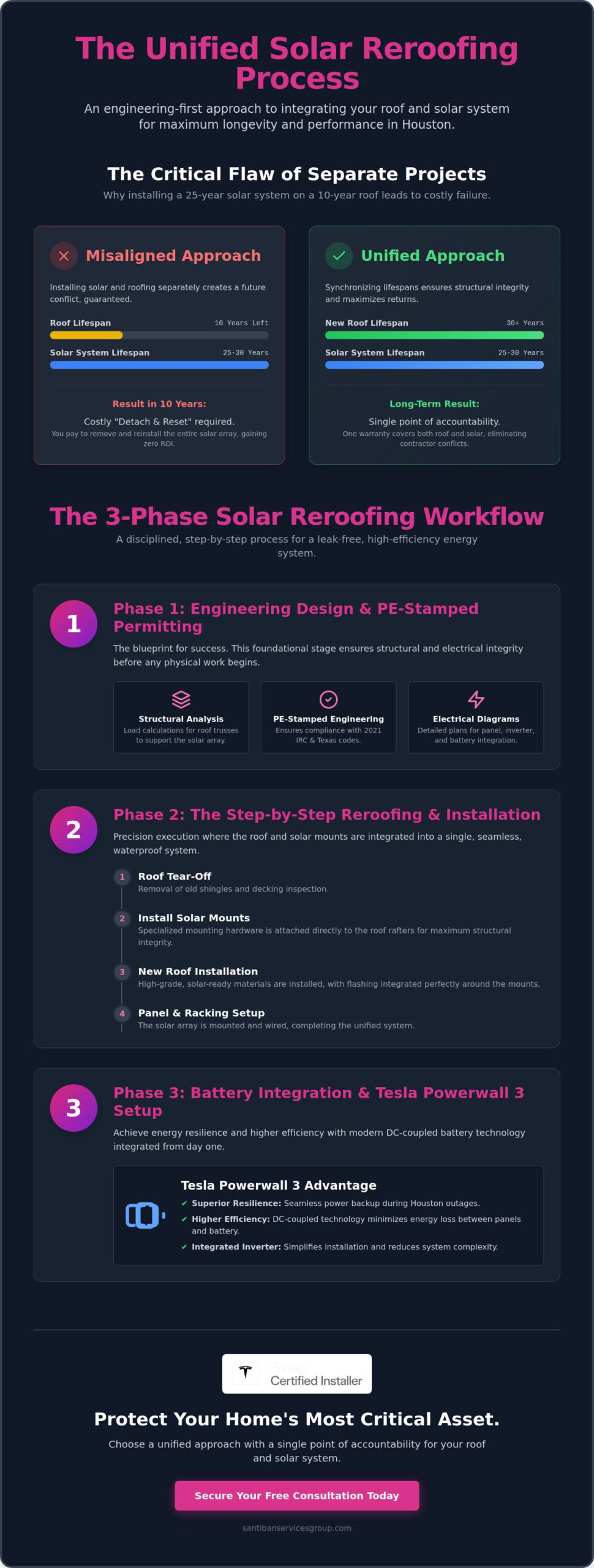
Solar reroofing represents a comprehensive approach to residential energy infrastructure. It is the simultaneous replacement of the roof’s structural deck or shingles and the precision installation of solar mounting hardware. This unified method ensures that the building envelope and the power generation system function as a single, high-performance unit. Understanding the solar reroofing process step-by-step begins with recognizing that your roof is the foundation for your energy investment. A Rooftop solar power system is designed to operate for 25 to 30 years. If you install these components on a roof with only 10 years of remaining life, you are committing to a costly and unnecessary logistical challenge a decade from now.
In the Houston market, timing is not just a financial consideration; it’s a structural necessity. Our local climate, characterized by extreme thermal cycling and high humidity, accelerates the degradation of organic roofing materials. When solar panels are placed over an aging roof, they create a micro-climate that can trap moisture and heat, potentially shortening the roof’s lifespan even further. By choosing a unified reroofing strategy, you secure a single point of accountability. This “Single Warranty” advantage eliminates the common industry conflict where roofing contractors and solar installers blame one another for leaks or structural failures. It provides the quiet confidence that every operational detail is under expert control from day one.
The Consequences of Misaligned Lifecycles
Misaligning the lifecycles of your roof and solar array leads to significant operational inefficiencies. If a roof fails mid-way through the life of a solar system, you must pay for a full “detach-and-reset” procedure. This involves decommissioning the array, removing all panels and racking, performing the roof repair, and then reinstalling the entire system. This redundant labor provides zero additional energy ROI. Beyond the financial cost, installing new solar penetrations into old, brittle shingles often voids existing roof warranties. This leaves the homeowner vulnerable to unmitigated risks and structural instability.
The Houston Resilience Standard
Houston’s geographic location requires adherence to strict wind uplift standards, particularly during hurricane seasons. A professional solar reroofing process step-by-step includes the selection of solar-ready roofing materials that are engineered to withstand the specific stresses of a weighted racking system. Standard shingles may not offer the necessary tear resistance or thermal stability required for long-term solar integration. We recommend a five-year remaining life threshold. If your current roof is expected to require replacement within the next five years, performing a full reroof alongside your solar installation is the only responsible path forward to ensure structural validation and consistent performance.
Phase 1: Engineering Design and PE-Stamped Permitting
The integrity of a synchronized project depends entirely on the precision of its initial blueprints. Within the solar reroofing process step-by-step, Phase 1 focuses on structural validation rather than physical installation. This stage involves a comprehensive analysis of the existing roof trusses to determine their capacity for additional dead loads. In Houston, residential structures must account for the weight of the solar array while maintaining resilience against high-velocity wind events. Our team utilizes advanced modeling to perform these structural load calculations, ensuring that your home’s skeletal system remains stable under the added pressure of a 25-year energy asset.
Securing PE-stamped engineering for solar systems is a legal and safety requirement in the state of Texas. This certification from a Professional Engineer confirms that the proposed installation meets or exceeds the 2021 International Residential Code. Beyond structural concerns, this phase also includes the creation of detailed electrical line diagrams. These diagrams are especially critical for the integration of a Tesla Powerwall 3, as they map the flow of energy between the hybrid inverter and the main service panel. A failure to provide precise electrical documentation often results in immediate rejection by local utility providers during the permitting and inspection phase.
Why PE-Stamping is Non-Negotiable in Texas
A professional engineering stamp acts as a seal of corporate stability and technical accuracy. It provides Homeowners Associations (HOAs) and city inspectors with the objective proof they require to authorize a project. In Texas, structural sign-offs are often a prerequisite for maintaining standard homeowner insurance coverage after a solar installation. Without this verified engineering, a homeowner might find their claims denied following a major storm event. Utilizing PE-stamped engineering for solar systems minimizes these liabilities and ensures that every operational detail is under expert control.
Navigating the Houston Permitting Center
The Houston Permitting Center (HPC) maintains rigorous standards for combined roofing and solar applications. Homeowners must submit site-specific plans that include roof framing details, mounting hardware specifications, and comprehensive electrical schematics. While many projects face delays due to incomplete documentation, our disciplined approach leverages tools like SolarAPP+ to expedite the process for eligible systems. This proactive management prevents common bottlenecks, allowing the project to move from design to execution without unnecessary friction. If you are preparing for a complex installation, securing a partner who understands PE-stamped engineering design is the most reliable way to navigate these regulatory hurdles.
Phase 2: The Step-by-Step Solar Reroofing Process
Physical execution begins with a commitment to a clean substrate. The solar reroofing process step-by-step demands that all existing materials are removed down to the plywood deck. This allows our crews to inspect the structural integrity of the roof’s foundation. We identify and replace any compromised decking before any new components are installed. A disciplined approach at this stage prevents the concealment of rot or structural fatigue that could jeopardize the project’s 25-year lifespan.
Once the deck is cleared and verified, the project moves through five distinct stages of integration:
- Step 1: Substrate Preparation. We strip the roof to the bare wood and perform a comprehensive inspection of the rafters and trusses.
- Step 2: Structural Reinforcement and Mounting. We install specialized solar mounts directly to the rafters. Synchronizing these tasks reduces the total cost of installing a residential rooftop solar array by eliminating redundant labor and permitting fees.
- Step 3: Roofing System Installation. We lay the primary water barrier and the final roofing material, whether it’s high-grade shingles, architectural metal, or a premium Tesla and solar roof.
- Step 4: Mechanical Assembly. Our technicians attach the racking system and PV modules to the previously integrated mounts with surgical precision.
- Step 5: System Commissioning. The final phase involves the electrical tie-in and the activation of the energy storage system to ensure the silent engine of your home is operational.
Integrated Flashing: Preventing the #1 Cause of Leaks
Standard solar installations often utilize a “drill-and-fill” method that relies on chemical sealants to prevent water intrusion. This is insufficient for the Houston climate. We prioritize integrated deck-flashing that weaves into the roofing material itself. The triple-seal method utilizes a primary mechanical flashing, a secondary chemical sealant, and a tertiary compression gasket to ensure a permanent, watertight barrier at every penetration point. This level of thoroughness protects the building envelope and maintains the validity of your structural warranty.
Racking and Module Installation
Precision continues with the mechanical attachment of the array. We maintain a specific gap between the roof surface and the solar panels to promote optimal airflow. This ventilation is essential for reducing attic heat and maintaining the efficiency of the PV cells during Texas summers. Technicians secure all wiring within dedicated looms to prevent weather wear or damage from local wildlife. Every bolt receives a final torque check to ensure the array remains stable and aligned with the original PE-stamped engineering plan.
Phase 3: Battery Integration and Tesla Powerwall 3 Setup
Integrating energy storage is the concluding phase of the solar reroofing process step-by-step. While the physical roofing work secures the building envelope, the Tesla Powerwall 3 installation transforms the structure into a self-sustaining power plant. This unit utilizes a DC-coupled architecture, which eliminates the conversion losses typically found in older AC-coupled systems. By keeping the energy in a direct current format from the panels to the battery, homeowners achieve higher efficiency during the peak generation hours common in the Gulf Coast region.
Proper placement of the Tesla Gateway and battery units is essential for long-term reliability. Our technicians prioritize locations that facilitate optimal thermal management, protecting the Lithium Iron Phosphate (LFP) cells from Houston’s intense summer heat. We often recommend north-facing exterior walls or conditioned garage spaces to maintain consistent performance. The Powerwall 3’s high continuous power output of 11.5 kW enables a “Whole Home Backup” configuration. This allows the system to support heavy loads, such as central air conditioning units, during grid outages without requiring complex load-shedding hardware.
Tesla Powerwall 3 vs. Traditional Inverters
The Powerwall 3 features an integrated hybrid inverter, which significantly simplifies the electrical layout of a reroofing project. Traditional systems require separate inverters mounted on the roof or exterior walls, increasing the number of potential failure points and complicating the wiring looms. Consolidating these components reduces the footprint of the installation and streamlines the commissioning process. Maintaining the 10-year battery warranty requires precision execution by Tesla-certified installers who adhere to strict manufacturer specifications.
Grid Independence and Storm Resilience
Houston’s weather patterns demand a proactive approach to energy security. The “Storm Watch” feature automatically tracks local weather alerts and prioritizes a full battery charge when severe storms are detected. This digital resilience complements the new roof’s structural integrity to provide total home security. The Powerwall 3 manages off-grid transitions with such speed that most household electronics continue to operate without interruption during a utility failure. Following this solar reroofing process step-by-step ensures that your battery integration is as structurally sound as your new roof deck.
Secure your home’s energy future and ensure grid resilience by scheduling a professional Tesla Powerwall 3 installation today.
Conclusion: Why Unified Execution is the Safest Path
Fragmented project management is the primary cause of failure in complex home infrastructure upgrades. When homeowners hire separate entities for roofing and solar installation, they inadvertently create a gap in accountability. If a structural issue or a leak surfaces, the roofer often attributes the fault to the solar racking, while the solar installer blames the underlying roofing material. This cycle of finger-pointing leaves the homeowner vulnerable and unprotected. Adopting a unified solar reroofing process step-by-step eliminates these disputes by consolidating all engineering, roofing, and electrical tasks under a single professional umbrella.
Santiban Services Group leverages over 24 years of industrial-grade electrical experience to manage these intricate transitions. We approach every residential project with the same discipline required for large-scale industrial electrical construction. This background ensures that every operational detail, from structural load calculations to final battery commissioning, is executed with technical precision. Viewing solar reroofing as a long-term asset protection strategy allows you to secure your home’s envelope while future-proofing your energy independence. It’s a strategic move for any serious property owner.
The Warranty Advantage
A unified contractor provides a comprehensive warranty that covers both the roof’s water-tightness and the solar system’s performance. This single point of contact simplifies long-term support and maintenance schedules, as one entity remains responsible for the entire system’s health. Before signing a contract, homeowners should verify that their provider offers a combined warranty that explicitly includes all roof penetrations and structural mounts. This level of thoroughness is the only way to ensure that your investment remains a silent engine for your home rather than a source of recurring maintenance challenges. It provides the quiet confidence that your property is under expert control.
Next Steps for Your Houston Home
The path to a resilient, high-efficiency home begins with a professional evaluation. We recommend requesting a comprehensive structural roof assessment and a solar feasibility study to determine the optimal configuration for your property. These initial steps provide the data necessary for a successful PE-stamped engineering design. Preparing for an initial consultation involves gathering your recent energy usage data and identifying any previous roof repair history. When you’re ready to move forward, consult with Santiban’s Tesla-certified experts for your solar reroofing project to ensure your installation meets the highest standards of professional execution.
Secure Your Home’s Energy Infrastructure
Transitioning to a high-efficiency energy system is a strategic investment that requires a disciplined engineering approach. By synchronizing the replacement of your building envelope with the installation of advanced power generation, you establish a single point of accountability and eliminate the structural vulnerabilities common in fragmented projects. Following a professional solar reroofing process step-by-step ensures that every operational detail, from structural load calculations to final battery commissioning, is managed with technical precision and corporate stability.
Santiban Services Group brings over 24 years of industrial-grade electrical experience to your residential project. As a Tesla Certified Installer, we prioritize long-term reliability and include PE-stamped engineering in our process to guarantee full compliance with Texas building codes. This comprehensive strategy protects your energy ROI and ensures your system operates as a silent engine for decades. Request a PE-Stamped Solar Reroofing Quote from Santiban Services Group to begin your transition to a resilient energy future. We look forward to providing the expert control your home infrastructure requires.
Frequently Asked Questions
Do I really need a new roof before installing solar panels?
You should consider a new roof if your current shingles have less than five years of remaining service life. Installing a 25-year solar array on an aging roof leads to a costly detach-and-reset procedure within a decade. Synchronizing the two projects ensures that the structural foundation and the energy system share a unified lifecycle, maximizing your long-term return on investment.
How long does the entire solar reroofing process take in Houston?
A typical project in Houston requires four to eight weeks from the initial engineering design to final commissioning. While the physical installation of the roof and solar mounts often concludes within three to five days, the total timeline is dictated by the Houston Permitting Center and utility interconnection approvals. Utilizing SolarAPP+ can significantly reduce administrative durations for eligible residential systems.
Will installing solar panels void my existing roof warranty?
Standard roof warranties often exclude coverage for areas where third-party solar penetrations are made. By utilizing a single provider for the solar reroofing process step-by-step, you maintain a unified warranty that covers both the building envelope and the energy hardware. This approach eliminates the risk of manufacturers denying claims due to unauthorized modifications by secondary contractors.
What is the cost difference between a standard reroof and a solar reroof?
A solar reroof represents a higher initial capital investment than a standard roof replacement because it includes the procurement of PV modules, racking, and energy storage. However, combining these projects reduces the overall cost of labor and permitting when compared to performing the tasks separately. Homeowners also benefit from the long-term energy savings that a standard roof cannot provide.
Can I install a Tesla Powerwall 3 without replacing my roof?
You can install a Tesla Powerwall 3 as a standalone energy storage solution without replacing your roof. The battery system is typically mounted on an exterior wall or within a garage and functions independently of the roofing material. If you plan to add solar panels later, ensuring your current roof is structurally sound remains a critical prerequisite for the future array installation.
What happens if my new roof leaks after the solar panels are installed?
If you choose a unified execution model, the installing contractor is solely responsible for identifying and repairing any leaks. This single point of accountability prevents the common industry practice of roofers and solar installers shifting blame to one another. Professional reroofing utilizes integrated flashing and a triple-seal method to ensure the structural integrity of every penetration point.
Does the City of Houston require a special permit for solar reroofing?
The City of Houston requires an electrical permit for all grid-tied solar installations and a separate roofing permit for the reroofing phase. A professional engineering firm must provide PE-stamped plans to the Houston Permitting Center for structural validation. These documents confirm that the combined weight and wind-load characteristics meet the 2021 International Residential Code.
How does solar reroofing affect my home insurance premiums in Texas?
Installing a solar reroof often requires an update to your homeowner’s insurance policy to reflect the increased replacement value of the structure. Understanding the solar reroofing process step-by-step includes recognizing its impact on your insurance portfolio. Many Texas insurers require a PE-stamped engineering report to maintain coverage for wind and hail damage after an array is installed.