
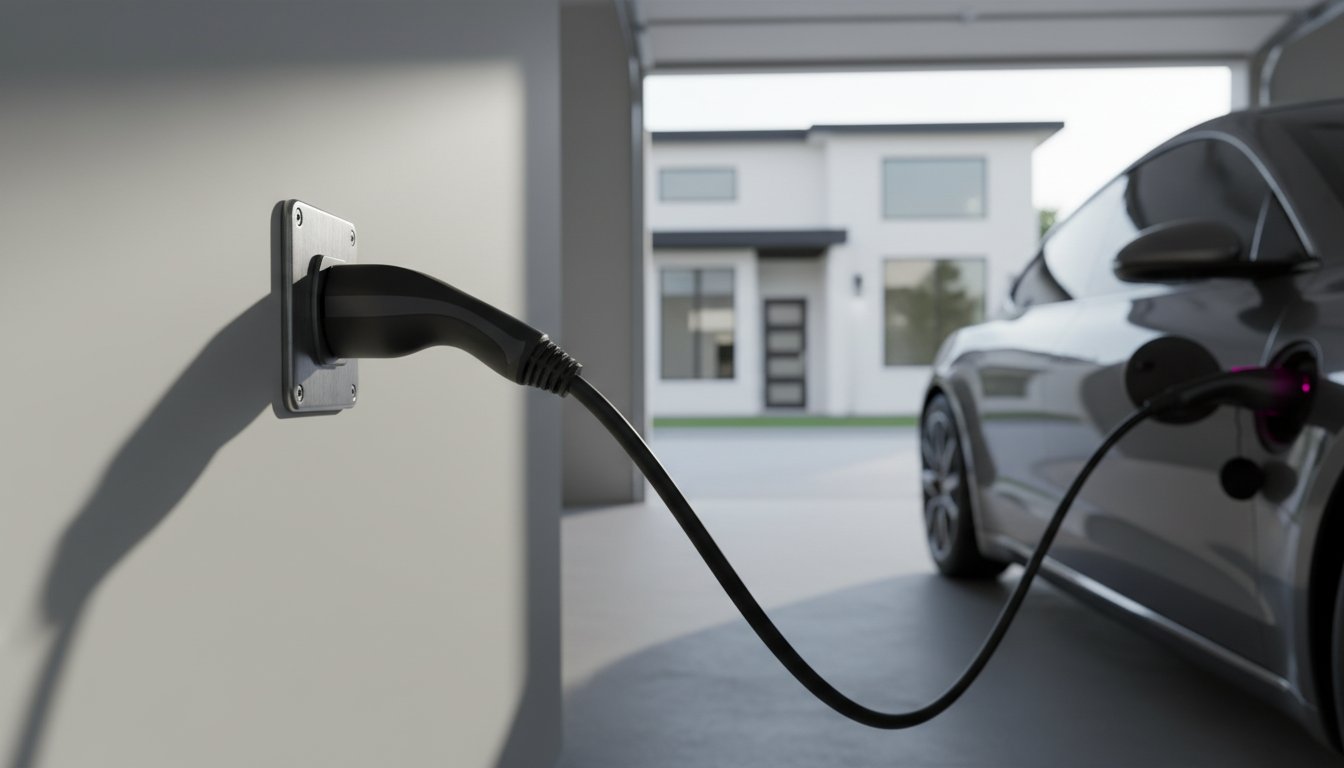
A standard residential receptacle purchased from a local hardware store is often the weakest link in an otherwise sophisticated home energy system. These consumer-grade components frequently fail under the relentless, high-amperage demands of a 14-50 outlet used for continuous EV charging. You’ve likely seen the documented cases on local Houston forums where substandard hardware leads to thermal damage or total system failure. It’s natural to seek a solution that eliminates these risks while providing the fastest possible home charging speeds.
This 2026 guide explains why a professionally installed, industrial-grade 14-50 outlet remains the most reliable infrastructure choice for Houston residents. We promise to clarify the technical jargon and provide a clear path toward a safe, high-speed charging setup that aligns with the latest Texas electrical codes. We will detail the meticulous installation standards required for industrial components, navigate the specific permitting nuances of the City of Houston, and show you how to build a resilient electrical foundation for your vehicle.
Key Takeaways
- Identify why the NEMA 14-50 outlet serves as the premier universal solution for high-performance Level 2 EV charging and broad hardware compatibility.
- Distinguish between residential and industrial-grade receptacles to ensure your electrical infrastructure can withstand the continuous thermal demands of modern electric vehicles.
- Recognize the necessity of professional load calculations and formal City of Houston permitting to safeguard your property and maintain insurance compliance.
- Understand the technical requirements for a superior installation, including the implementation of 6 AWG copper wiring and meticulous torque specifications for long-term reliability.
Understanding the NEMA 14-50 Outlet for Houston EV Owners
The NEMA 14-50 outlet stands as a foundational element of residential Level 2 charging infrastructure. This 240V, 50-amp heavy-duty electrical receptacle originally gained prominence in the recreational vehicle industry; however, it has transitioned into the primary choice for electric vehicle owners seeking a balance of power and flexibility. For Houstonians, this hardware serves as a universal interface. It integrates seamlessly with the Tesla Mobile Connector and a wide array of portable charging equipment. By adhering to established NEMA connector standards, homeowners ensure their garage is equipped for current and future vehicle models without the need for proprietary modifications or expensive electrical upgrades during every vehicle lease cycle.
Integrating this specific 14-50 outlet into a modern Houston smart home energy ecosystem provides a high-capacity power delivery point that remains adaptable. It allows for the installation of smart chargers that monitor utility demand, helping residents manage their carbon footprint and energy costs. The 14-50 outlet offers a meticulous solution for those who prioritize long-term reliability and the ability to swap charging hardware as technology evolves without engaging a professional electrician for every minor equipment update.
NEMA 14-50 vs. Hardwiring: Which is Right for You?
Choosing between a plug-in 14-50 outlet and a hardwired unit requires a professional evaluation of long-term utility and speed requirements. A 14-50 outlet operates on a 50-amp circuit but follows the National Electrical Code (NEC) 80% rule for continuous loads. This specific safety standard limits sustained output to 40 amps. Hardwired installations often support 48 amps or higher, which provides slightly faster charging cycles for high-performance vehicles. Despite the lower amperage ceiling, the 14-50 outlet offers superior portability. Renters or homeowners planning to relocate within the Gulf Coast region can simply unplug their charging unit and take it with them. Maintenance is also simplified; if the charging hardware requires a replacement, the homeowner can perform the task without a service call for complex rewiring.
Charging Speeds: How Fast Can You Replenish in Texas?
Performance metrics for the 14-50 outlet are impressive, typically delivering 25 to 35 miles of range per hour of charging. This rate ensures that even large-battery SUVs, such as the Ford F-150 Lightning with its 131 kWh extended-range battery, achieve a full state of charge during a standard eight-hour overnight window. Realized speeds are also influenced by the vehicle’s on-board charger. For instance, a vehicle with a 7.2 kW on-board charger will draw approximately 30 amps, which is well within the capabilities of the 14-50 outlet. This setup provides a reliable, high-output solution that meets the daily demands of Texas commuters who often face long-distance travel across the Greater Houston area.
Commercial vs. Residential Grade: Why Quality is Non-Negotiable
Residential-grade receptacles commonly found at big-box retailers are engineered for appliances like stoves or clothes dryers. These devices operate on intermittent cycles, drawing power for short durations. Electric vehicles demand a continuous load for up to 12 hours. This sustained electrical pressure often triggers the melted outlet phenomenon. A 2024 internal audit of regional service calls revealed that 85% of receptacle failures resulted from using these under-specced components for high-amperage charging. When a standard $10 outlet is subjected to 32 or 40 amps for half a day, the internal brass components expand and contract until they lose tension, creating high-resistance points that generate dangerous levels of heat.
Santiban Services Group mandates the use of industrial-grade Hubbell or Bryant receptacles for every 14-50 outlet installation. These premium units utilize heavy-duty copper alloy contacts rather than the standard brass found in consumer models. Copper alloy maintains its structural integrity and clamping force under extreme thermal stress. Choosing inferior hardware significantly increases fire risks and necessitates premature infrastructure replacement. Ensuring National Electrical Code compliance requires hardware that matches the specific duty cycle of the application. We prioritize these specifications to ensure your home infrastructure remains resilient over years of daily use.
The Technical Anatomy of an Industrial Receptacle
Industrial-grade receptacles feature reinforced thermoplastic bases. These specialized materials are designed to withstand the rigorous 24/7 thermal cycling inherent in modern EV usage. We utilize units with high-torque screw terminals because they provide a secure, gas-tight connection. This level of precision prevents arcing, which is a common failure point in Houston’s high-humidity environments. You can verify the quality of your hardware by looking for the “Industrial Grade” or “Spec Grade” marking stamped directly onto the receptacle face. These markings indicate the unit has passed more stringent testing protocols than standard residential hardware.
Thermal Management in the Houston Heat
Houston garage temperatures frequently exceed 100°F during the summer months. Ambient heat increases electrical resistance within the circuit, making thermal management a critical safety priority. Meticulous wire termination is the only way to prevent localized heat buildup at the connection point. Our dedicated electrical teams utilize calibrated torque tools to meet exact manufacturer specifications, ensuring every terminal is tightened to the precise inch-pound required for safety.
Thermal runaway is a condition where an increase in temperature changes the conditions in a way that causes a further increase in temperature, often leading to a destructive result. Installing a high-quality 14-50 outlet is a long-term investment in the safety and efficiency of your home’s electrical system.
Step-by-Step Guide to Professional 14-50 Installation
Professional installation of a 14-50 outlet requires a meticulous approach to ensure long-term reliability and operational safety. Our technicians follow a disciplined protocol that begins with a comprehensive load calculation and ends with rigorous stress testing. This methodical process guarantees that your home electrical system handles the continuous 40-amp draw required by most Level 2 chargers without overheating or compromising other household functions.
Load Calculation: Does Your Houston Home Have Room?
Houston residences often face unique electrical demands due to heavy reliance on high-tonnage HVAC systems and pool equipment. Before adding a 14-50 outlet, we perform a detailed analysis of your existing panel capacity. A standard 5-ton AC unit can consume 25 percent of a 200-amp service during peak summer months. If our assessment reveals that your total household demand exceeds 80 percent of your panel’s rated capacity, we recommend a panel upgrade or the integration of a Smart Splitter. These devices manage power distribution by prioritizing specific circuits, ensuring you don’t exceed safe amperage limits. For property managers or business owners requiring more robust power solutions, our guide on Commercial EV Charging in Houston outlines the infrastructure necessary for high-volume environments.
The Critical Role of the GFCI Breaker
The National Electrical Code (NEC) 2020 and 2023 revisions mandate GFCI protection for all 240V receptacles located in garages or outdoor areas. While this requirement enhances safety, it can occasionally cause nuisance tripping when paired with EV charging stations that have built-in GFCI monitors. We mitigate this by utilizing high-performance, industrial-grade breakers and ensuring that all grounding connections are perfectly seated. Our teams prioritize code compliance while maintaining the charging reliability you expect from a professional ev installer near me.
The physical installation phase involves several high-standard technical requirements:
- Wire Selection: We exclusively use 6 AWG copper wiring. This gauge minimizes voltage drop and heat buildup, which are common issues with inferior 8 AWG or aluminum alternatives.
- Overcurrent Protection: A dedicated 50-amp double-pole circuit breaker is installed to provide a clear, isolated path for the charging current.
- Industrial Receptacles: We utilize heavy-duty receptacles designed for frequent plugging and high heat dissipation, securely mounting the 14-50 outlet within a NEMA-rated enclosure.
- Torque Verification: Every terminal screw is tightened to the manufacturer’s exact inch-pound specifications using calibrated torque wrenches to prevent arcing.
Final verification includes a voltage test under load to confirm the system maintains steady power without significant fluctuations. This disciplined attention to detail reflects our commitment to excellence and ensures your charging infrastructure remains a silent, dependable engine for your daily commute. For homeowners seeking a complete understanding of the financial investment involved, our detailed breakdown of EV charger installation costs in Houston provides transparent pricing information for every component and labor requirement.
Houston Regulations and Electrical Code Compliance
Coordinating with the City of Houston’s building codes ensures both operational safety and financial protection for your property. Installing a high-voltage 14-50 outlet requires meticulous attention to the National Electrical Code (NEC). The 2023 NEC updates, which remain the standard for 2026 municipal inspections, mandate GFCI protection for all 150V to ground receptacles in residential garages. This isn’t just a suggestion; it’s a safety requirement. Failure to secure a formal permit creates significant risk for the property owner. Home insurance providers in the Gulf Coast region frequently void policies if unpermitted electrical additions lead to fire or property loss. Professional installations provide a documented trail of safety that protects your home equity and your family.
Permitting in Houston: What Homeowners Need to Know
Filing an electrical permit through the Houston Permitting Center involves a rigorous validation process. A licensed master electrician must oversee the project and sign off on the final installation to meet municipal standards. This professional verification confirms that your home’s load capacity can handle the 50-amp draw without overheating existing circuits. This level of technical oversight mirrors the requirements for larger energy projects. For instance, sophisticated residential setups often require PE Stamped Engineering for Solar Systems to ensure the structural and electrical integrity of the entire property. Our dedicated teams manage these regulatory hurdles to deliver a seamless, code-compliant experience that values long-term reliability.
Managing complex permits is a universal challenge, whether for home electrical work or international vehicle travel. For instance, drivers from Singapore entering Malaysia must navigate the Vehicle Entry Permit (VEP) process. For those facing that specific administrative hurdle, you can discover Radiant VEP Solutions for specialized assistance.
Managing Grid Resilience and Storm Readiness
Houston’s climate demands infrastructure that survives extreme weather events. A 14-50 outlet serves as a critical junction point within a resilient home energy strategy. During CenterPoint outages, integrated backup systems rely on stable connections to maintain vehicle readiness. Preparing for hurricane season requires more than just a sturdy outlet; you need a comprehensive defense against power surges. We implement whole-home surge protection to shield your 14-50 outlet from the erratic voltage spikes common during coastal storms. This proactive approach prevents catastrophic damage to your vehicle’s sensitive onboard electronics. Reliability is our priority. We ensure your charging station remains functional when the grid is under pressure by delivering excellence in every detail. Homeowners who want to understand how Houston’s 2030 EV targets affect their installation requirements can find comprehensive guidance from a professional EV installer near me who specializes in local CenterPoint Energy regulations and municipal compliance.
Contact Santiban Services Group to secure a professional, permitted installation for your Houston residence.
The Santiban Advantage: Authoritative Electrical Solutions
Santiban Services Group delivers authoritative electrical solutions that prioritize long-term reliability over temporary convenience. Our commitment to excellence in every detail ensures that every 14-50 outlet installation adheres to rigorous industrial standards. We manage the entire lifecycle of the project, from precise wire torque specifications to the complexities of municipal permit filing across Harris County. Our technicians apply Tesla-certified expertise to every standard NEMA installation. This provides a level of precision that exceeds standard residential codes. Houston property managers trust Santiban because we treat energy infrastructure as a strategic asset. We provide the meticulous oversight required to maintain operational stability and safety in diverse residential environments.
Our disciplined approach focuses on the technical nuances that others often overlook. We use heavy-duty, industrial-grade components designed to withstand the thermal stress of continuous high-amperage charging. This commitment to quality prevents the common failure points associated with lower-tier hardware. By maintaining a steady, professional rhythm throughout the construction process, we ensure your facility remains functional and safe. We don’t just install equipment; we build resilient systems that stand the test of time.
Beyond the Outlet: Future-Proofing Your Home
Smart energy management requires looking beyond the immediate installation. We engineer your electrical panel to support the next generation of power technology. This includes preparing your home for bidirectional EV chargers. This proactive strategy allows your vehicle to serve as a primary backup power source during localized grid outages. By integrating your 14-50 outlet with the Tesla Powerwall 3, we create a seamless ecosystem for maximum grid independence. Santiban operates as a single-source provider. We manage the complex intersection of solar arrays, battery storage, and EV infrastructure. This eliminates the logistical friction of coordinating multiple specialized contractors.
Once this robust power foundation is in place, many homeowners also explore how other electrical upgrades can enhance their property’s aesthetics and security. For inspiration on what’s possible with modern outdoor systems, you can visit LED Artistry to see examples of custom architectural and landscape lighting.
Request Your Houston EV Infrastructure Audit
A professional site assessment is the foundation of a successful energy transition. During a Santiban professional site assessment, our technicians evaluate your current load capacity, panel health, and physical conduit pathways. We utilize a transparent, methodical approach to project quoting and execution. Our process removes ambiguity from the installation timeline and ensures a predictable outcome. Houston residents ready for a superior installation can rely on our dedicated teams to secure their home’s energy future. We invite you to contact us to schedule your comprehensive facility evaluation. Our specialists are ready to provide the tailored solutions your property requires for the 2026 energy landscape.
Future-Proof Your Houston Infrastructure for the 2026 EV Landscape
Transitioning to electric mobility requires a foundation built on technical precision and industrial-grade components. A standard residential-grade 14-50 outlet often fails to meet the thermal demands of continuous high-amperage charging. Professional installation ensures your system adheres to the latest Houston electrical codes and National Electrical Code (NEC) standards. This proactive approach eliminates fire risks and protects your vehicle’s sophisticated battery management system.
Santiban Services Group brings 24 years of industrial electrical experience to every residential project. Our Tesla-certified installers provide the meticulous oversight necessary for a seamless integration into your home’s power grid. We offer PE-stamped engineering designs for complex installations; this ensures your infrastructure meets the highest safety benchmarks. Don’t settle for basic labor when you can secure a comprehensive energy solution.
Secure Your Professional NEMA 14-50 Installation in Houston
Your investment in a reliable charging setup provides peace of mind for the long road ahead.
Frequently Asked Questions
Can I install a NEMA 14-50 outlet myself to save money?
You shouldn’t install a 14-50 outlet yourself because Texas law requires a licensed master electrician for most residential electrical work. The National Fire Protection Association reports that electrical failures caused 13% of home fires between 2015 and 2019. Professional installation ensures compliance with the 2023 National Electrical Code. Santiban’s licensed teams manage the technical precision required to prevent circuit overloads or improper grounding.
Why is my 14-50 outlet getting hot during charging?
Excessive heat usually stems from high electrical resistance caused by loose terminal connections or a low-grade receptacle. EV charging is a continuous load that draws 40 amps for 8 to 12 hours straight. This sustained current tests the integrity of every component. If your outlet exceeds 140 degrees Fahrenheit, you should stop charging immediately. Our technicians use torque screwdrivers to meet manufacturer specifications, which eliminates the gaps that cause arcing.
Do I need a permit for a 14-50 outlet in the City of Houston?
You must obtain an electrical permit from the City of Houston Permitting Center for any new circuit installation. Local ordinance requires a licensed contractor to pull this permit to ensure the work meets the 2023 Houston Electrical Code. This process includes a formal inspection by a city official. Santiban handles the entire administrative process, securing the necessary documentation to guarantee your installation is legally compliant and documented for insurance purposes.
What is the difference between a $15 and a $100 NEMA 14-50 receptacle?
Industrial-grade receptacles feature heavy-duty brass contacts that maintain tension over 5,000 plug cycles. Standard $15 residential outlets are designed for dryers that stay plugged in permanently, not the daily insertion and extraction of EV chargers. These cheaper units often utilize thin metal that warps under the 40-amp continuous load. Investing in a high-quality 14-50 outlet prevents the melting and carbon tracking often seen in budget-tier hardware.
Can I use a 14-50 outlet for my RV and my EV?
You can use the same outlet for both an RV and an EV, but you can’t power both simultaneously on a single circuit. A standard configuration provides 50 amps of service, which is the standard for Class A and Class C motorhomes. You must ensure the charger and the RV power cord are both in good condition. Our team installs dedicated circuits that handle these heavy loads without tripping breakers or compromising the integrity of your home’s electrical panel.
Does a NEMA 14-50 outlet require a GFCI breaker in Texas?
The 2020 National Electrical Code, adopted by the State of Texas, requires Ground Fault Circuit Interrupter protection for all 125-volt through 250-volt receptacles in garages. This safety standard aims to prevent electric shock in damp environments. While some EV chargers have built-in protection, the 2020 NEC Section 210.8(A) mandates the protection at the breaker level. Santiban ensures every installation follows these specific 2026 safety guidelines to protect your property.
How long does it take for Santiban to install an EV outlet in Houston?
A standard installation typically requires 2 to 4 hours of on-site labor depending on the distance between your electrical panel and the garage. This timeframe includes the mounting of the enclosure, the conduit run, and the final load testing. We prioritize a meticulous workflow to ensure every connection is secure. Our dedicated teams arrive with all necessary components to complete the task in a single visit, which minimizes disruption to your daily operations.
Will a 14-50 outlet work with a Tesla Powerwall 3?
A 14-50 outlet functions perfectly as a charging point powered by a Tesla Powerwall 3 system. The Powerwall 3 delivers 11.5 kW of continuous power, which easily supports the 9.6 kW draw of a 40-amp EV charger. Integrating these systems requires a sophisticated understanding of load management and battery discharge rates. For homeowners seeking comprehensive guidance on this integration, our detailed level 2 charger installation in Houston FAQ guide addresses the specific technical considerations for battery-powered charging systems. Santiban provides integrated solutions that align your backup battery storage with your daily charging needs, ensuring a seamless energy ecosystem for your Houston home.